Ice conveyor systems move loose ice from an ice maker or storage bin to a weighing, dispensing, or bagging point. In a packaged-ice plant, they link production to packaging and deliver ice to the line at the required rate.
Conveyor choice depends on the ice type, route, peak packing rate, and cleaning access. The sections below compare three common methods and follow the ice from production through storage to bagging.
What Is an Ice Conveyor System?
An ice conveyor moves loose ice between process stages and coordinates handoffs between machines. The ice maker produces the ice, weighing equipment measures portions, and the bagger packages them.
An ice plant may pair its ice maker with storage and packing equipment and separate discharge and weighing systems. Each stage has its own function, even when the units are integrated into one line.
Main Types of Ice Conveyor Systems
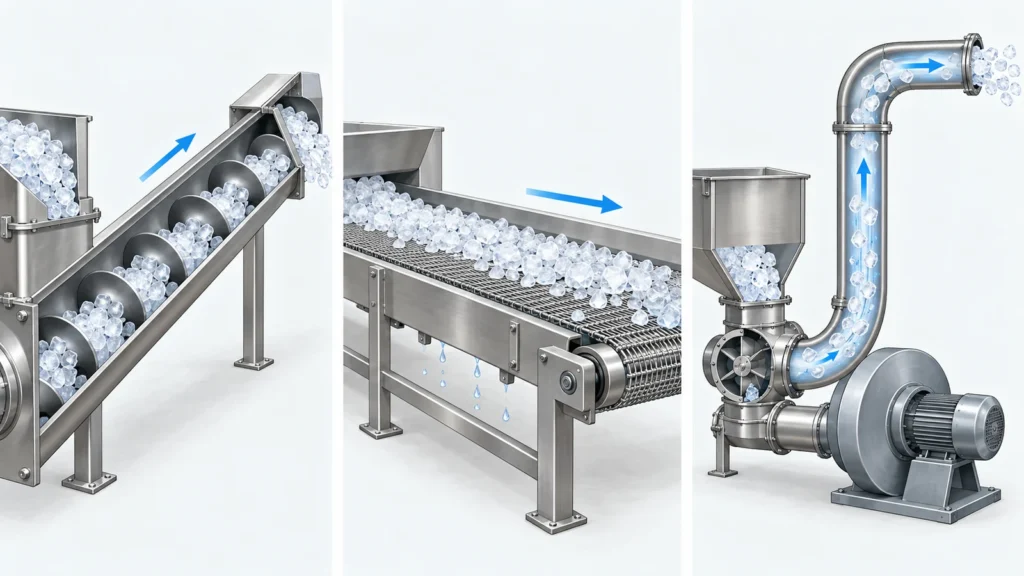
Screw, belt, and pneumatic conveyors suit different routes and ice conditions. The required flow rate also helps determine which system fits the job.
Screw Conveyors
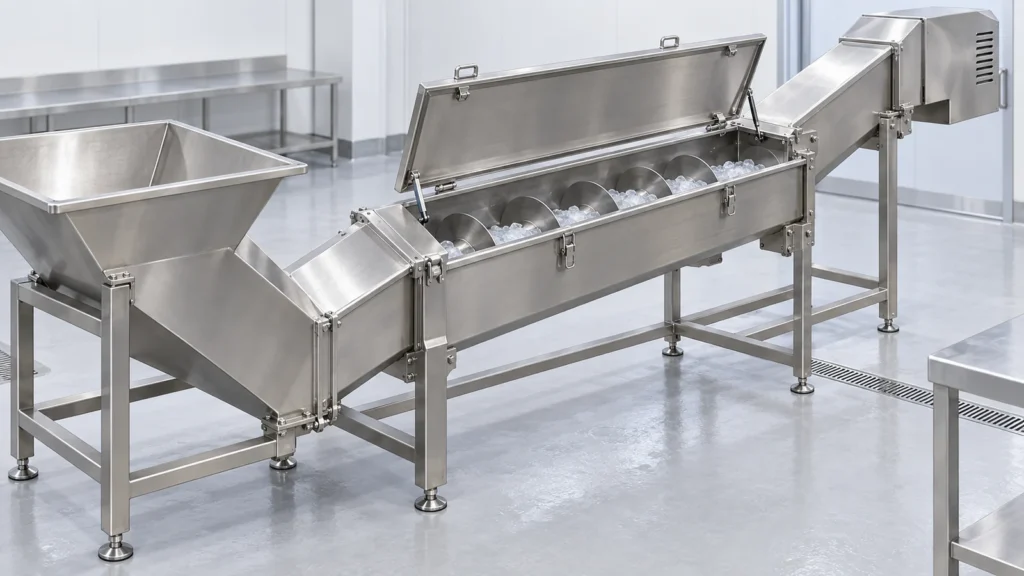
A rotating helical flight pushes ice through a trough or tube. Its enclosed path suits controlled transfers from a storage-bin outlet and other compact routes. Capacity depends on screw diameter, pitch, speed, fill level, and incline. An undersized or overfilled screw can break ice into fines, so size the screw and its feeder together.
Belt Conveyors
A moving belt carries ice along an open route. Belts suit longer horizontal transfers and can handle inclines when the surface and sidewalls are designed for them. Mesh belts let meltwater and small ice particles fall through. Covers can shield ice from heat, rain, and contamination.
Pneumatic Conveying
A blower moves ice through a pipe in an air stream. A rotary airlock or similar feeder meters ice into the line. Pneumatic systems can carry ice over long distances, across elevation changes, or to several delivery points. The airflow and pipe layout must suit the size and shape of the ice. At high velocities, impacts can create fines, while warm or moist air can contribute to melting.
How an Ice Conveyor Fits Into the Packaging Flow
The conveyor links equipment that may run at different rates: the ice maker, storage, weighing equipment, and bagger. Storage can buffer production against packaging demand, provided the discharge route can supply ice fast enough during the packing window.
Moving Ice From the Ice Maker to Storage
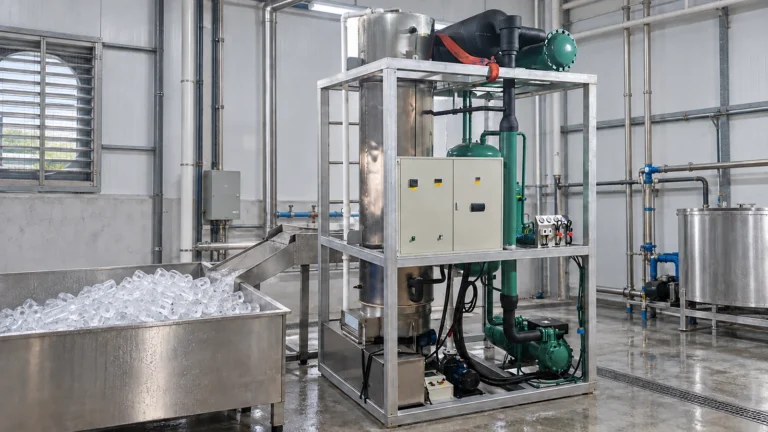
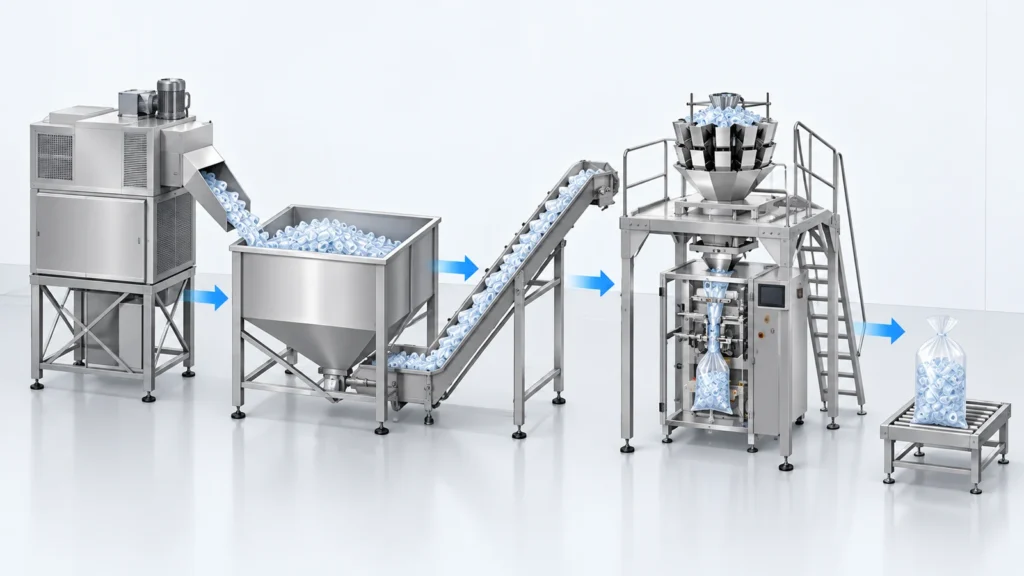
At harvest, ice leaves the maker through a chute or conveyor and enters a storage bin or room. Storage buffers continuous production during periods of high packaging demand, provided the discharge system can supply the packer at the required rate. In a tube-ice plant, this production-to-packing flow connects the maker, storage, discharge, and bagger.
Loose ice can fuse or bridge during storage, so larger systems may need mechanical discharge to move ice that gravity alone cannot clear. A level control can pause ice production or redirect the flow when storage is full.
Feeding Ice From Storage to Weighing and Bagging
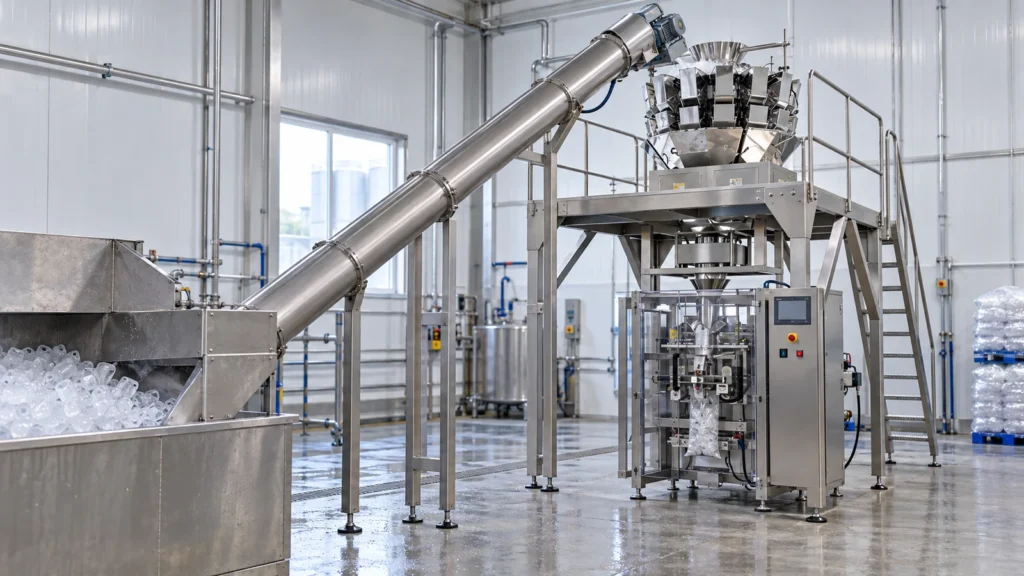
A conveyor carries ice from the storage outlet to a weigh hopper or the packing machine’s feed point. The weighing system portions the target mass, and the bagger fills and closes each bag. On a bagged-ice line, the ice packing machine receives the conveyor feed, so its feed point and peak intake need to match the conveyor’s delivery rate.
How to Match Conveyor Flow to Packaging Demand
Size the full transfer path for the busiest packing period. Daily ice production alone does not show whether the conveyor, storage discharge, weigh hopper, and bagger can sustain the required rate.
Match Conveyor Feed Rate
Calculate the conveyor feed rate from the mass of ice to be packed and the time available:
Required average feed rate = ice mass to pack ÷ packing time
For example, if a line must pack 6,000 kg in a six-hour packing window, its average feed rate is 1,000 kg/h. If breaks or changeovers reduce actual run time, use the shorter operating time in the calculation. Include demand from any other equipment drawing ice from the same storage. Then apply the same peak-window comparison to bagging capacity and ice-plant output.
Maintain Weigh Hopper Supply
The weigh hopper needs enough usable ice to keep filling while the conveyor replenishes it. Set its working capacity based on the packer’s draw rate and refill interval. Check that ice can discharge without bridging or clumping. Level or weight sensors can call for a refill and stop the upstream feed before the hopper overflows.
Synchronize Line Controls
Coordinate the conveyor, bagger, and weigh hopper controls. When the hopper is full or a downstream fault occurs, stop incoming ice before it backs up. A low-level signal can restart the feed when the line is ready. During a normal shutdown, stop the incoming ice and let the screw conveyor clear before stopping its drive. Keep emergency stops available for immediate shutdown.
What Conditions on a Packaging Line Affect Conveyor Selection?
Route layout, ice condition, cleaning access, and safety requirements all affect conveyor selection.
Conveying Route and Transfer Points
Map the path from the storage outlet to the bagger, including elevation changes, bends, branch points, and discharge locations. Tight turns, abrupt drops, and extra transfer points can increase wear, spills, or ice breakage. Leave enough access to inspect and clean chutes, covers, and transfer joints.
Ice Quality During Transfer
Ice shape, size, and surface moisture affect how it moves. Match conveyor speed and geometry to the ice being handled, since one design may not work equally well with every form. Reduce unnecessary drops and sharp transitions. For pneumatic lines, match airflow and bends to the ice size to limit impact damage.
Cleaning Access and Food Contact Materials
Food-contact sections need materials and construction suited to wet operation and the cleaning method. Make belts, troughs, joints, chutes, and hoppers accessible for inspection and cleaning. Stainless steel is common, though other materials may also be suitable. For facilities subject to 21 CFR Part 117, equipment used in food manufacturing, processing, packing, or holding must be adequately cleanable and maintained. Food-contact surfaces must be corrosion-resistant and suitable for their intended use, and conveying systems must be designed to remain in an appropriate clean and sanitary condition.
With the route, cleaning method, and safety needs defined, the proposed layout can be checked against the line’s peak feed rate. Send the project specifications, including the ice type, peak feed rate, route and elevation changes, and packing schedule, to assess conveyor capacity and control interfaces.
FAQs
Which Conveyor Components Need Regular Inspection?
Inspect components that affect ice flow, containment, and worker safety. Check screw flights, bearings, seals, and drives; belt tracking, tension, splices, and scrapers; and pneumatic blowers, airlocks, hoses, and joints. Also inspect chutes, hoppers, sensors, guards, and stop devices. Set inspection intervals based on operating duty, observed wear, and the equipment manufacturer’s maintenance schedule.
Can One Ice Conveyor Supply Multiple Packaging Lines?
Yes, if the shared conveyor can handle the lines’ simultaneous peak demand and its branches can direct and control flow to each line. Check the required feed rate for each route, then decide what should happen when one packer stops. Without controlled branches, one line can run short of ice or the shared conveyor can back up.
Which Safety Devices Are Needed on a Packaging-Line Ice Conveyor?
Guard accessible moving parts and pinch points, and place emergency stops where workers can reach them. Isolate hazardous energy before clearing jams or servicing equipment. Long belt conveyors may use emergency-stop pull cords along the line. In U.S. general industry, OSHA 29 CFR 1910.212 covers machine guarding, while 1910.147 addresses hazardous-energy control during covered servicing and maintenance.