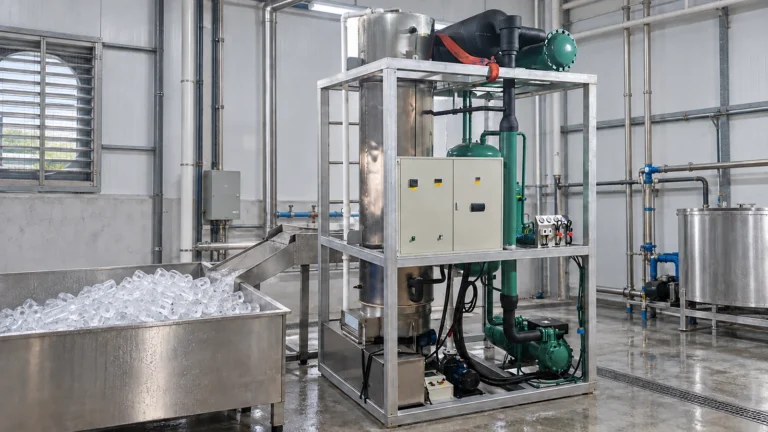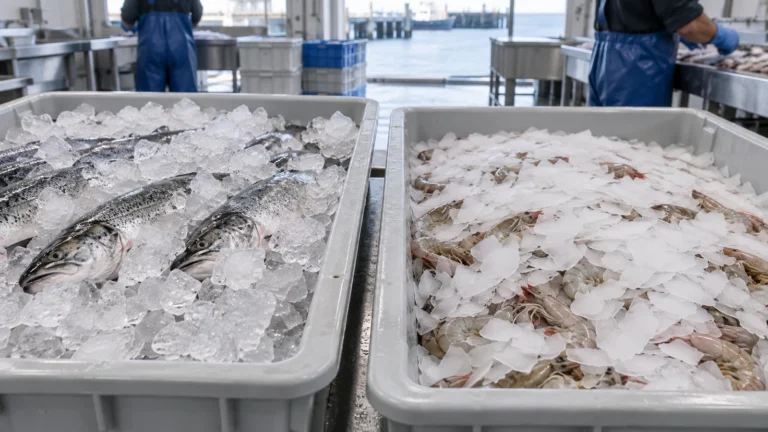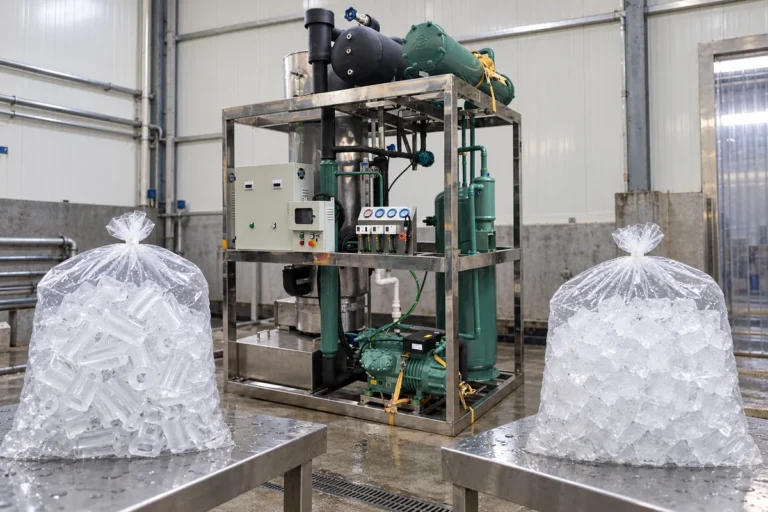
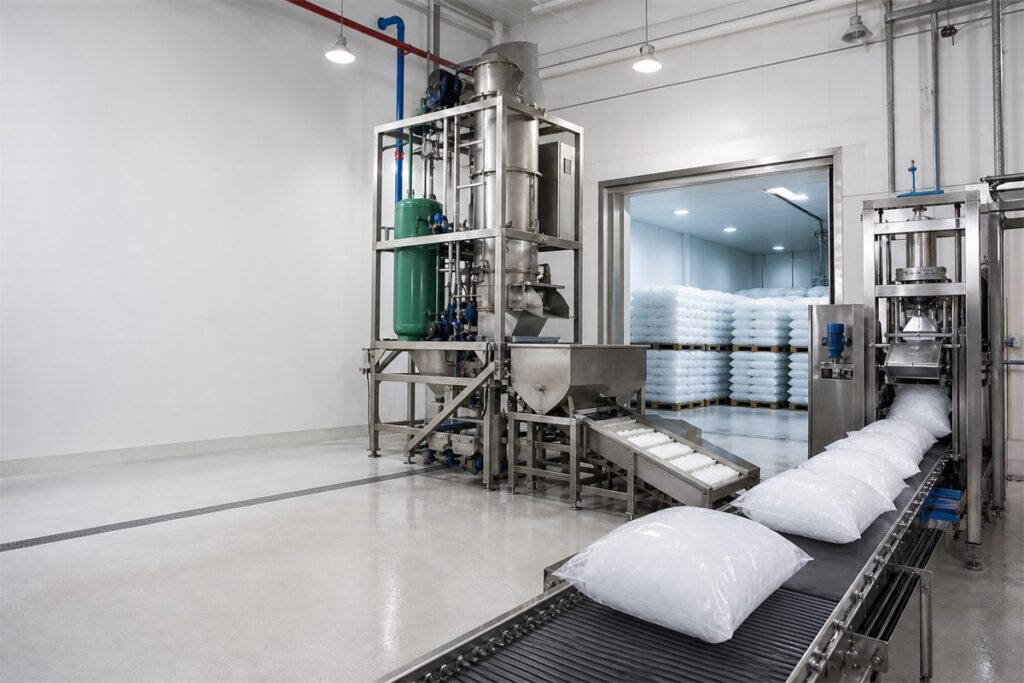
Match tube ice equipment as one operating flow. Production must rebuild the required inventory within real operating hours, storage must cover peak withdrawal, and packing must clear the ice without creating a backlog.
A tube ice machine rating is only one input. A plant can still miss dispatch if the storage buffer is too small, the discharge path is slow, or the packing line cannot accept ice at the planned rate. Define the complete ice path before comparing equipment.
Start With the Ice Flow
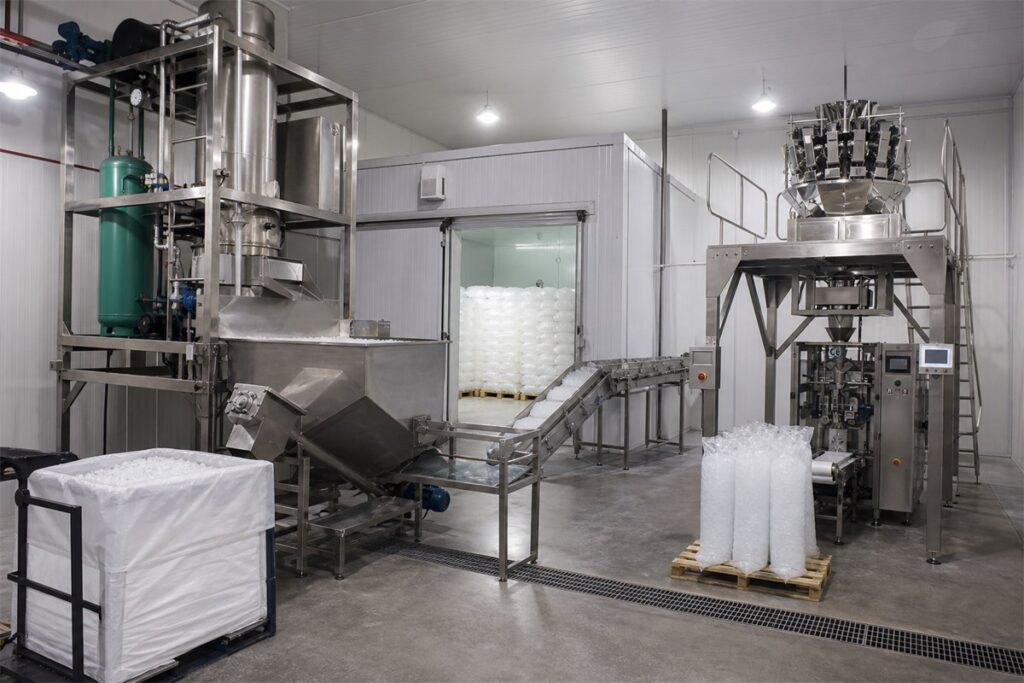
Begin with the route the ice will take after harvest. The route should show where ice is transferred, held, packed, staged, and handed to the customer. This makes the equipment boundary clear before the project team compares equipment proposals or line layouts.
Map the Required Path
The tube ice equipment category can help establish the product family, but the project still needs a written path for each handoff. Write the operating path in order and identify the handoff at each stage:
- production and harvest
- transfer into storage
- storage and stock rotation
- discharge to packing
- finished-bag staging and dispatch
Each handoff needs a planned flow rate, cleaning access, and a response when the next stage cannot accept more ice. A line is only as usable as the slowest handoff during the busiest period.
Define Peak Dispatch
Daily output does not show how much ice must be ready at one time. Record the largest planned withdrawal, its duration, and the time until the next dispatch or collection period. A plant that packs most of its volume in a short window needs storage, discharge, and packing capacity for that window even when daily production appears adequate.
Match Production to Demand
Select production from the usable daily demand and the actual time available to make ice. The selected machine must also rebuild inventory after peak dispatch, not only reach a nominal daily total.
Confirm the Production Window
Define the hours available for ice production after allowing for cleaning, inspection, maintenance, shift limits, utility interruptions, and any harvest or process time. The tube ice machine capacity guide helps organize the required demand, site, and auxiliary-equipment inputs, but the proposal still needs the project’s operating data.
Ask for the ambient temperature, inlet-water temperature, condenser conditions, power supply, and other rating conditions behind the proposed output. State whether the requested tonnage uses metric tons or US short tons, and whether a daily rating means a 24-hour test period. These definitions prevent a quote comparison from using different demand or rating bases.
Test Recovery After Dispatch
After each planned withdrawal, calculate the inventory that remains and the production available before the next peak. The system passes this check only when the recovery window restores the required buffer. Adding room volume does not fix a recurring production shortfall.
The industrial ice machine buyer guide explains the same boundary at the system level: production and storage are separate decisions, and storage only bridges a short peak while inventory is rebuilt.
Size Storage as a Buffer
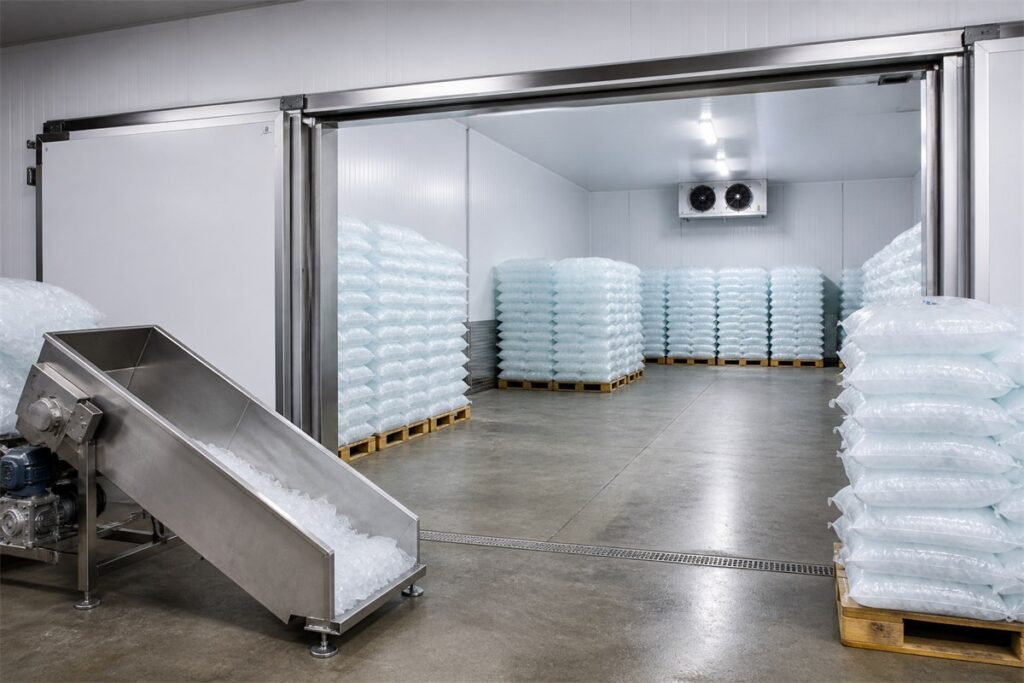
Storage should bridge the gap between production and dispatch. It should not be used to hide a machine that cannot meet sustained demand.
Set Usable Inventory
Set the storage target from the largest planned withdrawal and the time available to rebuild inventory. A tube ice storage room is described by Mikeicemachine as a buffer between ice production, packing, and customer orders, but the required configuration still depends on the project’s actual flow.
Nominal room volume is not the same as usable ice capacity because loading space, access aisles, ice depth, discharge equipment, stock rotation, and safe operating limits reduce the ice that can be withdrawn when needed.
| Stage | Question to Confirm | Result of a Mismatch |
|---|---|---|
| Production | Can the machine rebuild required inventory in the available production window? | The buffer is not restored before the next peak. |
| Storage | Can usable inventory cover the largest planned withdrawal? | Dispatch begins before enough ice is available. |
| Packing | Can the line accept the required ice flow and make the planned bags per hour? | Ice backs up upstream or bags leave late. |
| Dispatch | Can finished bags be staged and loaded within the promised window? | Storage and packing capacity remain unused. |
Define the loading method, discharge method, level control, room conditions, sanitation plan, and stock-rotation method with the storage requirement. A room that sits between production and packing is a buffer only when the transfer and withdrawal path can move the planned ice volume.
Match Packing to Ice Flow
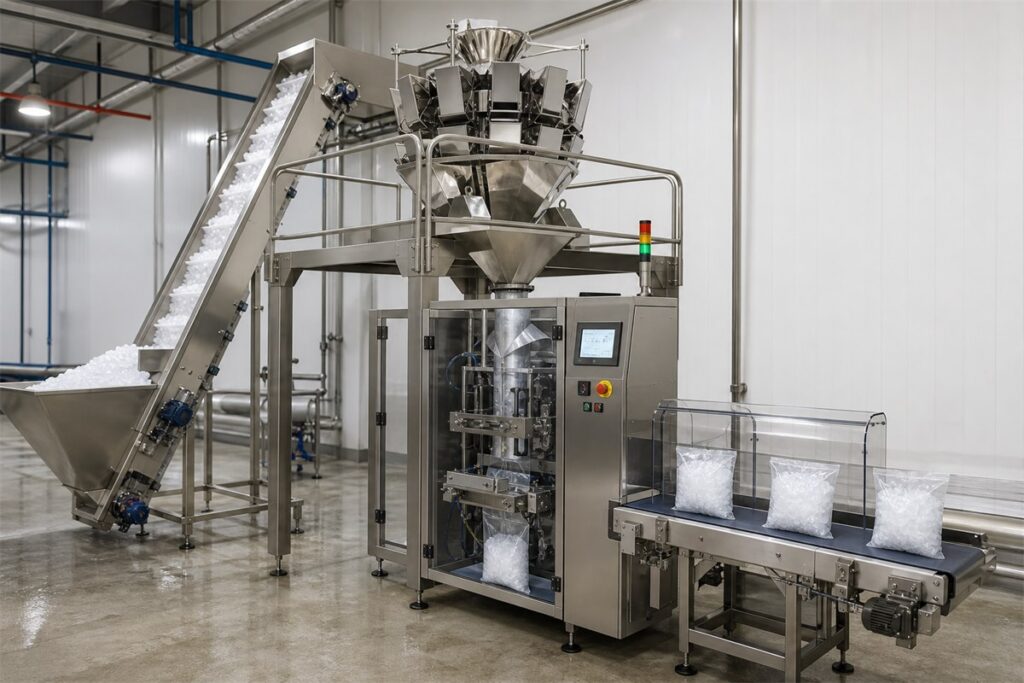
Packing equipment must match the product specification and the plant’s peak flow. The relevant rate is the amount of ice the line can receive, weigh, seal, and move to finished-bag staging during the required dispatch window.
Confirm Product Requirements
Confirm the tube dimensions, center opening, cut length, acceptable breakage, target bag weight, bag material, sealing method, coding requirement, and inspection needs before selecting packing equipment. These details affect how the ice is transferred and how the finished product is made, so they should be part of the same configuration review.
Test the Packing Rate
Compare the required packing rate with the capacity of each transfer, weighing, filling, sealing, and finished-bag handling step. The slowest step sets the practical line rate. Ask how the controls respond when storage or packing cannot accept more ice.
For a new retail or wholesale ice plant, the ice business planning guide can help define the sales model and dispatch pattern before the line is finalized. It does not replace project-specific capacity and layout data.
Prepare a Comparable Project Brief
Tube ice plant project layout](https://www.mikeicemachine.com/wp-content/uploads/2026/08/tube-ice-plant-project-layout-1024x683.jpg)
Use the same demand, site, and scope inputs across the quotes you compare. This turns the quote into a comparison of operating systems rather than a comparison of headline machine capacity.
Separate Equipment Scope
Ask each proposal to state whether it includes:
- the tube ice machine and stated production conditions
- storage, transfer, and discharge equipment
- packing interfaces, controls, and finished-bag handling
- water, power, heat-rejection, drainage, and site interfaces
- installation, commissioning, training, spare parts, and exclusions
The equipment list should distinguish the production machine from the complete plant scope. Civil work, permits, local compliance, and site services may belong to different parties, so confirm those responsibilities in writing.
Confirm Configuration Evidence
Request a layout drawing, stated operating conditions, an equipment list, a scope statement, and the test or acceptance records that apply to the proposed configuration. When a storage value, packing rate, bag specification, or compatibility claim affects the decision, it is not verified until the proposal identifies the configuration and conditions used.
For a Mikeicemachine project proposal, send daily demand, the largest dispatch window, available production hours, storage target, ice dimensions, packing method, country voltage, ambient conditions, available space, and the required system boundary. This gives the equipment team a basis to match production, storage, and packing without assuming a configuration from a machine title.
Frequently Asked Questions
What Should Buyers Check During a Factory Acceptance Test?
Buyers should agree on the test scope and acceptance criteria before the factory running test. The checklist should identify the machine and test duration, record ambient and inlet-water conditions, power and condenser conditions, and define the production measurement method, ice form, safety checks, allowed deviations, witness method, and records to be provided.
When Should a Tube Ice Plant Use Automatic Packing?
Use automatic packing when the project needs an integrated workflow for lifting, weighing, bag forming, filling, sealing, and finished-bag conveying. Mikeicemachine describes its semi-automatic packing machine for small and medium tube ice plants, where operators place the bags while the equipment controls the target weight and filling cycle. Confirm which workflow matches the plant before treating either machine type as the right fit.
Does a Tube Ice Plant Need a Tube Ice Crusher?
No. Add a tube ice crusher only when customers or a downstream process need smaller, irregular ice. Before including one, define the required output size, acceptable fines, feed rate, discharge rate, and whether crushing belongs before storage, before packing, or at the point of use.
Can a Tube Ice Plant Be Expanded in Phases?
Yes, provided the first project preserves a practical route for later capacity, storage, utilities, space, and dispatch changes. Record what the initial scope supports, what a later phase will require, and which assumptions must remain true. Expansion is a project-boundary decision, not a capacity promise.
How Should an Ice Plant Plan for a Production Stop?
Plan the response before supply starts. Assign the person who receives an alert, define the supplier or technician escalation path, identify any alternate supply option, and set customer priorities. Do not describe backup capacity as available unless it has been arranged.