
 Fishery
 & Seafood Ice Solutions
Soft, thick, slow-melting flake ice that cools fish fast, lasts longer and helps you sell more. See why flake ice quality matters for seafood business.
Explore solutionLarge flake ice machine for seafood processing plants, ports, poultry and concrete temperature control.
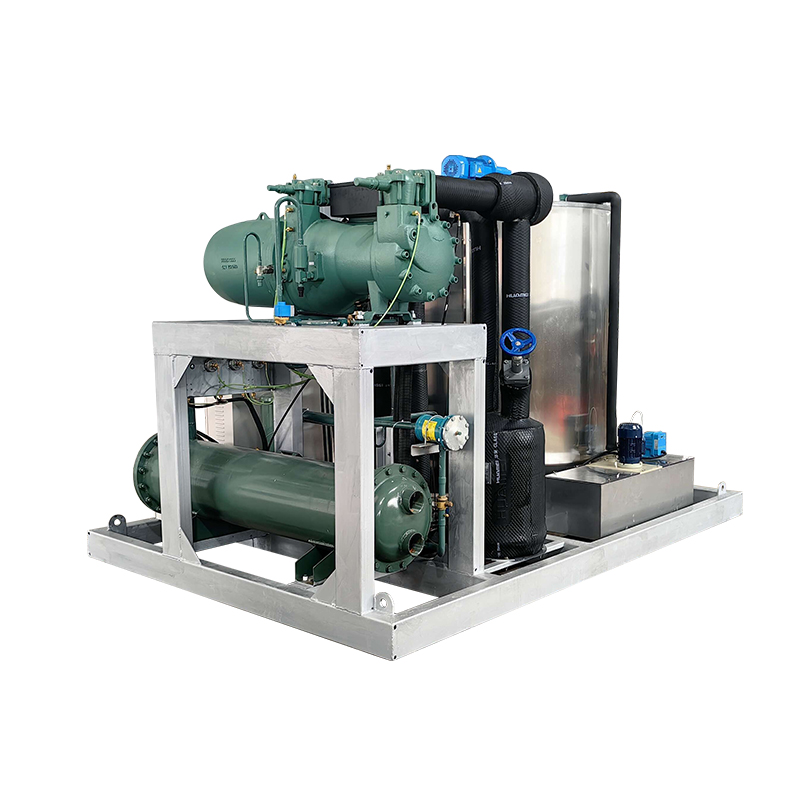
| Model | MIMF20T |
| Running Power | 60 KW |
| Ice Thickness | ≈2.5mm |
| Ice Temperature | -5℃ |
| Refrigerant | R404a, R448a, R449a, or else |
| Power Supply | 3 phase industrial power supply |
| Ice Daily Productive Capacity | 20,000 Kgs of ice flakes per 24 hours |
| Standard Working Condition | 30℃ ambient and 20℃ water temperature |
| Power Consumption | 75 KWH of electricity for making every 1 ton of ice flakes |
Fishery
Soft, thick, slow-melting flake ice that cools fish fast, lasts longer and helps you sell more. See why flake ice quality matters for seafood business.
Explore solution Food Processing
Use dry flake ice for slaughterhouses, poultry plants, meat processing, seafood handling and vegetable cooling where fast heat removal and hygiene matter.
Explore solution Hospitality
Commercial tube ice and flake ice solutions for beverage service, buffets, central kitchens, bakery dough cooling and hospitality operations.
Explore solutionThe MIMF20T is priced via a customized FOB China quotation. A standalone ice maker only includes the refrigeration unit and control panel, whereas a turnkey plant covers ice storage bins, delivery conveyors, and on-site installation. Final pricing varies with compressor brand, electrical standards, and the overall 20 ton flake ice machine price configuration.
Yes, provided operating temperatures stay within rated limits. The water-cooled MIMF20T delivers 20,000 kg per 24 hours at a 30°C ambient temperature and 20°C inlet water temperature. Higher ambient heat or warmer feed water increases the refrigeration load and reduces daily ice output.
The MIMF20T draws 60 kW of running power. While kW indicates instantaneous electrical load, actual electricity consumption per ton (kWh/ton) is calculated by dividing total metered kWh by the metric tons of ice produced. Ambient temperatures and condenser cleanliness directly impact overall ice machine power consumption.
Choose the 20 ton model if its real-world output under your local climate covers daily demand. Step up to the 30 ton unit if you need extra buffer for summer heat or peak production shifts. Accurate industrial ice machine sizing should also account for transfer melt losses, sanitation downtime, and bin refill times.
You can pair a 20 ton unit with either a manual insulated cold room or an automated rake bin using screw or pneumatic conveyors. Bin capacity depends on shift schedules and peak batch withdrawals, while the storage and transfer arrangement must fit your target discharge rate, floor space, and washdown requirements.
Tell us your detailed requirements about the ice machine, and we will send you the price, specs and so on.