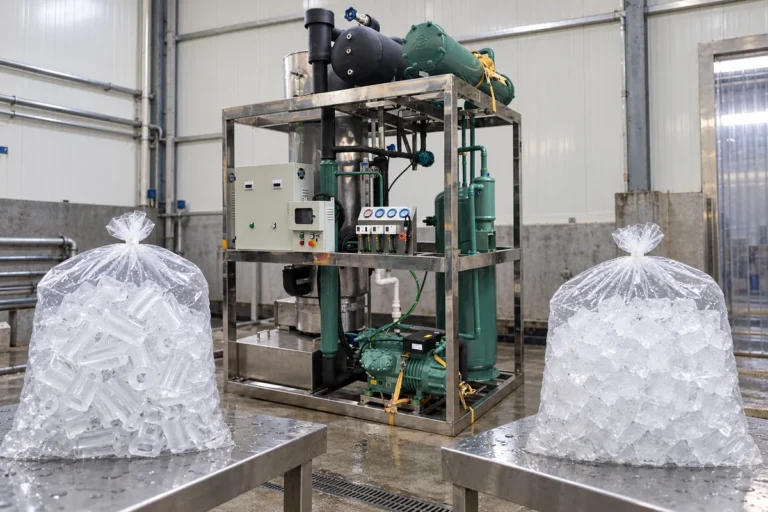
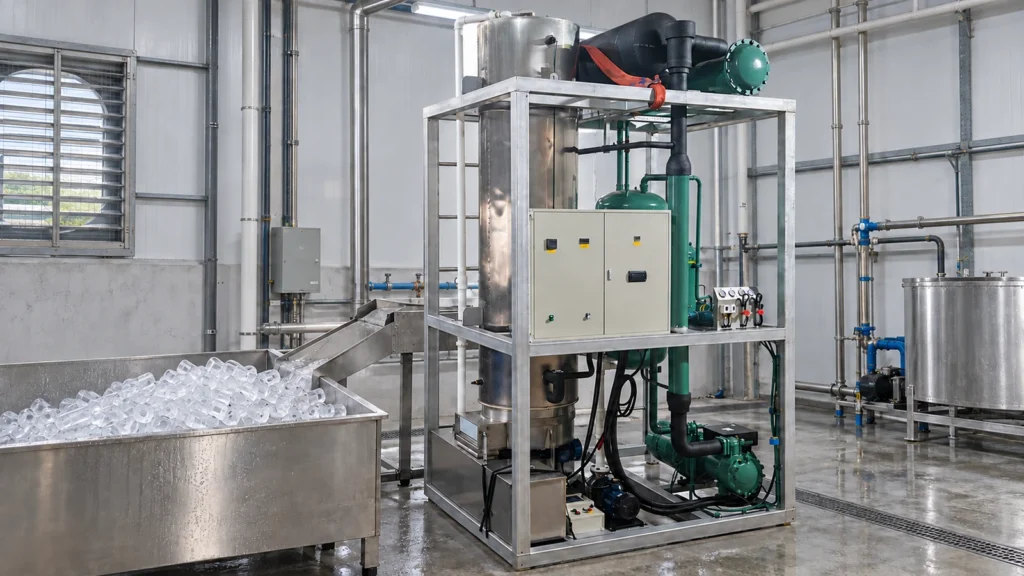
For an industrial ice machine, the most useful measure of electricity use is kilowatt-hours per metric ton of ice (kWh/ton). Running power, measured in kilowatts (kW), tells you what the machine draws while it operates. It does not tell you how much electricity the machine needs to produce a ton of ice.
That depends on the ice type, site temperatures, actual output, and which equipment is included in the figure. Those details also affect the cost of running an ice plant.
Industrial Ice Machine Power Consumption by Type
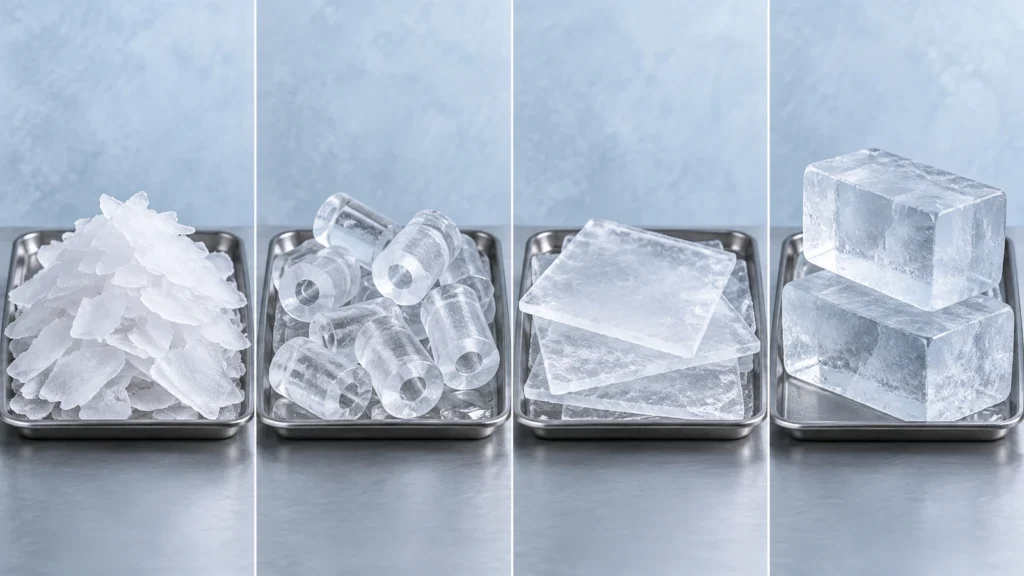
The table uses FAO planning ranges for the ice maker and refrigeration plant. The figures are not ratings for current models, and they exclude ice handling, crushing, and storage. Use them for an initial comparison, then ask suppliers for figures based on your site conditions.
| Ice Machine Type | FAO Planning Range (kWh per Metric Ton) | Main Application | Key Energy Factor |
| Flake ice | 50–60 in temperate areas; 70–85 in tropical areas | Seafood and food cooling | Low temperature needed to make cold flakes |
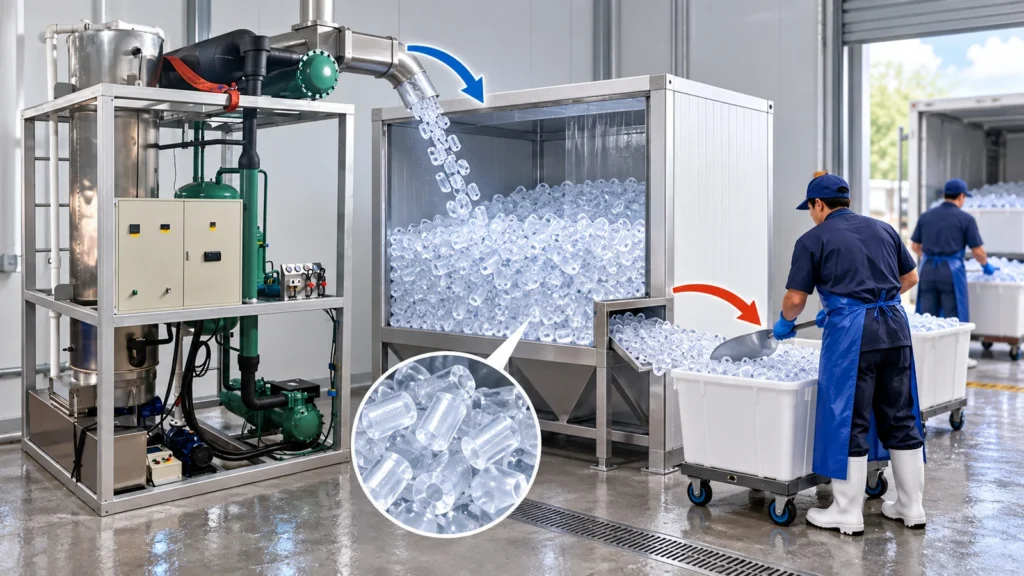
| Tube ice | 45–55 in temperate areas; 60–75 in tropical areas | Edible ice and ice distribution | Freezing and ice release cycles |
| Plate ice | 45–55 in temperate areas; 60–75 in tropical areas | Industrial cooling | Freezing and ice release cycles |
| Block ice | 40–50 in temperate areas; 55–70 in tropical areas | Ice storage and distribution | Refrigeration and, depending on the system, brine circulation |
FAO gives separate ranges for temperate and tropical conditions. For a purchasing decision, you need energy data at your site’s air and inlet-water temperatures. You can compare industrial ice machines by ice type and capacity before requesting those figures.
What Affects Actual Power Consumption?
The electricity used per ton changes with the heat the machine must remove, its actual output, and the efficiency of the complete system. A published figure is useful only when you know the conditions and equipment behind it.
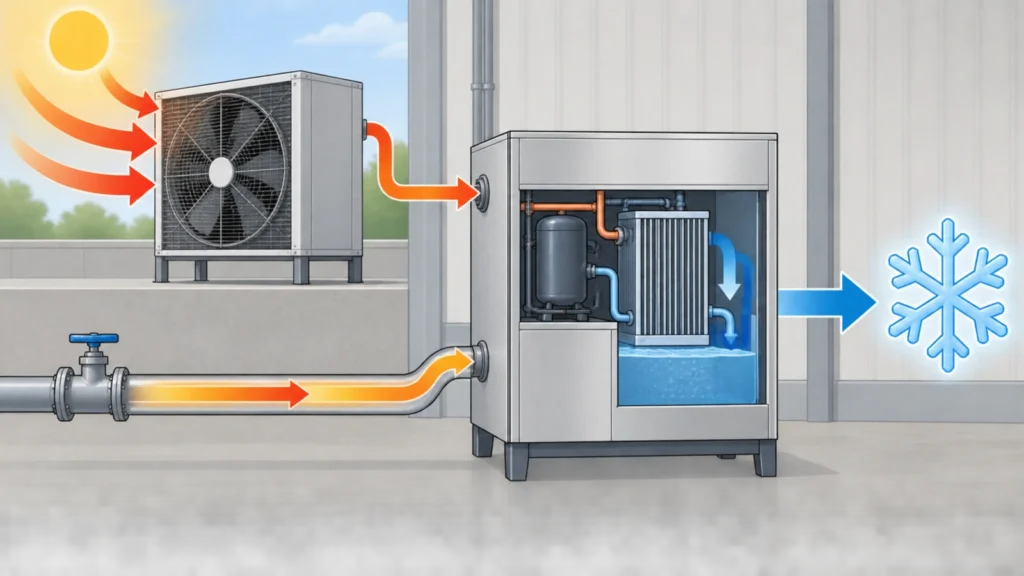
Ambient and Water Temperature
Hot air makes it harder for an air-cooled condenser to release heat. Warm inlet water takes more energy to freeze. Either condition can raise electricity use per ton or reduce daily output. This flake ice project in Senegal illustrates why suppliers need the site’s air and water temperatures.
Ice Type and Production Requirements
Ice types differ in how they freeze, how cold the finished ice is, and how the machine releases it. Start with the form and temperature your process needs. Then compare energy use among machines that can produce that ice.
Condenser and Cooling System
An air-cooled system needs fan power and clear airflow. A water-cooled system may also need a cooling tower and pumps. Include these loads when comparing complete systems, and account for cooling-water costs separately.
Machine Condition and Maintenance
Scale on water-contact surfaces and dirt on a condenser reduce heat transfer. The machine may run longer or produce less ice as a result. Compare meter readings and output with earlier records taken under similar conditions. If kWh/ton rises, inspect the system.
How to Calculate Electricity Use and Cost
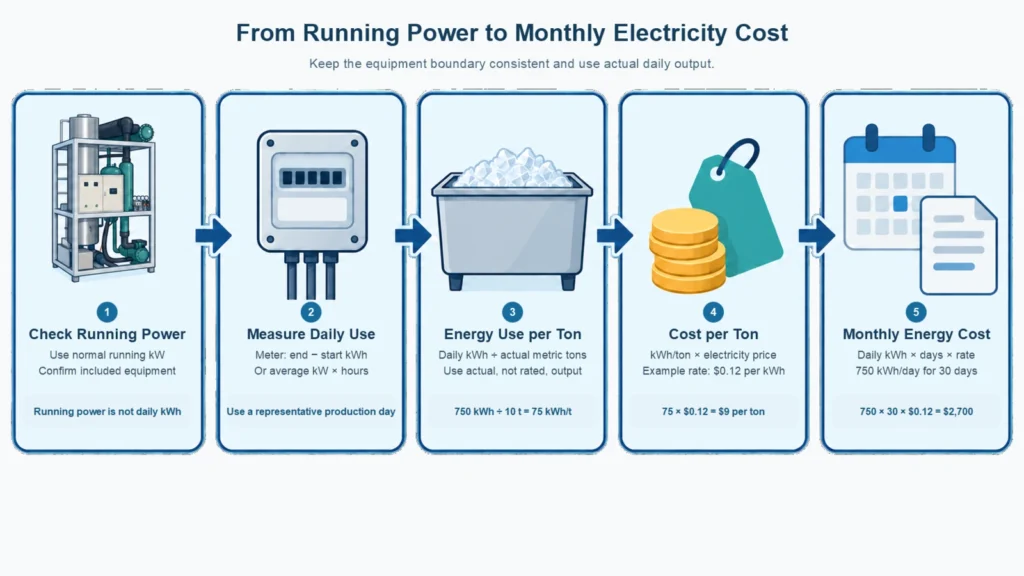
Measure the electricity used by a defined set of equipment and divide it by the ice that equipment actually produces. Use the same equipment boundary throughout the calculation.
Check the Machine’s Running Power
Find the running power in kW on the supplier’s specification and ask which components it includes. Installed or maximum power matters for electrical design, but it can differ from normal running power. For example, this 20 ton tube ice machine lists running power, daily capacity, and rating conditions separately.
Measure Daily Electricity Use
Read a kWh meter at the start and end of a representative production day. The difference is the electricity used. A separate meter for the ice plant keeps other site loads out of the calculation.
If you only have average running power, multiply average kW × operating hours for a preliminary figure. Use a realistic operating schedule.
Work Out Energy Use per Ton
Divide daily electricity use by the actual metric tons of ice produced that day:
kWh per ton = daily electricity use (kWh) ÷ actual ice output (tons)
If the plant uses 750 kWh to make 10 metric tons, it uses 75 kWh/ton. Substituting rated output for actual output would understate the result whenever production falls short of the rating.
Calculate Electricity Cost per Ton
Multiply kWh/ton by your electricity price per kWh. At an illustrative rate of $0.12/kWh, 75 kWh/ton costs $9 per ton in electricity. Water, labor, maintenance, and other electricity-bill charges are separate.
Add Up Monthly Electricity Costs
Multiply daily kWh by operating days and the applicable electricity rate. At 750 kWh per day for 30 days, with electricity priced at $0.12/kWh, the energy charge is $2,700. Time-of-use prices or demand charges may increase the full bill.
How to Choose an Energy-Efficient Industrial Ice Machine
First identify machines that can make the ice you need at your site. Then compare their documented kWh/ton figures using the same conditions and equipment boundary.
Compare Energy Use
Ask each supplier for kWh/ton, expected daily output, and the ambient and inlet-water temperatures used for the rating. Running power alone will not show which machine uses less electricity per ton.
Choose the Right Ice Type
Choose ice that suits the job. Flake ice makes close contact with fish or food, while tube ice is commonly used for edible ice and distribution. Once you know the form and temperature required, compare suitable machines.
Match Capacity to Demand
Size the machine for daily demand and busy periods. Confirm its output at your site temperature, and consider stored ice for short peaks that exceed production capacity.
Check Included Equipment
Ask whether the energy figure includes condenser fans, cooling-tower pumps, water pumps, ice handling, and refrigerated storage. Compare quotations using the equipment you will actually pay to operate.
Compare Operating Costs
Apply the same operating days, electricity tariff, water price, and equipment boundary to each quotation. For flake ice projects, this guide to quotation scope and pricing can help identify equipment and running costs outside the machine price.
Find the Operating Cost for Your Ice Machine Project
When you discuss your project, provide the ice type, daily demand, site temperatures, operating days, and electricity tariff. Ask for the proposed machine’s expected output and running power, along with a list of equipment included in its energy figure.
FAQs
How Do You Determine the Generator Size for an Industrial Ice Machine?
Generator size depends on the loads that may run together, the compressor’s starting requirements, and the site voltage and phase. Give the generator supplier the machine’s electrical specifications and the loads for pumps, fans, storage, and handling equipment. kWh/ton measures energy use; it does not tell you the generator capacity needed at startup.
Does an Industrial Ice Machine Need Three-Phase Power?
It depends on the model and configuration. Some industrial machines, including the linked 20 ton tube ice machine, specify three-phase power. Check the proposed machine’s voltage, frequency, phase, and starting requirements against your site’s supply.
Do Peak Demand Charges Affect an Ice Plant’s Electricity Bill?
They can, if your utility tariff includes them. Energy charges are based on kWh used; demand charges are based on the highest measured kW during the billing period. Check the local tariff and the plant’s expected peak load when calculating the full bill.