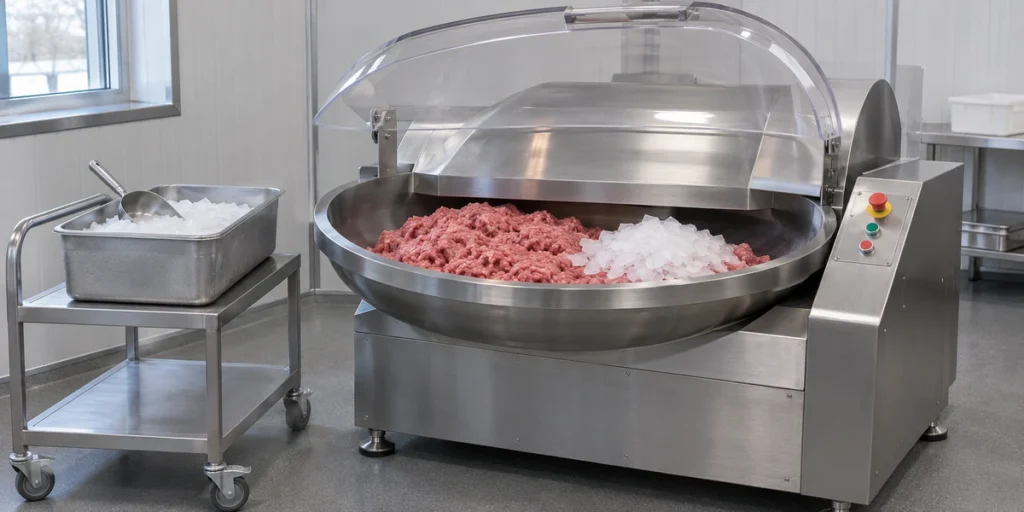
Flake ice absorbs heat during bowl chopping while supplying part of the recipe water. Controlling batter temperature requires a measured ice dose, properly chilled ingredients, and regular temperature checks throughout the chopping cycle.
This guide covers finely chopped meat batters for products such as frankfurters and bologna, where temperature control must support protein extraction and the required texture.
Why Temperature Rises During Bowl Chopping
Rotating knives transfer mechanical energy into the ingredients as they cut and mix. Longer chopping adds more energy, while knife condition, speed, and batch loading affect cutting efficiency. Chopping releases muscle proteins that help hold water and stabilize fat particles. Insufficient chopping leaves this structure underdeveloped; excessive chopping can reduce stability. The process must develop the batter within its temperature limits.
How Flake Ice Helps Control Meat Batter Temperature
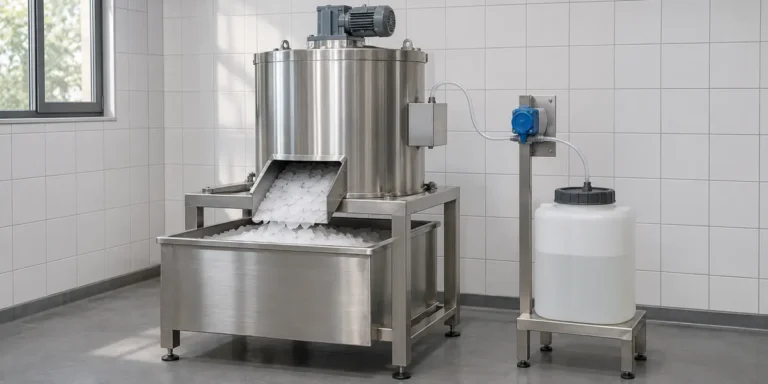
Ice cools the mixture through direct contact with the ingredients. For ingredient use, freshwater flake ice machines need a suitable water supply and hygienic handling from production to dosing.
Heat Absorption
Melting pure ice at approximately 0 degrees Celsius absorbs about 334 kilojoules per kilogram. Liquid water at the same temperature lacks this additional cooling capacity. Ice below 0 degrees Celsius also absorbs heat as it warms toward melting. The 3-ton flake ice machine, for example, lists an ice temperature of approximately minus 5 degrees Celsius. This is the temperature of the ice leaving the machine; the batter’s final temperature depends on the full batch and process.
Even Cooling
Thin flakes spread through the moving batter and distribute cooling as they contact the ingredients. Effective circulation is essential: an overloaded bowl or clumped ice can leave unevenly cooled areas. One low reading cannot establish that the whole batch has reached the same temperature.
Set the Target Temperature for Your Product
Choose a temperature range that suits the product’s structure and processing sequence. Keep this quality target distinct from the food-safety limits established for production.
Key Temperature Factors
Fat type, protein functionality, and formulation affect the chopping endpoint. Changing from pork fat to beef fat, or changing the binder system, may require a different process. For certain emulsion-type sausage processes, FAO recommends that the mixture not exceed approximately 12 to 14 degrees Celsius. A chicken batter study used an endpoint below 10 degrees Celsius as an experimental condition. Neither value is a universal production limit.
Temperature Checkpoints
Check temperatures before loading, after major ingredient additions, and before discharge. Record ingredient temperatures separately from batter readings. Allow for heat added by downstream equipment. If the batter passes through an emulsifying mill after chopping, the cutter discharge target must leave room for that temperature rise.
Validate the Target Range
Compare trial-batch temperature records with cooking yield, fat or water separation, and texture. Use consistent cooking and evaluation methods so the results are comparable. Adopt a range that repeatedly produces acceptable results. Revalidate it when changes to ingredients, batch size, or equipment settings materially affect processing.
Determine Ice and Water Amounts
Establish the recipe water allowance before dividing it between ice and liquid water. Then check whether that split provides enough cooling.
Recipe Water Contribution
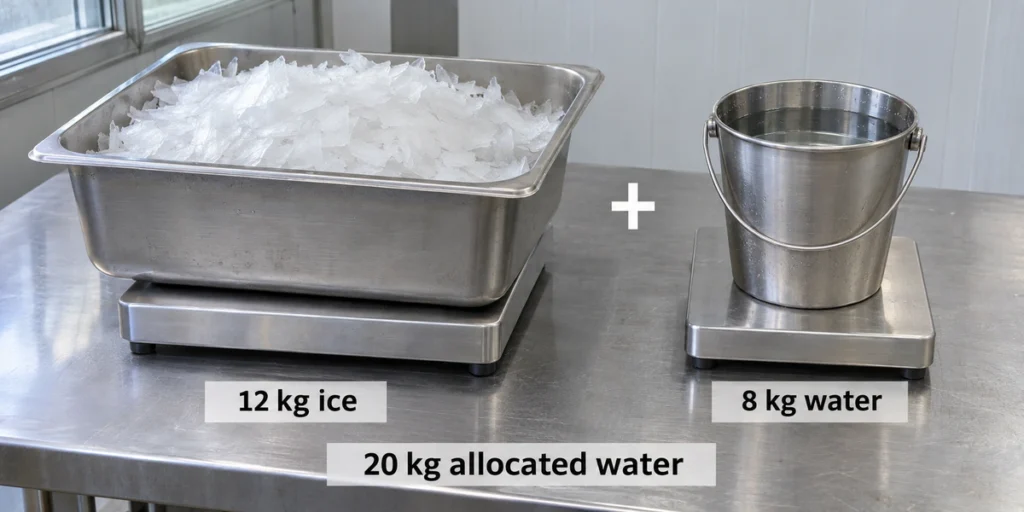
Count ice by weight toward the allocated recipe water. For a hypothetical batch with 20 kilograms assigned to separately added ice and water:
12 kilograms ice plus 8 kilograms liquid water equals 20 kilograms allocated water
Account for water carried by brines, hydrated ingredients, and other additions according to the formulation. The added-water allowance is separate from the product’s total moisture content.
Cooling Requirements
Base the ice fraction on ingredient starting temperatures, expected energy input, and the target endpoint. Frozen ingredients also absorb heat as they thaw. Use a heat balance when ingredient and equipment data are available. Otherwise, start with an established formulation and test different ice-to-water splits while holding these conditions constant:
- Batch size and ingredient starting temperatures.
- Knife settings and total added water.
Record ice weight, addition times, chopping time, and discharge temperature. Compare cooked yield and separation across trials. The extra heat absorbed by melting ice helps explain the cooling effect, but measured batches are needed to establish the final temperature. If the required ice exceeds the recipe water allowance, improve ingredient prechilling or revise the chopping process.
How to Add Flake Ice During Bowl Chopping
The batch procedure should state ingredient weights, ice addition points, temperature checks, and the action to take when a reading falls outside the process limits.
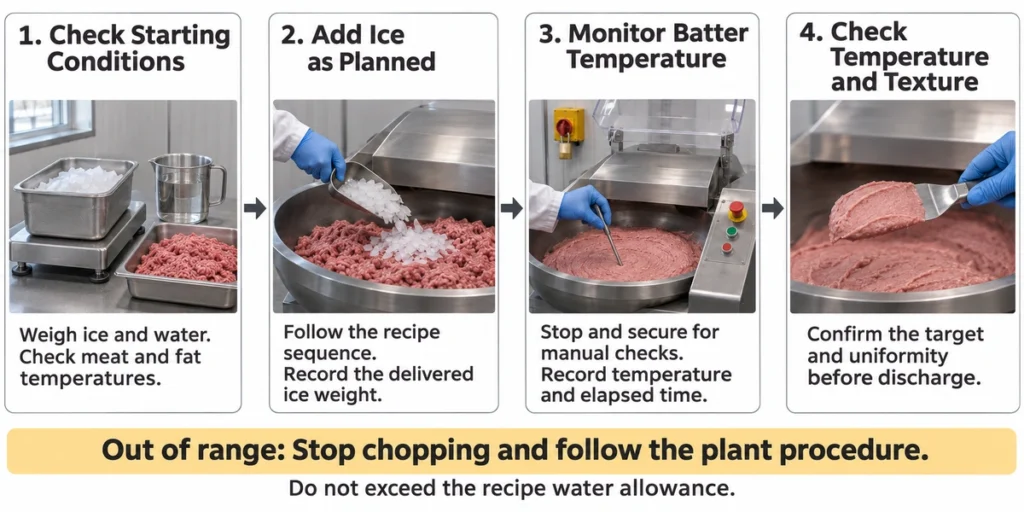
Step 1: Check Temperatures and Water Limits
Weigh the planned ice and liquid water. Check lean meat and fat against their specified starting temperatures, and correct out-of-range conditions before loading. Confirm that scales and thermometers have passed the plant’s scheduled accuracy checks.
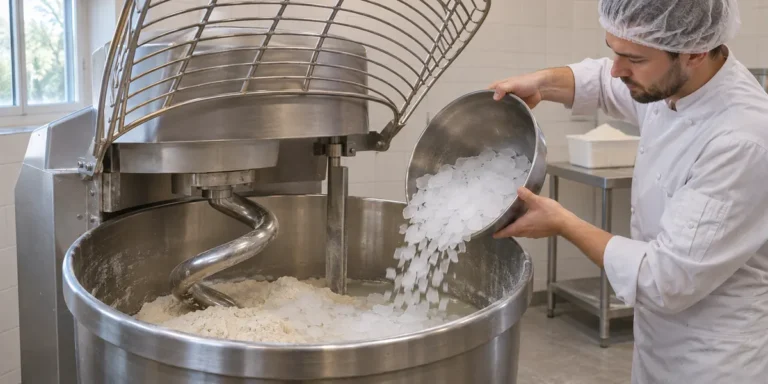
Step 2: Add Ice as Planned
Follow the established recipe sequence. In one two-stage FAO method, lean meat is chopped with salt, specified functional ingredients, and part of the ice or water. Fat and the remaining ingredients follow. The first stage supports protein extraction; later additions complete the mixture and control further warming. This is one method for trial design, not a universal loading order.
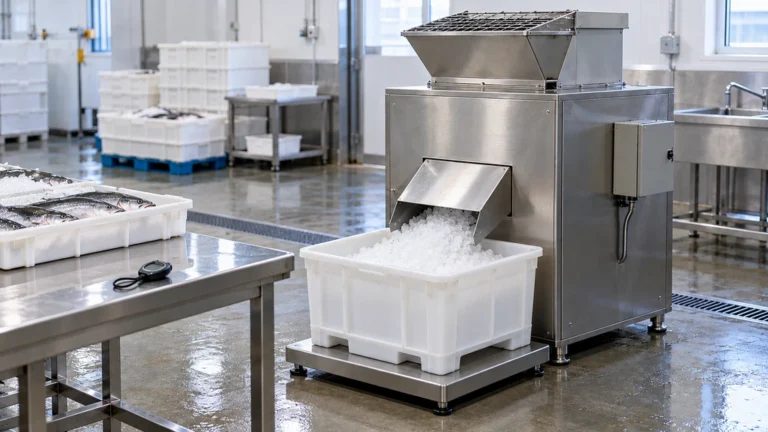
For automated dosing, match storage discharge and ice transfer rates to each addition. Record the delivered weight to identify delayed or incomplete doses.
Step 3: Monitor Batter Temperature
Read the installed product probe at the specified checkpoints. For manual checks, stop and secure the machine according to its operating procedure before inserting a clean probe. Measure the batter without sampling isolated ice or touching the bowl surface. Use the same sampling method each time and record elapsed time alongside temperature to spot unusually fast warming.
Step 4: Check Temperature and Texture
Before discharge, confirm that the batter meets its temperature target and specified fineness and uniformity. These checks must also support the required protein extraction and fat distribution. If the batter reaches its upper temperature limit before the required texture develops, stop chopping and follow the plant’s procedure for an out-of-range batch. Further chopping adds heat, and extra ice may exceed the water allowance.
Troubleshooting Temperature Rise During Bowl Chopping
Compare problem batches with records from acceptable batches before changing settings.
| Observed Problem | Checks to Make | Possible Adjustment |
| Temperature starts too high | Meat, fat, and bowl temperatures | Restore specified starting conditions |
| Batter warms faster than usual | Knife condition, loading, speed, and chopping time | Service knives or restore validated settings |
| Cooling varies between batches | Ice weight, clumping, delivery timing, and probe accuracy | Correct dosing and measurement consistency |
| Temperature remains high after the planned ice dose | Actual ice delivery, starting temperatures, and water allowance | Correct the cause; hold an out-of-range batch |
| Temperature is acceptable, but fat or water separates during cooking | Formulation, protein extraction, and chopping intensity | Run controlled trials before revising the process |
Cooling an overheated batch does not prove that its structure has recovered. Assess it against the plant’s acceptance or rework criteria before further use.
Match Ice Supply to Batch Production
Calculate daily demand from the ice required for all planned batches, including supported storage and handling losses. Check how much ice must be available when several cutters request it at once. Size storage and delivery for those withdrawals, with enough time to replenish inventory. Compare machine ratings at the stated operating conditions. A 24-hour output rating alone does not establish the ice available during a shorter production window or at different air and inlet-water temperatures.
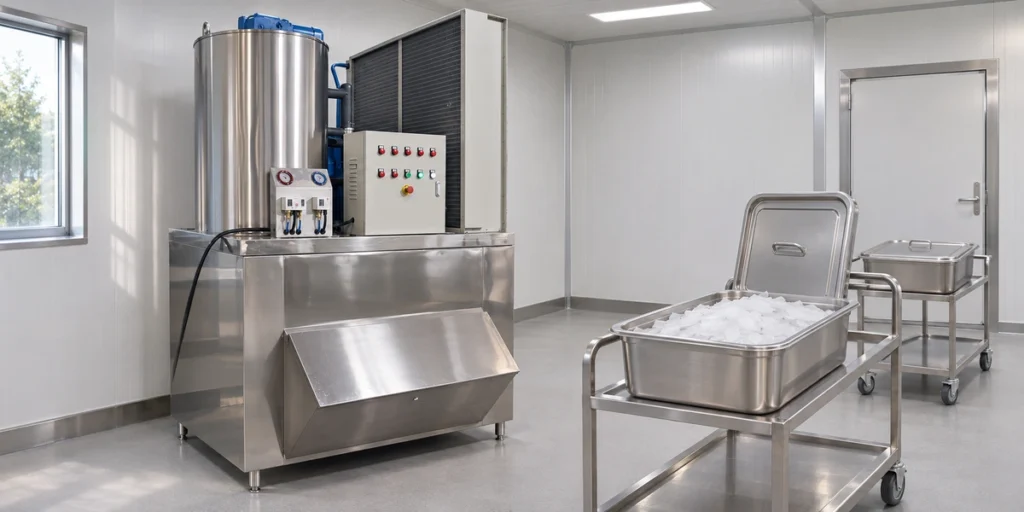
To evaluate a supply configuration, share your batch and site requirements with Mikeicemachine. Include ice per batch, peak dosing times, available production hours, and air and water temperatures.
FAQs
Can Crushed Ice Replace Flake Ice in a Bowl Cutter?
Yes, finely crushed ice can be used when its particle size suits the cutter and the process has been validated. FAO sausage guidance includes finely crushed ice. Uneven pieces may disperse and melt differently from thin flakes. Confirm acceptable particle size with the cutter manufacturer, then verify dosing, temperature development, and finished-product quality.
Does Vacuum Bowl Chopping Still Require Ice?
Vacuum bowl chopping can still require ice because removing air does not eliminate heat from cutting and mixing. Vacuum reduces entrained air. Cold ingredients or separate cooling may reduce the ice requirement, but any change needs verification through the temperature profile and recipe water balance.
What Ice Quality Is Required for Direct Meat Contact?
Ice added to meat must be made from potable water and protected from contamination during production, storage, and transfer. Keep ice-contact surfaces clean, use dedicated handling tools, and follow a documented sanitation procedure. Request material records for equipment contact parts; a manufacturer evaluation checklist can help organize that review.
External Sources
- FAO: Small-Scale Sausage Production: Production of Emulsion-Type Sausages
- FAO: Guidelines for Slaughtering, Meat Cutting and Further Processing
- Evaluation of Quality Characteristics of Chicken Meat Emulsion/Nuggets Prepared by Using Different Equipment
- OpenStax: Phase Change and Latent Heat
- FAO: General Principles of Food Hygiene Training Reference