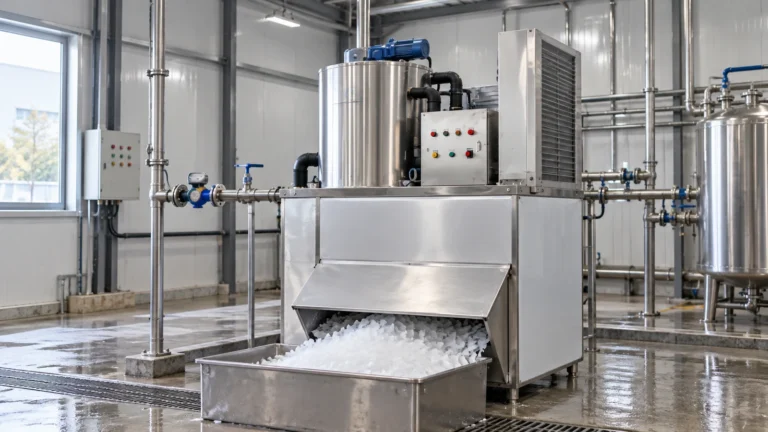
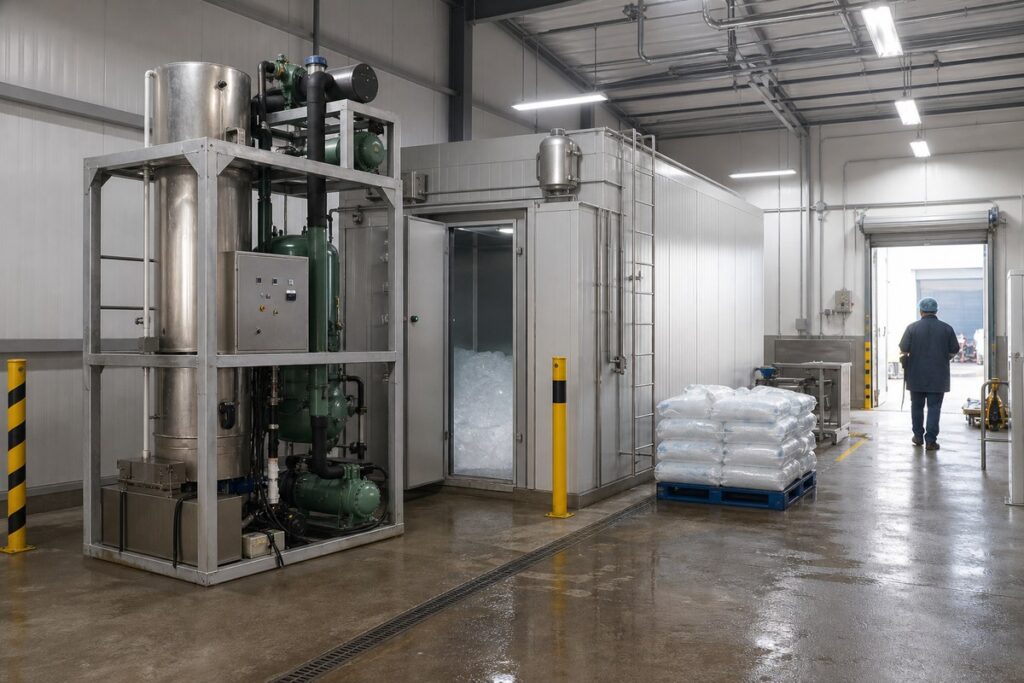
Start an industrial ice business by validating the sales model and site first, then size production, storage, and dispatch as one operating system before you request quotes.
This guide is for a business that will produce and sell ice at industrial scale. It does not prescribe a machine model, permit, or capacity because those choices depend on verified local demand, site conditions, and supplier evidence.
Is the Project Ready for Equipment Selection?
Validate the business before equipment selection because a machine cannot repair a weak sales plan, inaccessible site, or missing utility path.
Define the Sales Offer
Write down who will buy the ice, how it will be supplied, the form customers need, the service area, and the hours when orders must be filled. Separate contracted volume from an estimate. A processor, fishery, distributor, or local retail channel may need different ice forms, packaging, loading methods, and delivery timing.
Do not base capacity on a broad market estimate alone. Start with customer commitments, seasonal patterns, and the consequence of a missed delivery. This turns demand from an assumption into an input a supplier can review.
Verify Site Access
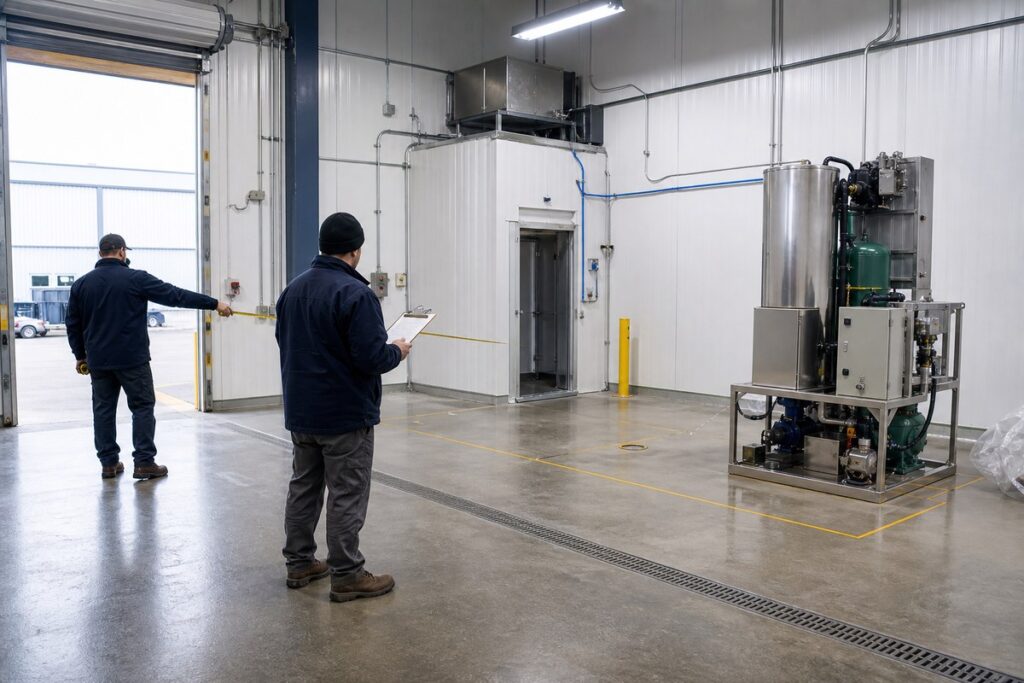
Confirm that the candidate site can receive equipment, allow installation work, and move finished ice from storage to the pickup or loading point. Check doors, routes, floor layout, vehicle access, and room for routine service before accepting a site lease or ordering equipment.
Access is a feasibility decision. It is not an RFQ field to postpone until after the system is chosen.
Confirm Utility Conditions
Ask qualified local parties to confirm the available water, drainage, electrical supply, and any operating constraints at the proposed location. Supplier requirements vary by selected configuration, so record the existing conditions rather than assuming a typical connection will apply.
Keep the supporting documents, site photos, and contact details. These records let the supplier identify missing information without treating a preliminary assumption as an engineering fact.
Check Local Operating Requirements
Contact the appropriate local authorities before making commitments. Requirements can differ by jurisdiction, sales channel, water source, packaging method, facility use, and whether ice is sold as a food product.
Request the applicable checklist and identify the inspections, records, construction conditions, and operating approvals that could affect the opening sequence. This guide does not replace local legal or food-safety advice.
What Production System Fits the Sales Plan?
Choose production from committed demand and the customer use case, then test whether the production window covers the peak period.
Match Ice Type to the Sales Model
Choose an ice form because customers need it to perform a job, not because it looks familiar. Product cooling, seafood handling, retail bagging, and transport can create different handling needs. Use the ice-machine type guide to frame the discussion, then define the buyer’s use, handling, packaging, and acceptable melt or breakage limits before asking a supplier to recommend a system.
Calculate Daily Demand From Customer Commitments
Calculate a daily planning baseline from named customer volume, expected replenishment frequency, and periods when demand changes. Keep projected new accounts separate from committed orders so the first system is not built on untested sales. The industrial capacity-sizing guide can help organize the production discussion, but the supplier still needs the reader’s own demand and peak schedule.
Test Peak Demand Against Production Hours
Test peak demand against the hours available to make, store, pack, and load ice. The daily total can appear adequate while the operation still falls behind when orders cluster into a short collection or delivery window.
List the busiest dispatch period, planned production hours, cleaning or changeover time, and the buffer required before loading begins. This identifies whether the issue is production rate, storage, dispatch flow, or customer scheduling.
Can Storage and Dispatch Support the Production Plan?
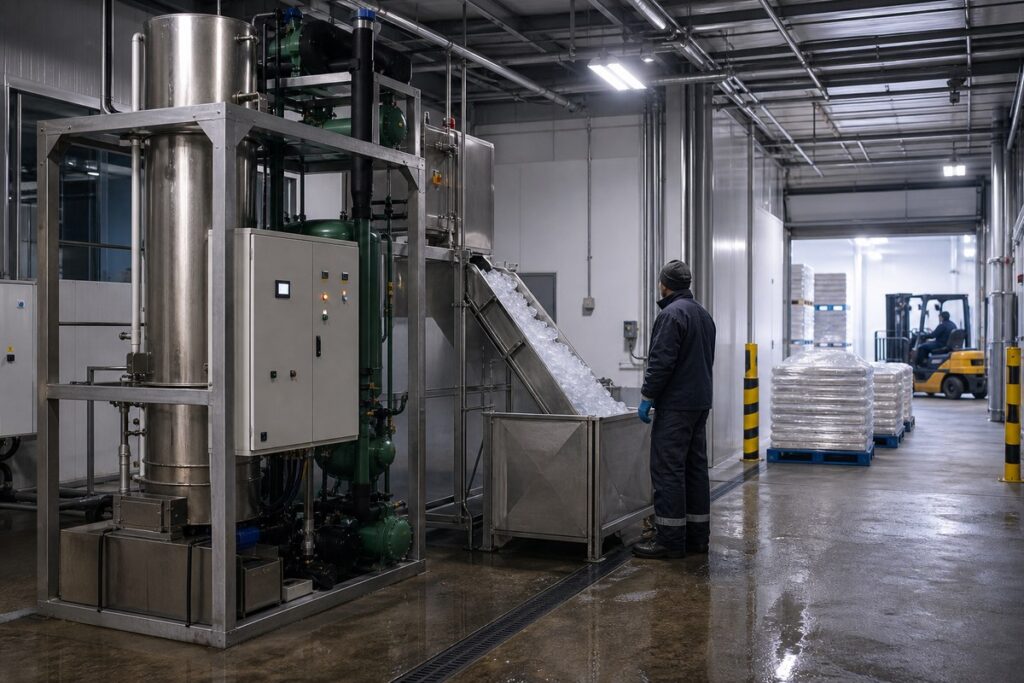
Storage should bridge the time between production and dispatch, while the handling route should protect the product and keep loading moving.
Size Usable Storage for Dispatch Timing
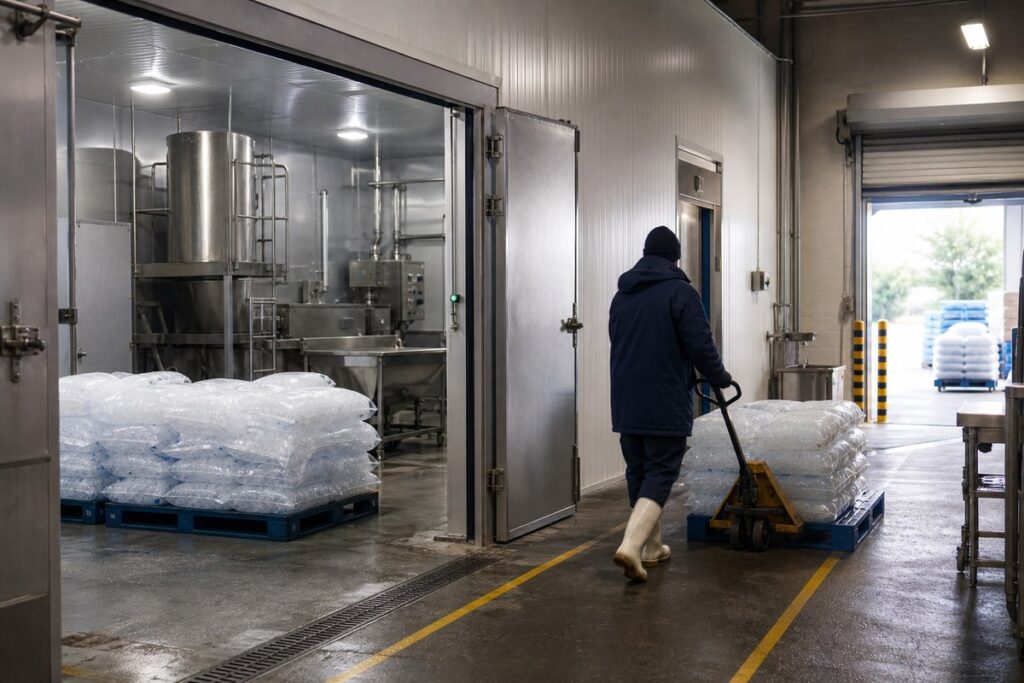
Size usable storage around the peak dispatch window, the production schedule, and how long ice waits before pickup or loading. Nameplate storage is not the same as usable buffer if access, packaging, staging, or product rotation reduces the amount that can be moved when needed.
Confirm how finished ice enters storage, how it is identified or rotated, and how it leaves for each sales channel.
Plan Packing and Loading Flow
Map the path from production to packing, storage, staging, and vehicle or customer handoff. The supporting equipment category helps identify the product-family context, but the actual handling scope must be defined in the RFQ.
| Flow point | Question to answer before purchase | Risk if unresolved |
|---|---|---|
| Packing | How will finished ice be packed and checked? | Production can wait on packaging |
| Storage | Where will prepared orders stage? | Usable buffer may be smaller than planned |
| Loading | Who loads, when, and through which route? | Peak dispatch can exceed handling capacity |
What Should the RFQ Include?
An RFQ becomes comparable when it gives each supplier the same verified demand, site, and scope inputs.
Submit Demand Data
Provide the daily demand baseline, peak pattern, sales channels, required ice form, packaging method, dispatch schedule, and expected growth assumptions. Label commitments, estimates, and optional future demand separately. This is about transmitting the completed analysis, not calculating it again.
Submit Confirmed Site Data
Provide the confirmed site location, layout information, access constraints, available utility facts, drainage information, local contact details, and photographs or drawings that accurately describe the site. State what is confirmed and what still needs verification. This is about communicating evidence to a supplier, not repeating feasibility checks.
Define the Requested System Boundary
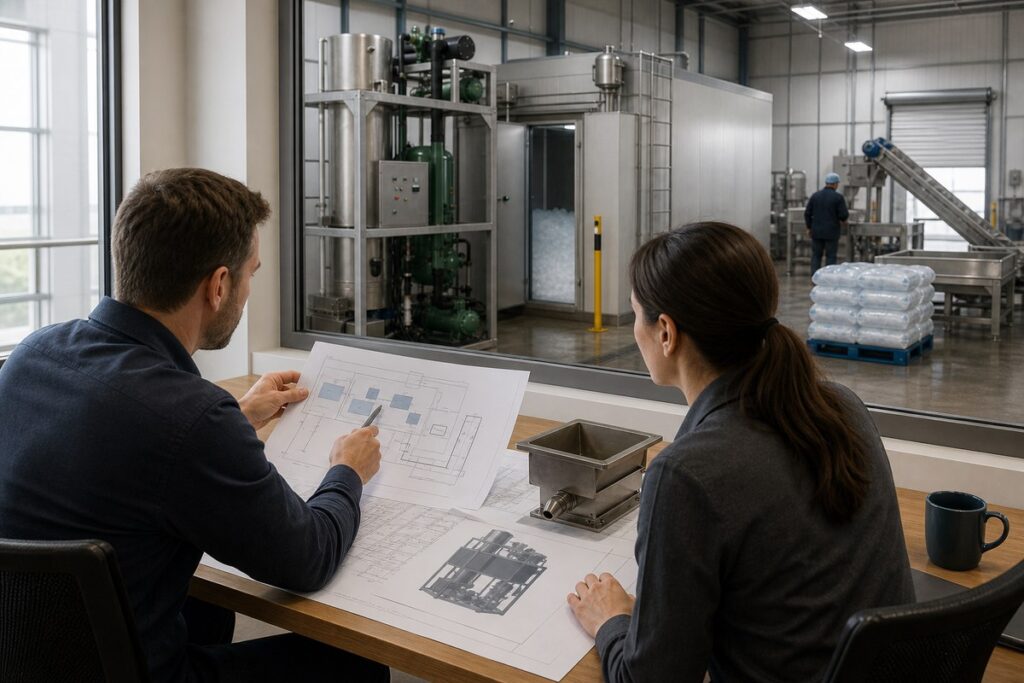
State whether the RFQ should address production equipment only or a broader system that includes storage, packaging interfaces, handling, controls, installation support, commissioning, and documentation. The complete ice-plant solution page is a useful product-family destination when a buyer needs this system-level context, but it does not replace a project-specific scope statement.
How Should You Compare Complete Ice Plant Quotes?
Compare offers by the operating system and its documented conditions, not by a headline capacity or equipment price alone.
Compare Quoted System Boundaries
Normalize each quote into the same categories: production, storage, packing or handling interfaces, utilities, installation responsibilities, controls, commissioning, training, documentation, spare-parts assumptions, and exclusions. The industrial ice-machine cost guide can frame cost questions, but each quote still needs a matched scope before price comparisons are meaningful.
Confirm Evidence Before Award
Request drawings, stated operating conditions, an equipment list, a scope statement, testing approach, commercial terms, and support terms. If a capacity or compatibility statement matters to the buying decision, ask which conditions and configuration the supplier used. Review the supplier’s Mikeicemachine project information alongside the proposed documents, then resolve material gaps before committing.
Frequently Asked Questions
Can I Start With Customer Pickup and Add Delivery Later?
Yes, if pickup can support the first customer commitments and the business does not promise delivery before it has the vehicles, route process, staffing, and product handoff controls to provide it. Plan the layout so delivery can be added without disrupting storage or loading, but validate the first channel on its own terms.
Can I Start With One Ice Machine?
Yes, but a single production line creates a continuity risk that must be disclosed in the sales plan. Before accepting supply commitments, decide how customers will be served during planned maintenance, a delayed part, or an unexpected stop.
What Support and Local Service Should I Confirm Before Ordering?
Confirm who will handle installation questions, commissioning, operator training, fault escalation, routine service, spare-parts ordering, and warranty communication in the project location. Ask for the actual contact path and responsibility boundaries rather than relying on a general statement that service is available.
How Should an Ice Business Plan for a Production Stop?
Plan the response before the first sale: name the person who receives the alert, define the supplier or technician escalation path, identify any alternate supply option, and decide which customers receive priority. Do not promise backup capacity that has not been arranged.
Can an Ice Plant Be Expanded in Phases?
Yes, when the first project design preserves a practical path for later capacity, storage, utilities, space, and dispatch changes. Ask suppliers to identify what the initial scope allows, what a later phase would require, and which assumptions would need to remain true.