Solid tube ice is often chosen for its handling strength and longer-lasting pieces. Hollow tube ice has more exposed surface area, which can support faster initial cooling when liquid reaches the center opening.
Neither type is automatically better. Performance depends on the piece dimensions, wall thickness, ice temperature, operating conditions, and amount of ice used. This article compares the two structures and explains what to check before choosing a tube ice machine.
What Is Solid Tube Ice?
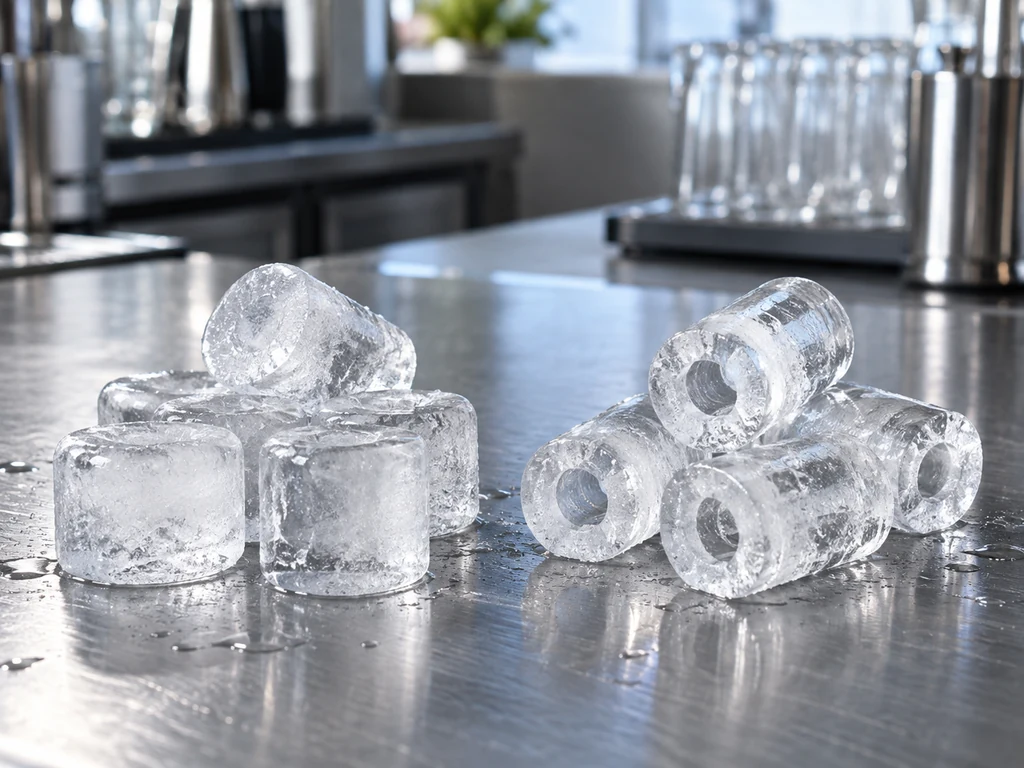
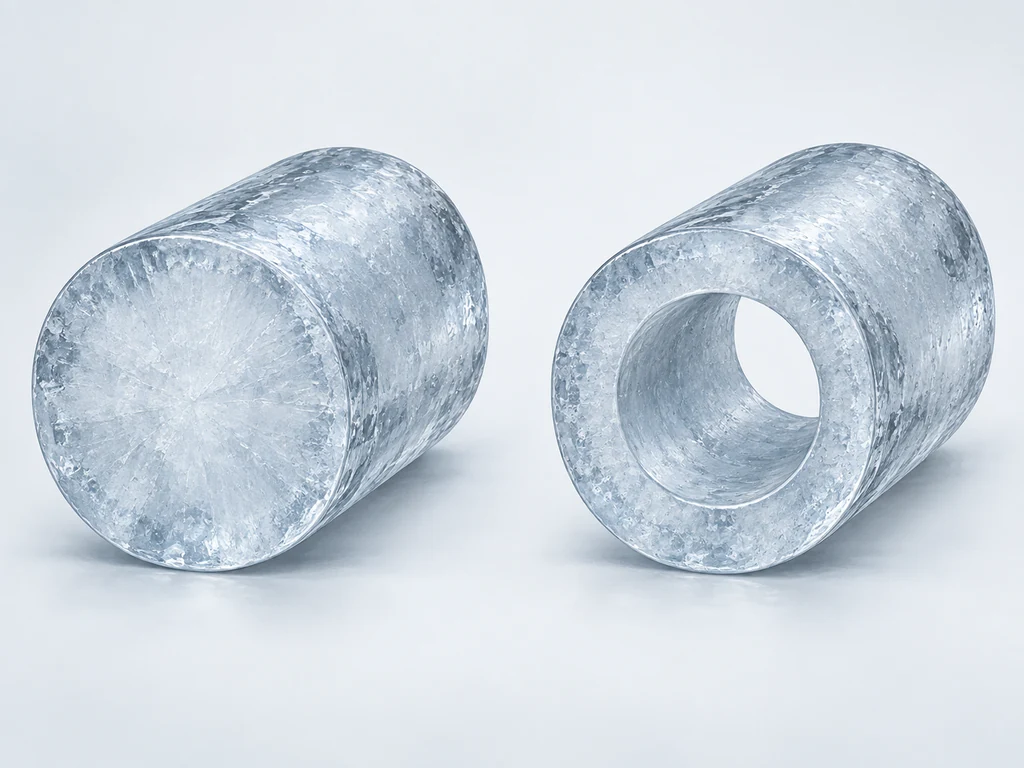
Solid tube ice is cylindrical ice without a continuous opening through the center. Depending on the freezing tube and cutting system, each piece may resemble a short rod, rounded cylinder, or thick capsule.A solid piece contains more ice than a hollow piece with the same outer diameter and length. It is therefore heavier and may be less prone to breakage during discharge, storage, and transport.
When comparing tube ice machines, check the available diameter, cut length, and center structure. The term “solid tube ice” does not refer to one standard piece size.
What Is Hollow Tube Ice?
Hollow tube ice is cylindrical, with a hole running fully or partly through the center. It forms as water freezes against the inner wall of a vertical tube while the center remains unfrozen. The opening increases surface area and may improve heat transfer. Since performance varies with hole size, wall thickness, ice temperature, and operating conditions, buyers should specify the required dimensions.
Key Differences Between Solid and Hollow Tube Ice
The center structure changes the weight and distribution of ice within each piece. It can also affect heat transfer, mechanical strength, and production settings. It does not determine whether the ice is clean or transparent.
Structure and Piece Weight
A solid piece is heavier than a hollow piece with the same outer diameter and length because its center also contains ice. It also has less surface area relative to its mass.For this reason, piece count alone is not a useful way to compare cooling capacity. Packing and dosing calculations should use total ice mass, piece dimensions, and expected breakage.
Cooling and Melting Performance
Hollow ice may cool a beverage or process fluid faster because the liquid can contact the outer surface and the center opening. Its thinner wall also reduces the distance heat must travel through the ice.
If both pieces have the same outer diameter, length, initial temperature, and exposure conditions, the solid piece will usually remain longer because it contains more ice. Equal-mass comparisons are less straightforward. The number of pieces, exposed surface area, liquid movement, and contact conditions may all differ.
Equal masses of solid and hollow ice at the same initial temperature absorb approximately the same total amount of heat as they warm and melt. Shape primarily affects how quickly heat is transferred.

Appearance and Ice Quality
Solid pieces look dense and substantial. Hollow pieces have the familiar ring or tube profile commonly seen in drinks. Neither shape guarantees clear ice.
Clarity is influenced by water composition, filtration, dissolved gases, freezing conditions, and machine operation. Ice intended for food or beverages should be made from safe water and handled under suitable hygiene controls.
In the United States, packaged ice is regulated as food. Businesses in other markets should check the requirements of the relevant local authority. Clear ice may look clean, but appearance does not confirm microbiological safety.
Storage and Transportation
Solid pieces may withstand handling better than thin-walled hollow pieces of similar dimensions. Actual breakage still depends on the piece size, internal defects, ice temperature, conveyor drops, bag compression, and storage conditions.
Thin-walled hollow ice may crack when exposed to large temperature changes or pressure from stacked bags. Handling trials provide a better estimate of real losses because the machine settings, bag size, storage temperature, and transport time can have more influence than the center opening itself.
Machine Requirements and Production Cost
Producing solid ice requires the freezing front to extend farther toward the center. Depending on the machine, this may involve a longer freezing cycle, different settings, or a configuration designed for solid pieces.
Ice shape alone does not determine production capacity or energy use. Compressor capacity, evaporator design, refrigerant, condenser conditions, inlet-water temperature, harvest method, and control settings also affect performance.
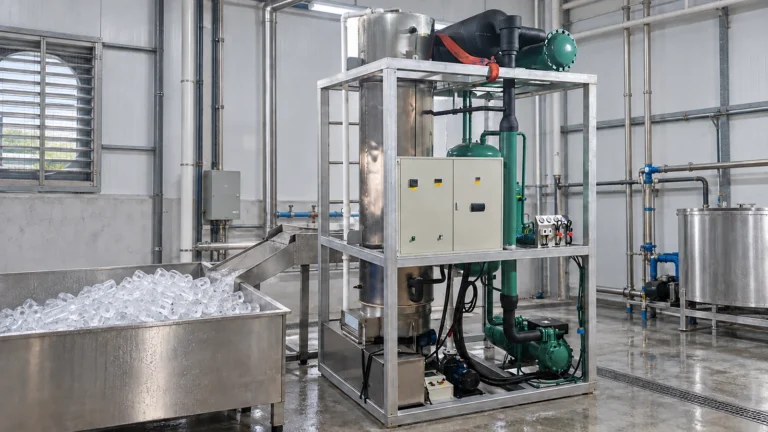
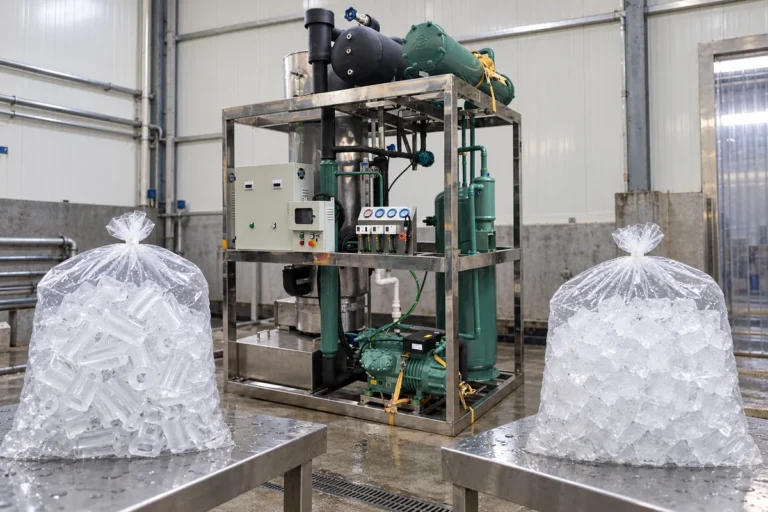
For example, our 10-ton tube ice machine can be configured for solid or hollow ice. The required output, ice dimensions, and site conditions should be confirmed before the final configuration is selected.
Which Tube Ice Structure Fits Each Application?
Solid tube ice is generally suited to applications that value piece strength and longer retention. Hollow tube ice works well where rapid surface contact is useful. Many businesses can use either type once the correct dimensions, hygiene controls, and handling system are in place.
Beverage Service
Hollow tube ice is commonly used in drinks. Liquid enters the center opening and contacts more of the ice surface, which can provide faster initial cooling. How the ice feels when chewed depends on the piece size, wall thickness, and serving temperature. The hollow shape alone does not determine whether it will be easy to chew.
Solid tube ice may be preferable when the pieces need to stay visible longer or resist breakage during stirring and dispensing. Cup size, beverage volume, required cooling time, and customer preference should also influence the choice.
Retail and Packaged Ice
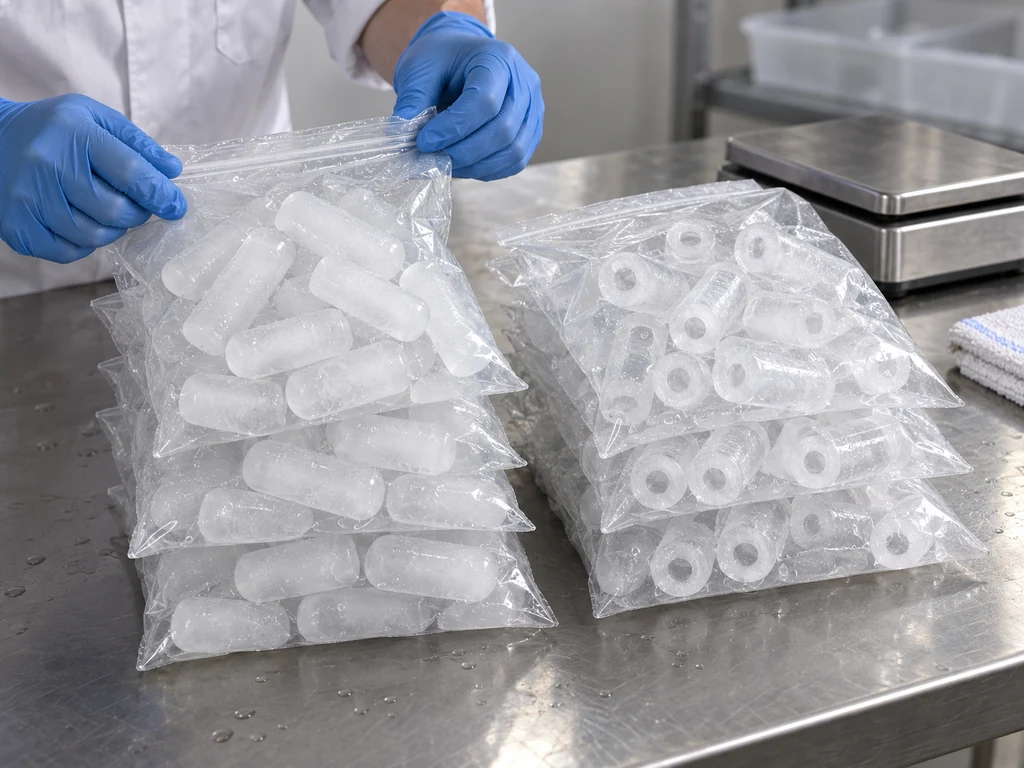
Solid tube ice can work well for retail products that require stronger pieces for transport and slower melting. Since each piece is heavier, a bag may contain fewer pieces at the same total weight. Hollow tube ice may suit markets where customers are familiar with its shape or use the ice mainly in drinks.
Before choosing either type, pack samples at the intended bag weight. Check how the ice passes through the filling equipment, whether pieces obstruct the seal, how well the bags stack, and how much ice breaks or melts during distribution.
Food Preservation and Cold Chain Transport
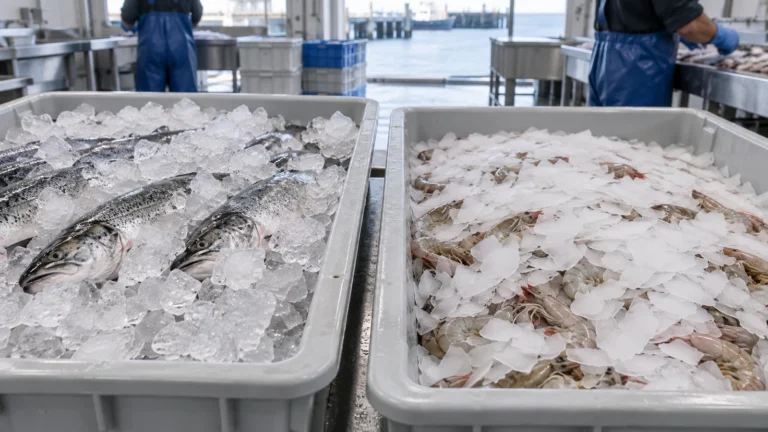
Solid tube ice may remain intact during loading and transport. However, tube ice is not always suitable for direct food cooling. Compared with crushed or flake ice, large pieces have less contact area and may leave warm spaces around irregularly shaped products.
Hollow pieces may cool faster where they touch the product, while solid pieces may remain intact longer. Test both types using the actual product and container, planned ice-to-product ratio, trip duration, drainage setup, and sanitation procedure.
Industrial Cooling
Hollow tube ice can provide faster heat exchange when a compatible process fluid circulates through and around the pieces. Solid tube ice may work better in batch systems that require durable pieces and a slower release of cooling capacity.
Calculate the required ice mass from the process heat load, then test whether the proposed ice geometry can remove that heat within the available operating time.
How to Choose Between Solid and Hollow Tube Ice
Base the decision on the required cooling speed, service life, handling strength, and local customer preference. Samples can demonstrate shape and appearance, but production cost and full-scale operating performance require separate evaluation.
Define Your Performance Requirements
Specify the required ice mass, outer diameter, cut length, permitted center-hole size, initial ice temperature, and intended use. Also determine how long the pieces must remain intact and whether the application favors faster cooling or slower melting.
For packaged ice, include the bag weight and expected handling conditions. For process cooling, provide the material being cooled, its starting and target temperatures, the batch size, available cooling time, and whether the ice will contact the product directly.
Compare Machine Capacity and Total Cost
Compare quotations using the same ambient temperature, inlet-water temperature, ice dimensions, daily output basis, and operating schedule. Confirm that the quoted capacity applies to the requested solid or hollow structure.
The total investment may cover the ice machine, condenser, water-treatment system, storage, transfer and packing equipment, installation, utilities, and expected operating demand. The guide to matching tube ice production, storage, and packing explains how downstream equipment can affect an ice plant’s usable daily output.
Test Samples Under the Same Conditions
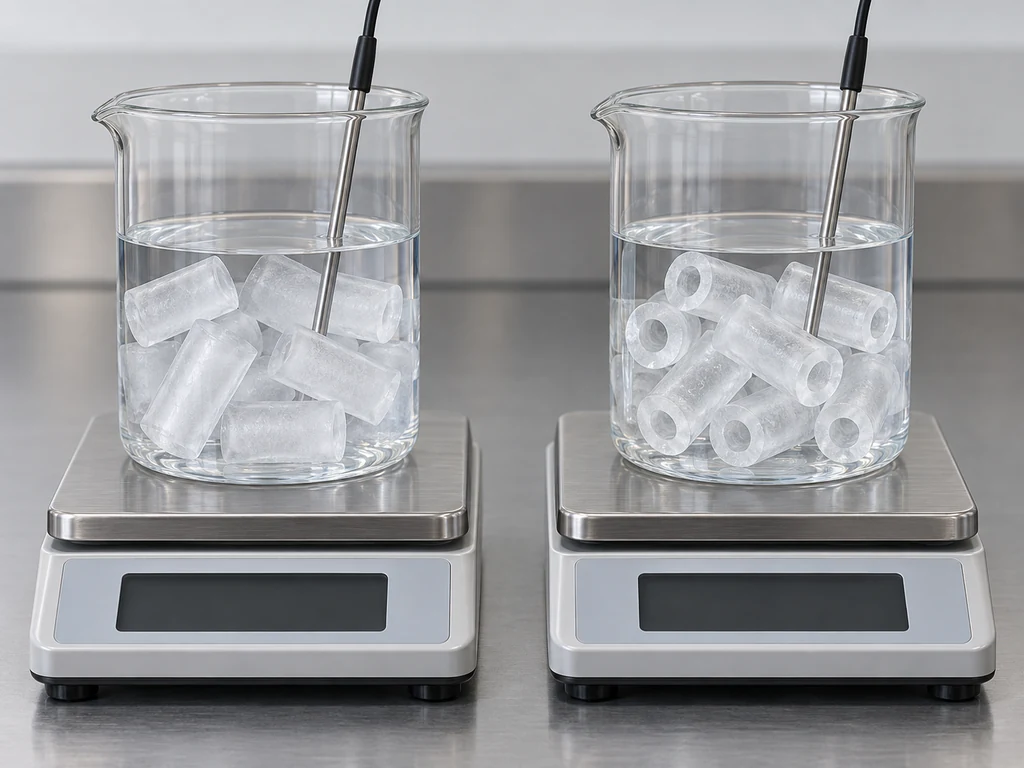
Test equal masses of ice at the same initial temperature. Use identical containers, product or liquid loads, ambient conditions, and measurement intervals. Record the cooling time, final product temperature, remaining ice mass, proportion of broken pieces, and any blockages in the dispensing or packing equipment. The results describe performance under the test conditions. Confirm full-scale machine capacity and annual operating cost separately.
Confirm the Final Machine Configuration
Ask the supplier to include the agreed ice structure, outer diameter, cut length, capacity basis, refrigerant, condenser type, power supply, and design conditions in the quotation.The supplier should also state whether switching between solid and hollow ice requires different parts, controls, cycle settings, or output ratings.Include the method for measuring output and finished ice dimensions in the acceptance procedure. A general model number is not enough to define the required performance.
Find the Right Tube Ice Solution for Your Business
Share your required ice dimensions, daily output, application, site temperatures, and storage or packing needs when you request a tube ice machine quote. We can then confirm the proposed solid or hollow tube ice configuration and the production conditions used for the quotation.