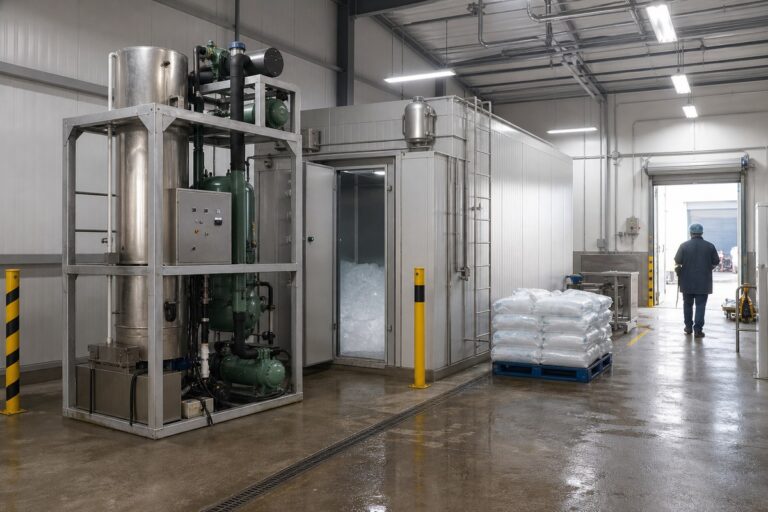
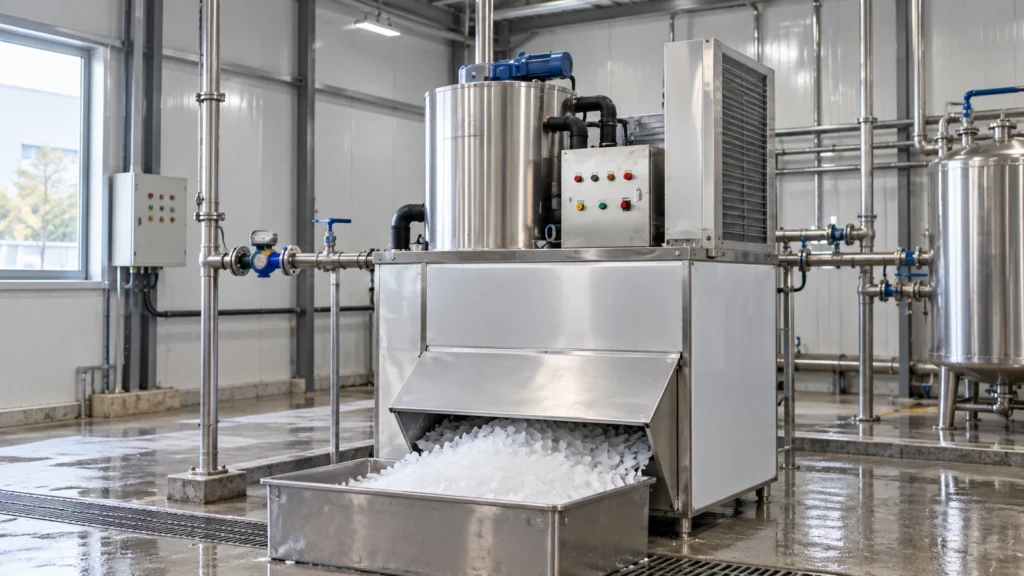
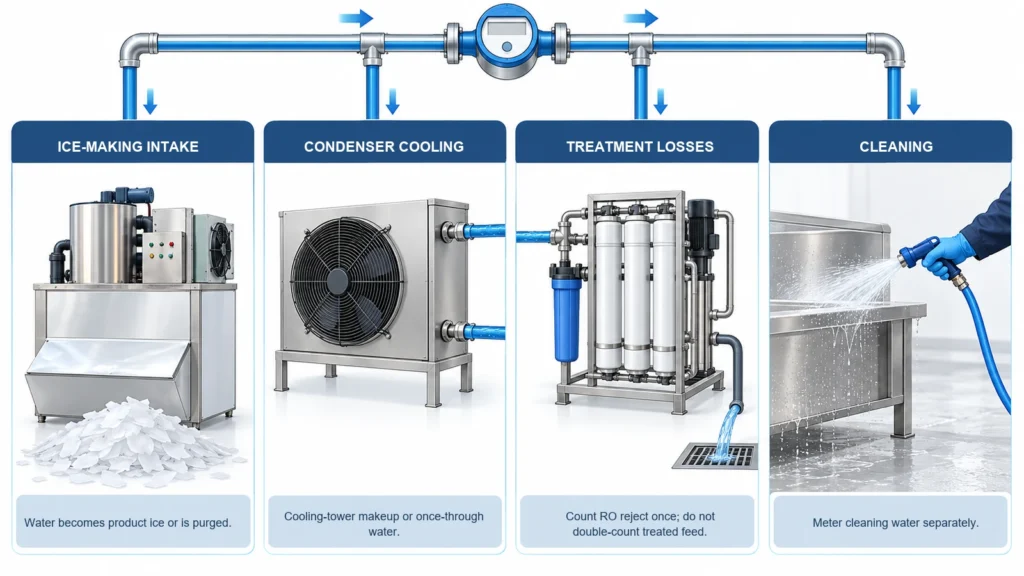
An industrial ice machine needs about 1 cubic meter (m³) of water to make 1 metric ton of ice, plus any water lost during production. A complete plant may also use water for treatment, condenser cooling, and cleaning. Cooling can make the biggest difference to the plant’s total demand.
Start with the amount of ice you need each day. Then check where water enters and leaves the ice-making, treatment, and cooling systems.
Quick Guide to Industrial Ice Machine Water Use
The table covers water supplied to the ice maker. It excludes condenser cooling, treatment losses, and cleaning. One metric ton of finished ice contains approximately 1 m³ of water, but the machine may draw more if some feed water goes to drain. Use the selected model’s data to account for that difference.
| Ice Production | Theoretical Product Water | Ice-Making Water Intake |
| 1 metric ton/day | About 1 m³/day | More than 1 m³/day; check model-specific losses |
| 5 metric tons/day | About 5 m³/day | More than 5 m³/day; check model-specific losses |
| 10 metric tons/day | About 10 m³/day | More than 10 m³/day; check model-specific losses |
These figures are a starting point for sizing the supply, not a total for the plant. The FAO notes that ice-making requires slightly more water than the finished ice contains. Condenser demand depends on the cooling arrangement.
What Affects Ice Machine Water Use?
The finished ice accounts for only part of the water a plant may draw. Check the following uses separately when comparing machines.
Cooling System
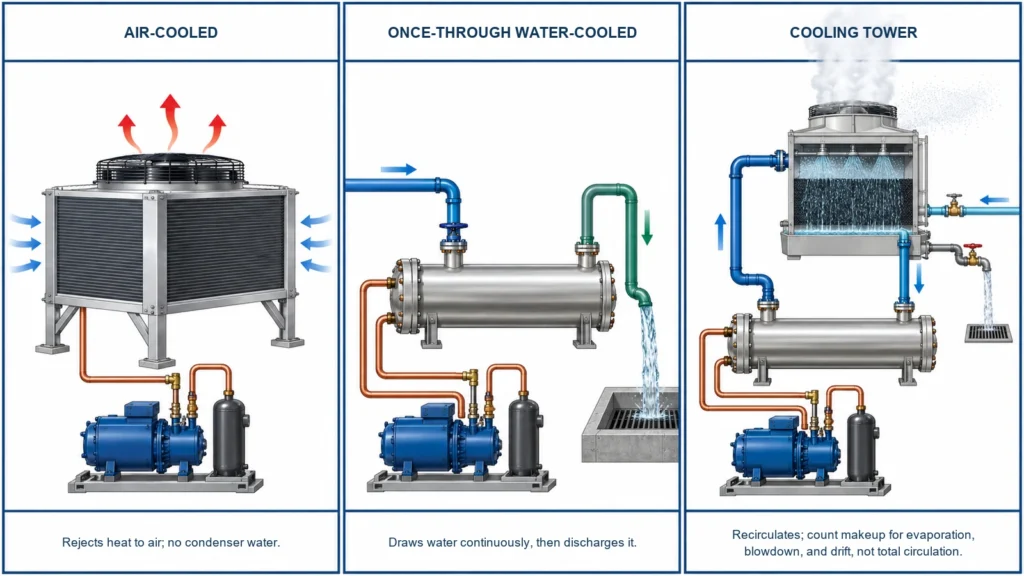
An air-cooled condenser rejects heat to air and needs no condenser water. A once-through water-cooled condenser draws water continuously and discharges it after use. A cooling tower recirculates water but needs makeup to replace evaporation, blowdown, and drift. Use the makeup figure, not the total circulation flow, when calculating fresh-water demand.
Ice Type and Machine Design
Ice contains roughly the same amount of water per unit of finished mass, whatever its shape. Machine designs differ in how they circulate water, purge it, and release the ice. A tube machine and a flake machine may therefore draw different amounts of water to produce the same daily output. The flake ice machine range covers several capacities and cooling configurations; compare water intake using the same measurement boundary.
Water Quality and Treatment
Minerals can build up in recirculated water, requiring some water to be purged. Hard water may also leave scale on wetted surfaces. If the plant uses reverse osmosis, count the water rejected during treatment. The treated-water volume alone does not show how much raw water the plant draws.
Operating Conditions and Maintenance
Inlet water and site temperatures affect how much ice the machine can produce. Compare water use against actual ice output under those conditions. Leaking valves, overflowing tanks, and excessive purging can raise water intake without raising production. During tube ice machine cleaning and maintenance, record inlet readings and check for leaks, scale, and unusual drainage.
How to Calculate Daily Water Use?
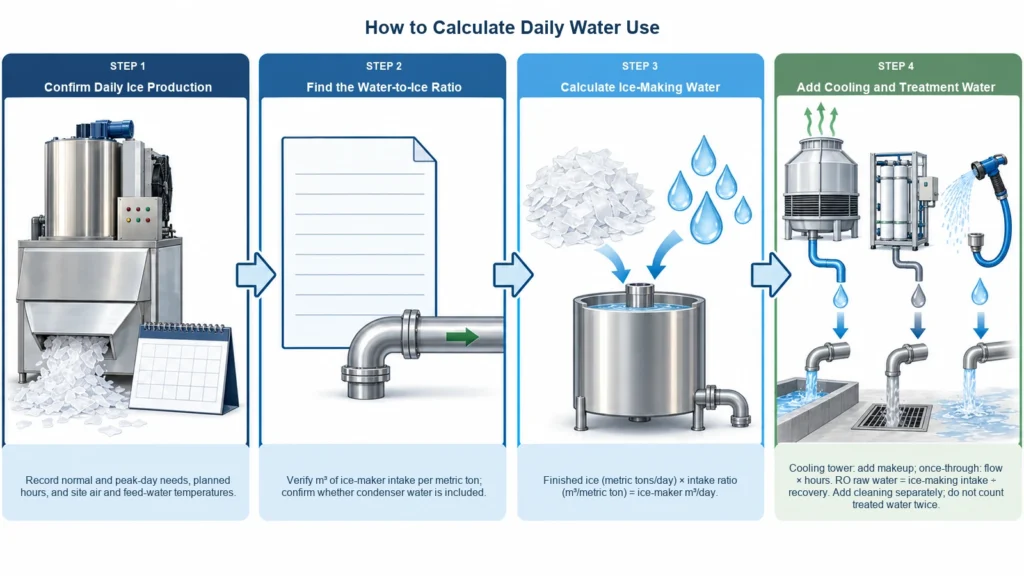
Use the machine’s documented water-to-ice ratio and the amount of ice you expect to produce. Add treatment and cooling water according to where each measurement is taken. Keep the units in metric tons and cubic meters.
Confirm Daily Ice Production
Record the ice needed on a normal day and a peak day. Do not assume a machine rated at 10 tons per 24 hours will make 10 tons every day. Note the planned operating hours and ask for output at your site’s air and feed-water temperatures.
Find the Water-to-Ice Ratio
Ask the supplier how many cubic meters of water enter the ice maker per metric ton of finished ice. The figure should include any purge water and state the test conditions. If the supplier provides daily intake and output instead, divide intake in m³ by output in metric tons. Confirm whether condenser water is included so it can be accounted for separately.
Calculate Ice-Making Water
Multiply daily finished ice production, in metric tons, by the verified ice-making ratio, in m³ per metric ton. This gives the ice maker’s daily intake. The difference between that figure and the theoretical product-water volume is water that does not become finished ice.
Add Cooling and Treatment Water
For a cooling tower, add its daily makeup water rather than its total recirculation flow. For once-through cooling, multiply the condenser’s supply flow by its operating hours. If reverse osmosis supplies the ice maker, calculate raw-water intake by dividing ice-making intake by the verified RO recovery rate. Then add condenser water and any separately metered cleaning water. Do not count the treated ice-making water twice.
How to Choose a Water-Efficient Ice Machine?
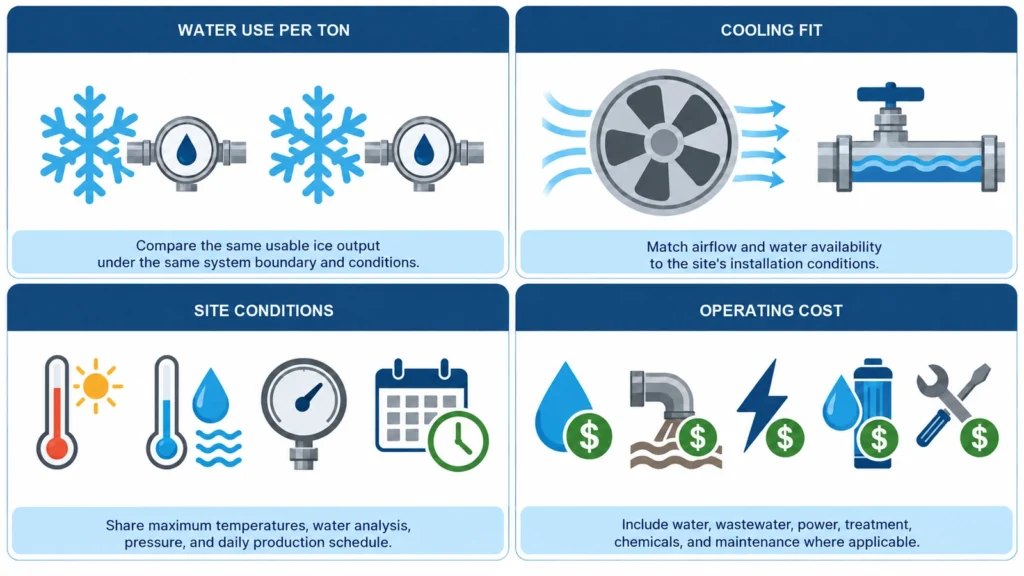
Compare water use per ton of usable ice under the same operating conditions. The machine also needs to meet your site’s ventilation, power, and production requirements.
Compare Water Use per Ton
Request separate figures for ice-making intake and condenser makeup or discharge, each in m³ per metric ton of finished ice. Ask whether the figures include treatment reject and cleaning. Suppliers’ totals are only comparable when they cover the same parts of the system.
Match the Cooling System to Your Site
Air cooling suits sites with limited water and enough clean airflow. Water cooling may suit a hot or confined installation with a reliable condenser-water system. If you’re considering a 10-ton flake ice machine, compare the water requirements of both cooling options under your site conditions.
Check Local Operating Conditions
Give suppliers the maximum ambient and feed-water temperatures, a water analysis, available pressure, and your daily production schedule. Ask them to state output and utility use at those conditions. For fishery plants, this capacity and utility planning guide discusses how the water source and site conditions affect equipment planning.
Compare Operating Costs
Use the same system boundary when calculating water purchases and wastewater charges for each option. Include electricity, treatment, chemicals, and maintenance where applicable. A cooling method that uses less water may cost more to run if it uses more power.
To check water and utility requirements for your plant, send your project details: ice type, daily output, water source, ambient temperature, and preferred cooling method.
Frequently Asked Questions
Does an Industrial Ice Plant Need a Water Storage Tank?
A tank is useful if the incoming supply cannot maintain the required flow and pressure, or if brief interruptions are expected. Size it for peak draw and the required buffer time. Protect stored water according to how the ice will be used.
Will a Temporary Water Supply Interruption Damage the Ice Machine?
Not necessarily. A machine that detects low water and shuts down correctly may tolerate a brief interruption. Running without enough water can affect pumps or ice production. Check the model’s low-water protection and follow its restart procedure once the supply returns.
Where Should Ice Machine Drain Water Be Discharged?
Send purge, cleaning, and condenser discharge to drains approved for those streams under local plumbing and wastewater rules. The drain layout must also prevent contamination of the ice-making supply and finished ice. Cooling-tower blowdown may need different handling from routine meltwater.
Can Seawater Be Used to Produce Flake Ice?
Yes, if the flake ice machine is designed for seawater. Its wetted materials and cooling arrangement must suit marine service. Do not assume a freshwater machine is compatible. Seawater used for fish-contact ice must also meet the applicable water-quality requirements.
Is Industrial Ice Suitable for Food Processing?
Only if the source water, ice-contact equipment, storage, and handling meet the relevant hygiene requirements. Capacity and ice shape alone do not establish food suitability. Check the intended use and local rules before specifying treatment and sanitation.