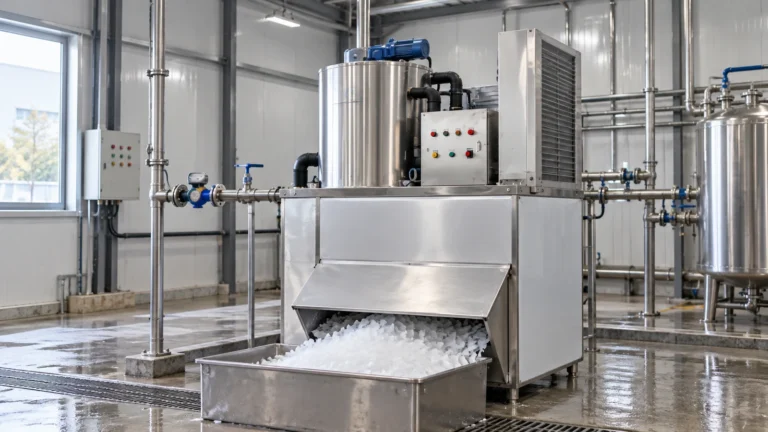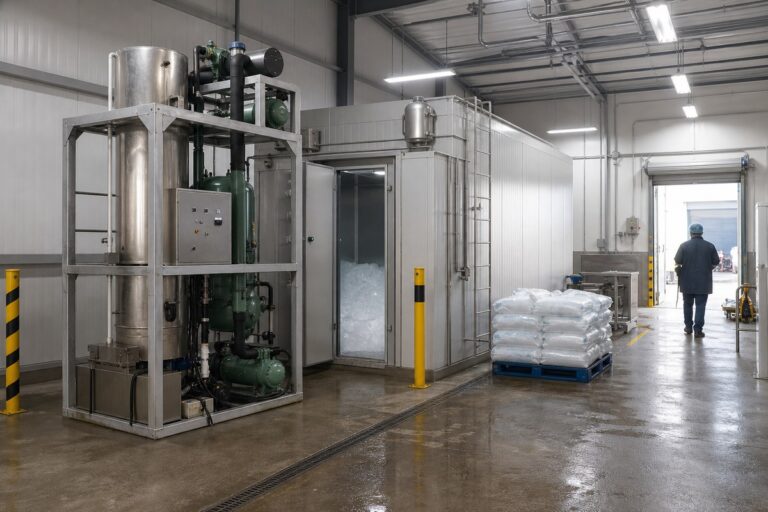

Complete refrigeration-based ice machines classify internationally under HS code 8418.69. For US import clearance, the primary entry code is HTS 8418.69.0110. Final declarations require matching local tariff extensions against the shipment’s physical engineering boundary, especially when managing modular units, bare evaporators, or multi-function plants.
What Is the HS Code for an Ice Machine?
Determining the correct tariff starts at the global six-digit level before applying regional customs extensions.Heading 8418 covers refrigerators, freezers, and other refrigerating machinery alongside designated parts. Subheading 8418.69 serves as the universal baseline for complete ice-making equipment.
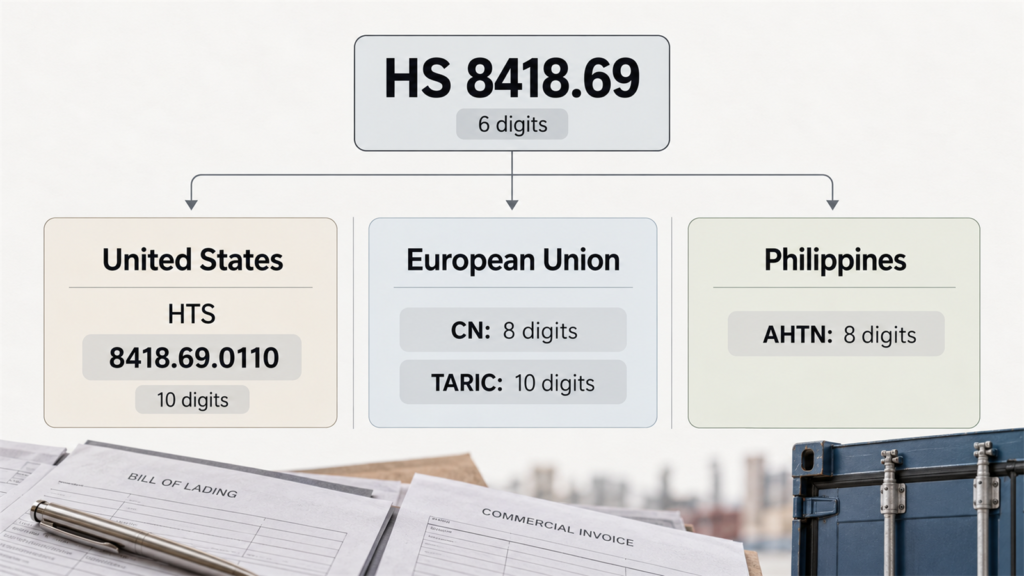
The World Customs Organization (WCO) standardizes classification through the first six digits. Importing countries then append local statistical digits to regulate duties and trade measures. An exporter’s six-digit reference provides a baseline, yet domestic declarations require reviewing regional legal notes, Chapter 84 definitions, and local tariff subheadings.
Ice Machine Tariff Codes by Country and Region
While the initial six digits remain uniform worldwide, national tariff schedules establish their own duty rates, taxes, and technical digits.
United States HTS Codes
The 2026 US Harmonized Tariff Schedule (Revision 21) designates 8418.69.0110 for commercial icemaking machines. This ten-digit code establishes the baseline tariff rate. Importers must independently review applicable Chapter 99 trade remedies, Section 301 tariffs, or anti-dumping duties to determine total landed costs.
European Union CN and TARIC Codes
The European Union uses eight-digit Combined Nomenclature (CN) codes for customs declarations and ten-digit TARIC codes for trade management measures. Classification relies on system configuration and working function. US statistical suffixes do not apply in Europe. Importers can consult the European Commission’s CLASS database for official binding tariff information.
Philippines AHTN Codes
The Philippines applies the eight-digit ASEAN Harmonized Tariff Nomenclature (AHTN). Importers verify specific lines via the Philippine Tariff Finder. Preferential duty rates under trade agreements require certified certificates of origin, operating independently from the baseline tariff code.
HS Codes for Complete Ice Machines and Parts
Customs rules strictly separate self-contained freezing systems from standalone mechanical components and unmounted replacements.
Complete Machine
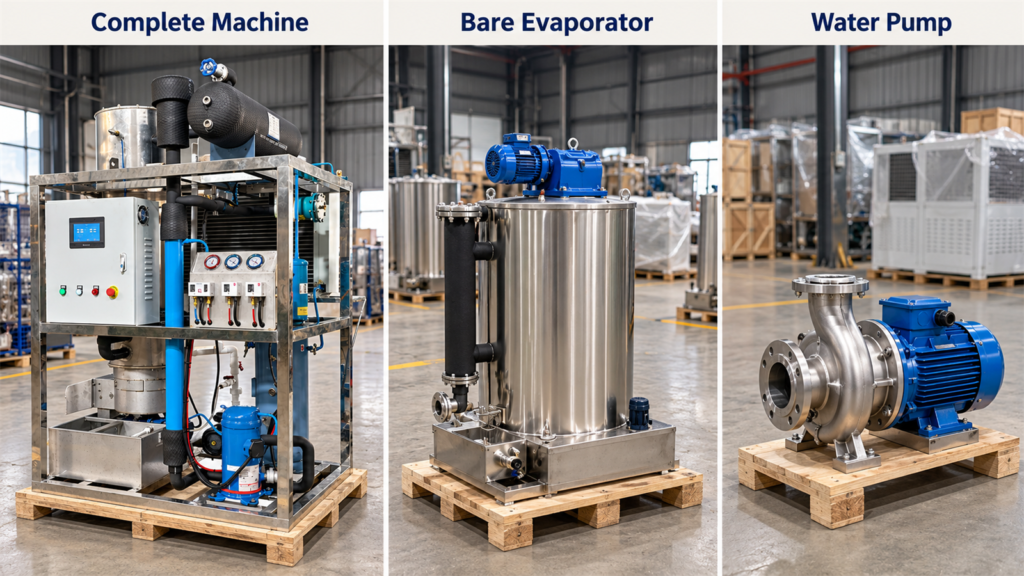
A complete ice machine declaration requires identifying the working refrigeration circuit alongside all supplied hardware. Technical parameters in specifications for industrial ice machines clarify cooling arrangements, helping customs officers verify whether compressors, condensers, and controls arrive as an operational set.
Under General Rule of Interpretation (GRI) 2(a), incomplete or disassembled machines classify as complete articles when presenting the essential character of an ice maker. For complex installations, Section XVI Note 4 applies to functional units. Packing diverse secondary equipment into one container does not merge them into a single machine code.
Parts and Components
Separately imported components follow distinct classification rules. Under Section XVI Note 2, parts with dedicated headings in Chapter 84 or 85 retain their specific codes rather than falling into ice machine subheadings. Entering all spares under residual subheading 8418.99 risks compliance audits. For instance, dedicated replacement water pumps classify under heading 8413, requiring separate declaration from the primary ice machine.
HS Classification for Different Ice Machine Types
Tariff schedules categorize equipment by thermodynamic and mechanical configuration rather than market-driven ice shapes.

Flake Ice Machine
A flake ice maker freezes water on an internal drum and harvests it with a scraping blade. Customs officers distinguish genuine flake ice production from mechanical ice crushers, which process pre-frozen blocks. Declarations must specify whether the shipment contains a complete condensing unit or a bare evaporator drum intended for a central refrigeration system.
Tube Ice Machine
Tube ice systems generate hollow cylinders within vertical shell-and-tube evaporators via hot-gas harvest cycles. Commercial analyses comparing tube and cube ice emphasize freezing cycle variations and structural density. From a tariff perspective, declarations must separate the ice generator from downstream material handling equipment, such as post-harvest sorting conveyors or automatic bagging systems.

Block Ice Machine
Block ice installations require itemized component declarations, distinguishing between brine tanks, direct-expansion evaporator plates, lifting cranes, and harvest moulds. Modular setups like containerized ice plants package water chillers, generators, and cold storage into ISO containers. Housing multiple systems inside a single enclosure does not qualify the entire consignment under one tariff code without satisfying strict functional unit rules.
Cube Ice Machine
Cube machine entries must clarify whether the shipment is a self-contained commercial unit, a modular ice head, or a sub-assembly for a dispenser. Declaring internal replacement ice modules under complete machine codes invites physical inspections, even when both share common commercial names.
How to Confirm an Ice Machine HS Code Before Importing
Follow this structured three-step verification roadmap to secure correct customs entry and avoid transit delays.

Step 1: Gather Equipment Specifications
Customs officers inspect technical engineering details rather than broad sales invoices. Specifications detailing condenser cooling circuits verify whether water-cooled towers or remote fluid coolers accompany the unit.
- Compile technical cut sheets, electrical schematics, piping diagrams, and nameplate photos.
- Detail the exact models of compressors, condensers, evaporators, and control panels.
- Identify all excluded components, such as field piping or local cooling towers.
Step 2: Check the Official Tariff Schedule
Verify national schedules directly rather than relying on historical entry summaries.
- Compare technical parameters against the exact descriptions in heading 8418.
- Review Section XVI legal notes to identify components requiring independent tariff lines.
- Consult current national tariff updates, cross-rulings, and classification circulars.
Step 3: Verify the Code Before Shipment
Align final shipping documents against the confirmed tariff codes before dispatch. Complex projects require importers to contact equipment engineers for certified supply boundary sheets to present to customs brokers.
Request specific legal reasoning whenever brokers and suppliers suggest conflicting numbers. When material classification ambiguity persists, submit an advance ruling application to the destination customs agency for legally binding classification assurance.
FAQs About Ice Machine HS Codes
Does the Same HS Code Mean the Same Import Duty?
A shared HS code does not produce identical customs duty across different countries. National schedules establish unique baseline tariffs, trade agreement discounts, and trade remedy surcharges. Valuation methods and shipping terms also alter actual payable amounts, making six-digit codes insufficient for final landed cost estimates.
Does an HS Code Replace Import Permits or Product Certifications?
Tariff classification identifies tax categories without replacing statutory permits or regulatory compliance. Customs databases link HS codes directly to import restrictions, including fluorinated refrigerant controls, electrical safety standards, and pressure vessel certifications.
Should I Include the HS Code on the Commercial Invoice?
Displaying the verified tariff code on the commercial invoice accelerates import clearance where local customs rules require it. Verify the appropriate digit depth with the customs broker and align the code with a detailed technical description. Broad descriptions like “ice machine accessories” routinely trigger physical cargo holds.