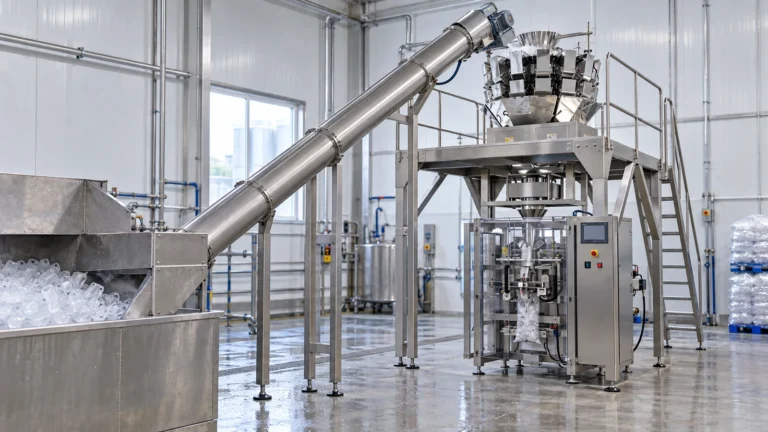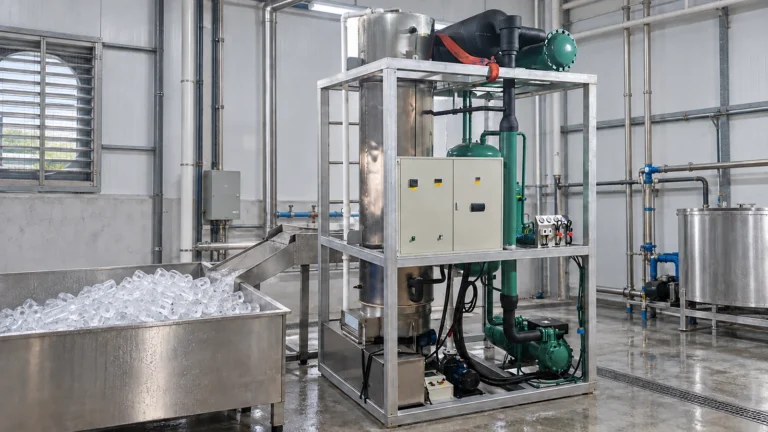
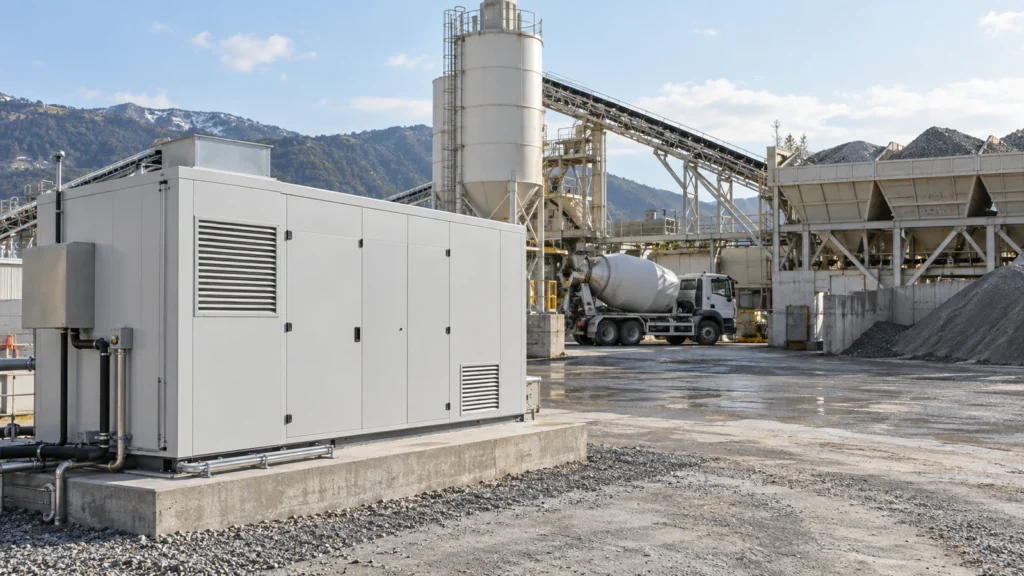
A containerized ice machine is an ice production plant housed or assembled in a transportable enclosure near a concrete batch plant. Concrete projects can use containerized ice plants to produce ice at the construction site. The ice replaces part of the batch water; as it melts, it absorbs heat and lowers fresh-concrete temperature.
Plan capacity around the concrete mix and peak batching schedule. Check the machine’s output under site conditions, then review the transport route, lifting plan, and utility connections at each project location.
What Is a Containerized Ice Machine?
A containerized ice machine packages the ice maker, refrigeration equipment, and controls for transport and use at a project site. Packages vary. Some include storage, conveyors, or weighing equipment, so confirm what the supplied system covers.
The ice plant supplies ice for batching, while concrete production and overall temperature control involve other equipment and procedures. Ice makers also vary by type; industrial ice machines include flake, tube, block, and seawater models.
How a Containerized Ice Machine Produces Ice
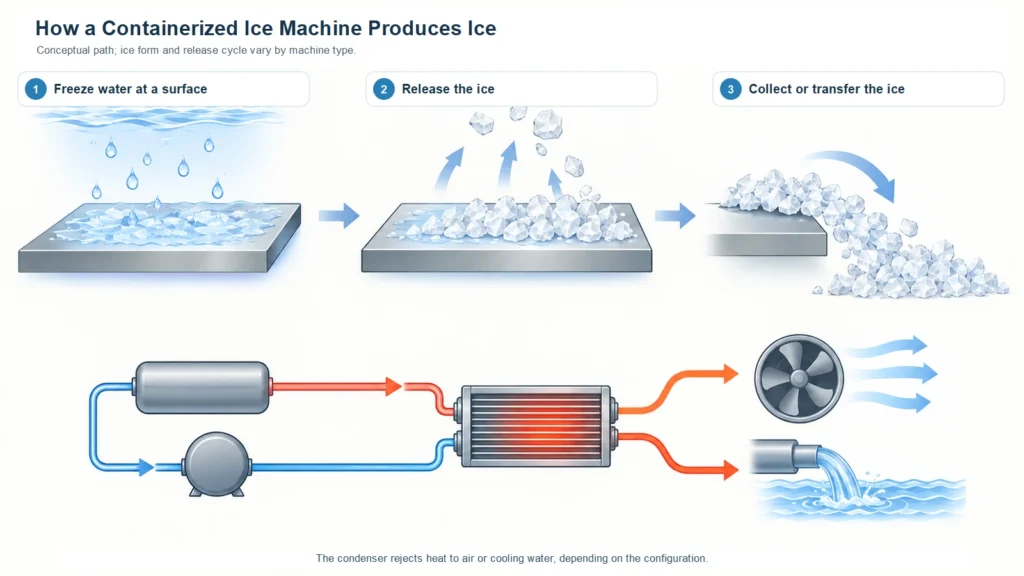
The refrigeration system removes heat from water at a freezing surface. The machine then releases the ice into a bin or transfer system. Flake machines generally produce ice continuously; plate and tube machines freeze and release ice in cycles. A condenser transfers heat to air or cooling water, depending on the configuration. This determines the site’s ventilation or water service needs.
How to Size Ice Capacity for a Concrete Project
Size the plant for the ice dose required during peak concrete production. When comparing suppliers, compare flake-ice machine quotes on the same basis. Then check the stated output against the air and water conditions expected at the site.
Mix Design and Target Temperature
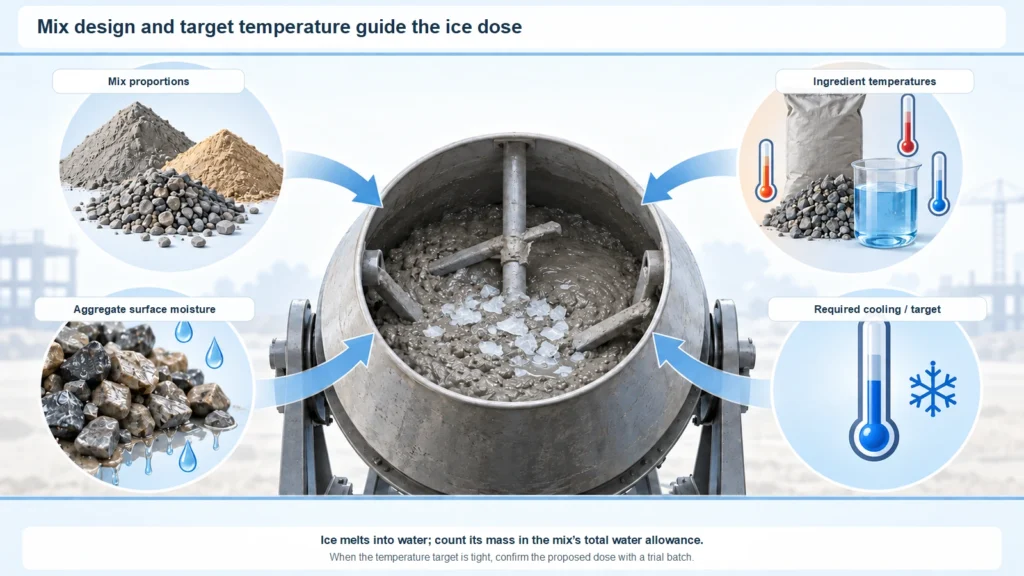
Start with the specified concrete temperature at the relevant control point, such as batch discharge or placement. The required ice dose depends on mix proportions, ingredient temperatures, aggregate moisture, and the amount of cooling needed. A heat-balance calculation estimates fresh-concrete temperature from ingredient masses and starting temperatures, including the heat absorbed as ice melts. Confirm the proposed dose with a trial batch when the temperature target is tight.
As ice melts, it becomes water, so include its mass in the mix’s total water allowance. Account for aggregate surface moisture and other water sources when setting the batch’s liquid-water quantity.
Peak Ice Demand
Calculate peak ice demand from the highest sustained concrete production rate expected during a pour:
Peak ice demand (t/h) = peak concrete output (m³/h) × validated ice dose (kg/m³) ÷ 1,000
Use the production window and batching schedule to assess daily demand. Daily totals can hide short periods of high demand. A similar peak-versus-average issue arises in a Senegal fishery project, where capacity is compared with peak requirements and available production hours. An ice bin can cover short gaps between production and use. Sustained shortfalls require more production capacity.
Rated Output at Site Conditions
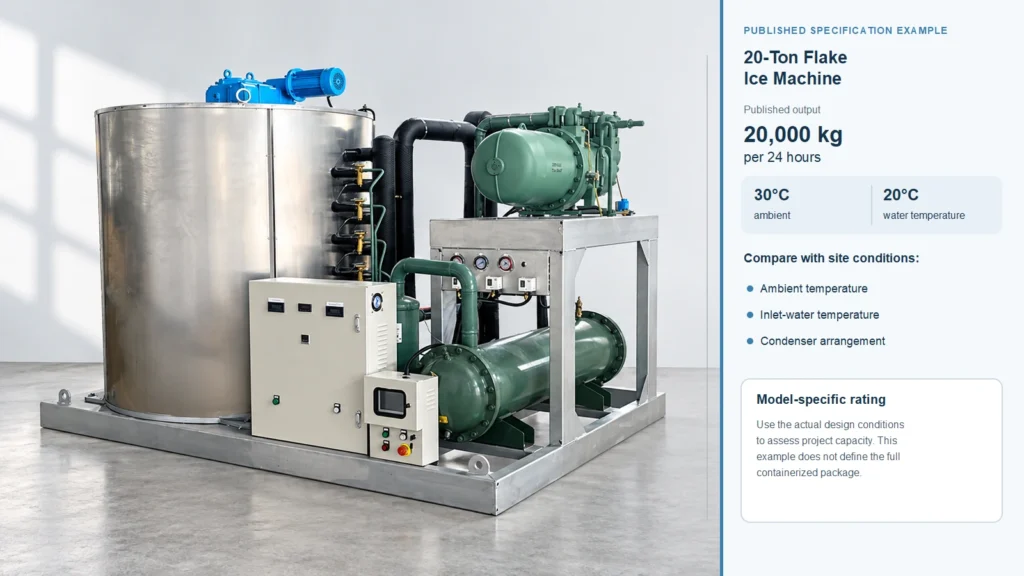
Compare the machine’s output rating with site conditions, including ambient temperature, inlet-water temperature, and condenser arrangement. Higher heat loads can reduce ice production, so request capacity data for the actual design conditions.
For example, the published specification for a 20-ton flake ice machine lists an output of 20,000 kg per 24 hours at 30°C ambient and 20°C water temperature. Treat this as a model-specific rating. It does not determine project capacity or define the full scope of a containerized package.
How to Move the Ice Plant Between Concrete Projects
Plan relocation using the equipment’s transport drawings and the next site’s access and connection details. External equipment can change the total shipping and lifting envelope.
Container Size and Weight
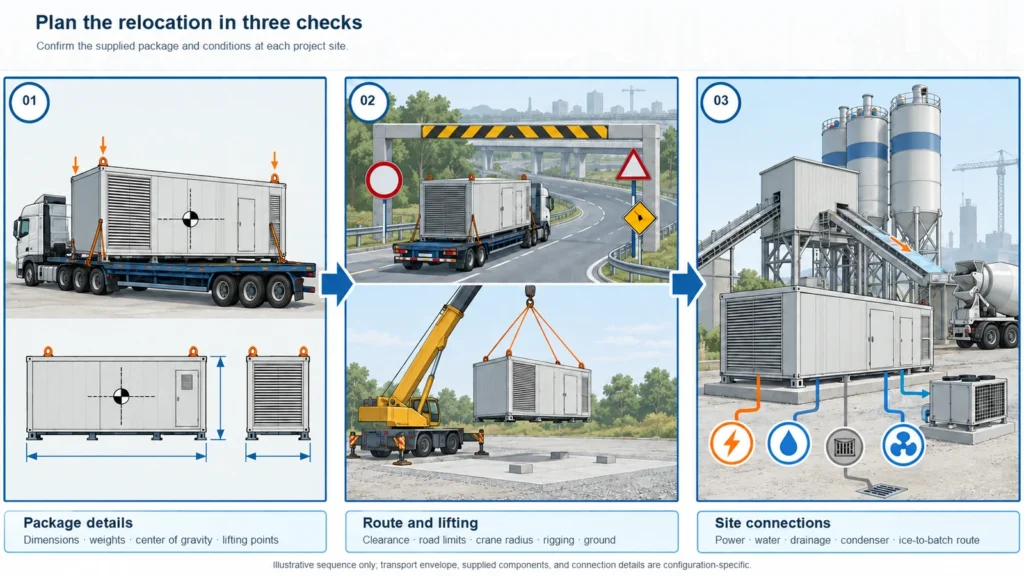
Obtain the shipping dimensions and weight for the exact configuration, including any condenser, storage bin, or conveyor shipped with the unit. Confirm the operating weight, center of gravity, and designated lifting points. Check the full package rather than assuming it matches a standard freight-container size.
Route and Lifting Access
Survey the route for clear width and height, turning space, road or bridge limits, and delivery-area capacity. Confirm the crane’s capacity at the planned working radius, the rigging arrangement, and the ground’s ability to support the lift. The complete operating package may require a different route or lift plan than the empty enclosure.
Batch Plant and Utility Connections
Before delivery, confirm electrical voltage, phase, frequency, and available load. Identify the required water supply, drainage, and condenser connections. Plan the ice route from the machine to storage and the batch weighing point, including how the system will deliver and measure the recipe’s ice dose.
To assess capacity and relocation needs for a specific site, submit project specifications with the target concrete temperature, peak output, site air and water conditions, available utilities, and transport and lifting route.
Frequently Asked Questions
Can Ice Precooling Replace Post-Cooling in Mass Concrete?
Sometimes. Ice precooling lowers concrete temperature before placement; post-cooling removes heat afterward. Use precooling alone only if thermal analysis shows that peak core temperature and the core-to-surface difference will stay within project limits.
How Are Thermal Gradients Monitored in Mass Concrete?
Place temperature sensors at representative locations, including the expected hot core and near the surface, and log their readings over time. Compare the core-to-surface difference and peak readings with the project’s thermal-control limits. The monitoring plan should specify what action to take as readings approach those limits.
How Is Ice Dosing Managed During Concrete Batching?
Set each batch’s ice target from the approved mix dose and concrete volume. Verify the delivered ice quantity, then confirm that the concrete reaches the specified temperature and uniformity before discharge.