
Process cooling removes heat from production equipment, materials, or manufacturing operations to maintain the temperatures a process requires. It helps control product quality, protect equipment, and keep production stable. Cooling systems may use air, circulating liquids, refrigerants, or ice.
The required temperature, cooling rate, and contact conditions determine the suitable system. This article explains how common systems work, where ice offers practical advantages, and which operating conditions guide system selection.
How Does Process Cooling Work?
Process cooling transfers heat from a warmer process to a cooler medium, which carries the heat away.
In a typical chilled-water system:
- Water flows through a heat exchanger, equipment jacket, or cooling channel and absorbs heat.
- The warmer water returns to a chiller.
- The chiller transfers heat from the water to its refrigeration circuit.
- A condenser releases that heat to outdoor air or a separate cooling-water system. The cooled water returns to production.
A dry cooler takes a different route, releasing heat from the fluid directly to ambient air. Ice absorbs heat as it melts, so it can provide cooling at a different time and place from where it was made.
Core Process Cooling Methods and System Topologies
A cooling system needs a way to circulate its cooling medium and equipment to absorb and reject heat. These parts do different jobs, so compare their functions as well as their arrangement.
Open-Loop and Closed-Loop Hydronic Systems
Hydronic systems carry heat in water or a water-based mixture. In an open circulating system, such as an open cooling tower, the water comes into contact with outside air. Evaporation concentrates minerals, and airborne contaminants can enter the water, creating a need for water treatment.
A closed process loop keeps its fluid separate from outside air, helping control the quality of the fluid reaching the equipment. The process and heat-rejection loops can use different arrangements. In a closed-circuit cooling tower, process fluid stays inside a coil while spray water outside the coil evaporates. The process loop stays closed, but the heat-rejection side still loses water through evaporation.

Common Cooling Technologies and Their Functions
Several of these technologies can work together in one installation.
| Technology | Main Function | Useful Operating Conditions | Main Constraint |
| Dry cooler | Releases fluid heat to outdoor air | Required fluid temperature is sufficiently above outdoor air temperature | Performance follows ambient temperature |
| Cooling tower | Cools circulating water through evaporation | Suitable for process-water cooling or condenser heat rejection | Wet-bulb temperature and water management |
| Chiller | Uses refrigeration to cool water or a water–glycol antifreeze mixture | Controlled fluid temperatures, including below ambient conditions | Capacity and power vary with operating temperatures |
| Direct expansion | Evaporates refrigerant at the cooling surface | Equipment designed for direct refrigerant cooling | Refrigerant distribution and control |
| Ice-based system | Absorbs heat through melting ice | Contact cooling, ice-water supply, or stored cooling | Ice supply, handling, and melting capacity |
| Cryogenic system | Uses very cold substances such as liquid nitrogen | Specialized low-temperature or rapid-cooling duties | Consumable supply and application-specific controls |
Both air-cooled and water-cooled chillers can supply chilled water to a process. Their names describe how their condensers reject heat.
The Role of Ice in Process Cooling
Ice can cool a material directly, chill circulating water, or store cooling for later use. The process must suit the ice’s melting temperature, the way it contacts the material, and the schedule for supplying it.
Sensible Heat and Latent Heat in Cooling
Sensible heat transfer changes a material’s temperature without changing its physical state. Chilled water warms as it absorbs heat from a process. Latent heat is the heat involved in a change of state. Freshwater ice near 0°C absorbs approximately 334 kJ/kg as it melts into water at the same temperature. This extra heat absorption is useful in processes that limit how much water can be added.
Ice shape affects contact, handling, and melting behavior. Under comparable conditions, changing the shape does not increase the heat absorbed by an equal mass of melting ice. Other cooling systems also use phase change. Refrigerants evaporate in refrigeration circuits, and water evaporates in cooling towers.
Direct-Contact Ice Cooling
In direct-contact cooling, ice touches the product or is mixed into the process. It absorbs heat as it warms and melts. Thin pieces from flake ice machines can spread around irregular products or be measured into a mixer. Larger pieces may need crushing or more time to mix.
The process must accept the added water, and the ice must meet its quality requirements. When ice is an ingredient, include it in the recipe’s total water allowance. If direct contact is unsuitable, a separate ice-water circuit and heat exchanger can keep the cooling water away from the product.

Ice-Chilled Water Cooling
Melting ice can chill water that circulates through a jacket or heat exchanger. The water absorbs process heat and returns to be cooled again, without adding solid ice directly to the material. The supply temperature depends on water flow, mixing, contact with the ice, and incoming heat. Even when the ice-water mixture is near its melting point, the product may remain warmer.
For example, 100 kg of freshwater ice at 0°C absorbs about 9.3 kWh of heat as it melts. Using that cooling within one hour requires an average cooling rate of 9.3 kW. The circulation system and heat exchanger must be able to deliver that rate; having enough stored ice alone is insufficient.

Ice Thermal Energy Storage
Ice thermal energy storage allows ice to be made ahead of demand and melted when cooling is needed. This can reduce peak electrical demand or shift electricity purchases to lower-cost periods. With partial storage, the chiller and stored ice supply cooling together. Full-storage designs supply cooling from storage throughout the planned discharge period.
Compare energy use over the whole cycle, including charging, storage losses, pumps, and useful cooling delivered. A lower electricity bill does not necessarily mean fewer kilowatt-hours were consumed. For ice production, measured electricity use per ton of ice helps distinguish actual energy consumption from machine power.

Critical Industrial Applications of Process Cooling
Define the cooling result before choosing equipment. A product temperature, reaction condition, or mixing-temperature limit gives the system a specific task to meet.
Food and Beverage Processing
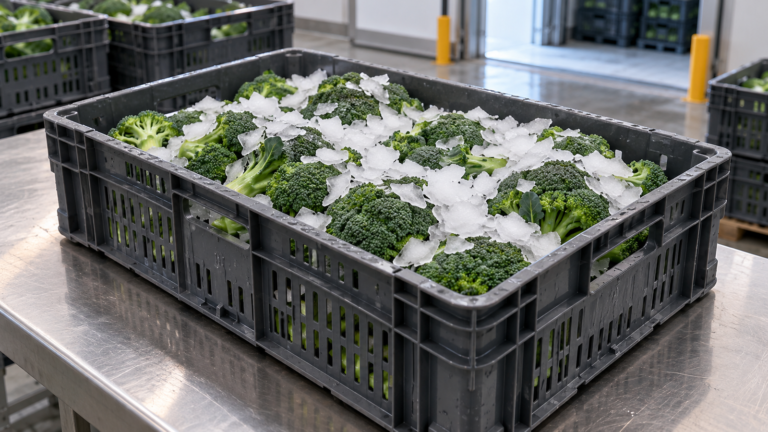
Cooling controls food temperatures during production and handling. Mixing can warm dough or meat mixtures, while fermentation generates heat that must be removed. Ice suits processes that accept direct contact or added recipe water. Where the coolant must stay separate, jacketed equipment or heat exchangers provide cooling without mixing the fluids. Seafood handling requires allowance for both fish chilling and holding loads. The first removes heat from the fish; additional ice absorbs heat entering during storage and transport.
Chemical Processing
Cooling removes reaction heat to keep chemical processes at the temperature needed for consistent production. Jackets and heat exchangers can keep the coolant separate from the chemicals. Direct ice addition is suitable only when the chemistry allows added water and the resulting dilution. Size cooling capacity around how the reaction releases heat, since an average daily load alone can miss that demand.
Concrete Production
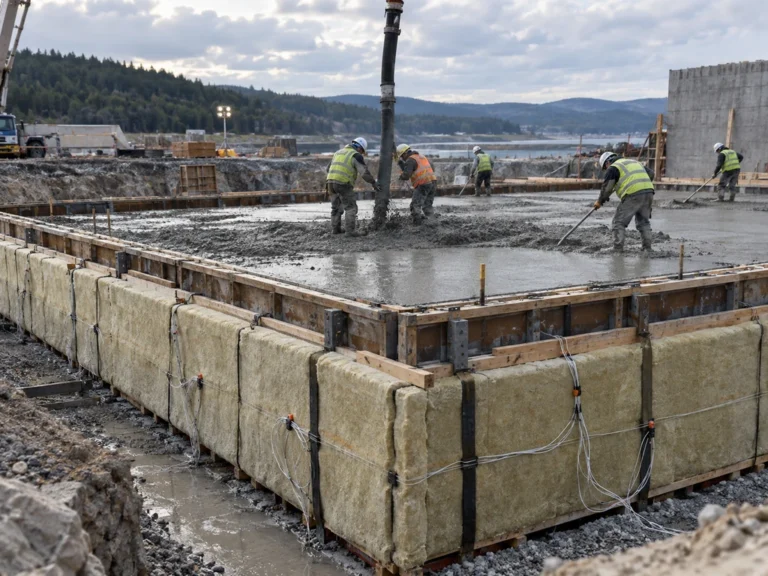
Cooling concrete ingredients lowers the temperature of fresh concrete. Ice can replace part of the mixing water and absorb heat as it melts.
Its quantity must fit within the batch’s total water allowance. The amount needed varies with ingredient temperatures, aggregate moisture, mixing conditions, and the required concrete temperature. A lower initial temperature helps with temperature control, although it cannot prevent every form of thermal cracking.

Key Differences Between Process Cooling and Comfort Cooling
Process cooling controls production temperatures, while comfort cooling maintains indoor conditions for people. Their loads and operating requirements are therefore defined differently.
Comfort-cooling design considers heat entering the building, occupancy, temperature, and humidity. Process-cooling design starts with the heat from equipment or materials, then accounts for target temperatures, production timing, and fluid compatibility.
A process may run continuously or in batches, with either a narrow or broad temperature tolerance. Continuous operation and a fixed level of precision are not requirements for every process. In a brewery, for example, air conditioning serves offices and occupied rooms while a separate circuit cools the fermentation tanks.
How to Choose a Process Cooling System
A circulating-water system is a starting option for continuous cooling that keeps the coolant separate from the process. Use a chiller when ambient heat rejection cannot maintain the required supply temperature. Direct ice suits processes that accept contact, while storage can bridge a gap between the cooling-demand schedule and the production schedule.
Cooling Requirements and System Sizing
Start with the heat that must be removed and the time available to remove it. For a batch without a phase change:
Heat removed (kJ) = mass (kg) × average specific heat [kJ/(kg·K)] × temperature drop (K)
Specific heat measures heat transfer per unit mass per degree. Divide the heat quantity by cooling time in seconds to find average cooling capacity in kW. For steady-flow cooling, use mass flow in kg/s in place of batch mass. Equipment selection must also account for the maximum simultaneous load and any available buffering. Include heat from equipment, reactions, and the surroundings where relevant.
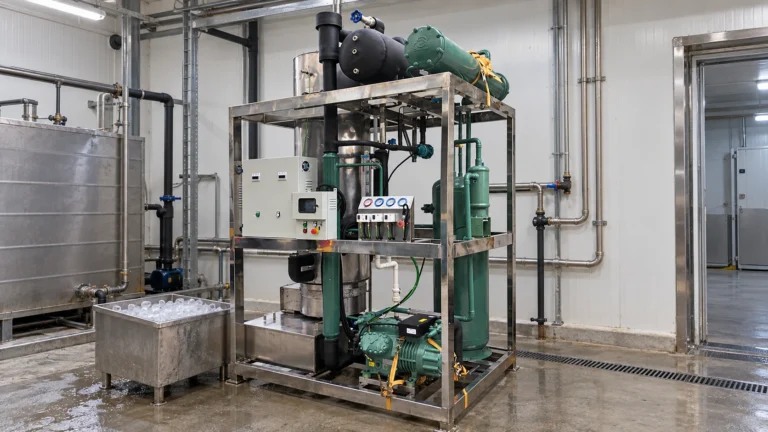
For ice systems, work out daily production and peak delivery separately. A 2-ton flake ice machine lists 2,000 kg per 24 hours at 30°C ambient and 20°C inlet-water conditions. Those figures do not establish its output at hotter site conditions or how much ice will be available during a short shift.
Operating Strategies and System Optimization
Keep heat-transfer surfaces clean and maintain water treatment so the system can meet the required process temperature and flow. Match compressor operation to changing loads. Variable-speed pumps or fans can be used where the equipment and minimum-flow requirements allow.
In suitable weather, free cooling uses ambient conditions to reduce chiller operation. Adjust temperature setpoints within the process’s acceptable range, and compare energy use against useful production under similar conditions to spot changes in performance.
For an ice-based project, submit your operating conditions, including the material, throughput, starting and target temperatures, cooling time, and site location. These details help establish the required ice-production capacity, storage, and delivery arrangement.