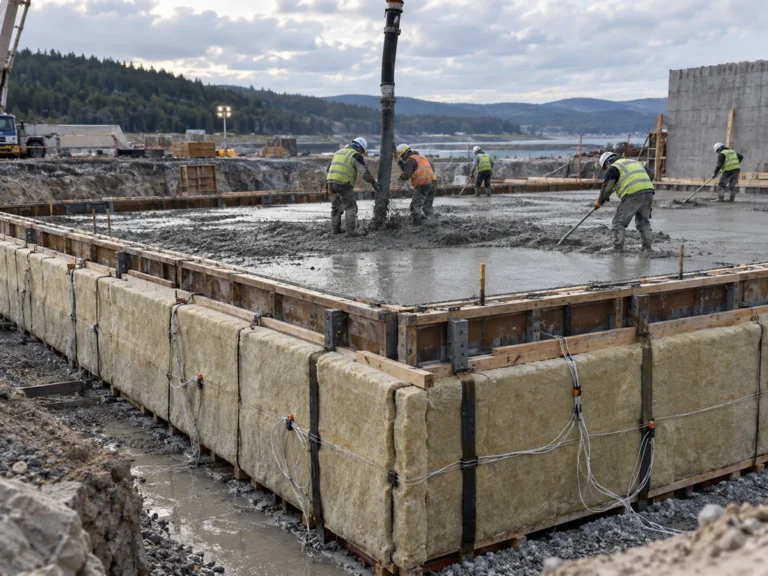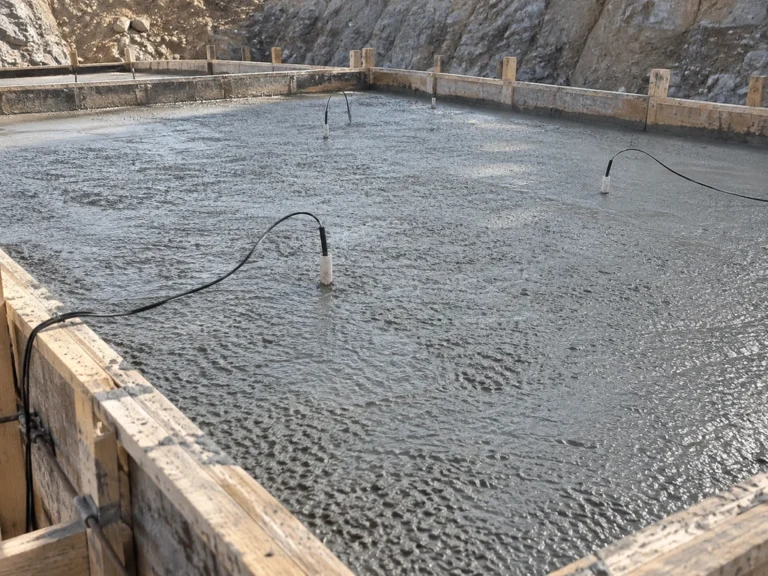

A mass concrete pour requires project-specific placement and thermal controls to limit internal temperatures and temperature differences. Successful execution depends on maintaining concrete quality, placement continuity, embedded-system integrity, and the required temperature history.
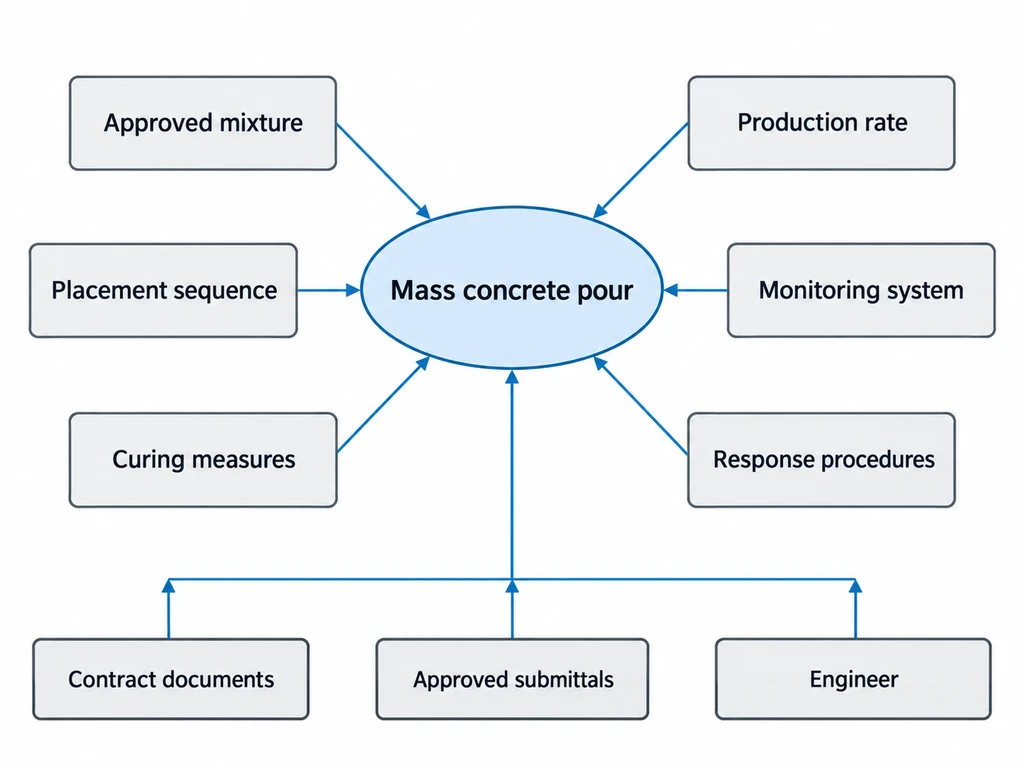
The approved mixture, production rate, placement sequence, monitoring system, curing measures, and response procedures must work as one coordinated operation. Every field requirement should trace back to the contract documents, approved submittals, and the engineer responsible for the design.
What Must Be Planned Before a Mass Concrete Pour?
Planning must establish what will be placed, how fast concrete will be supplied, how the approved thermal controls will be implemented, and who can authorize a change. These decisions should be documented and approved before production begins.
Approved Concrete Mixture and Thermal Control Plan
Use the approved concrete mixture that supports the specified strength, durability, workability, setting characteristics, and heat-generation assumptions. The crew should have the current approved mixture, placement procedure, and thermal control plan before concrete production starts.
A change in cementitious materials, aggregate source, admixture dosage, water content, or mixture proportions can affect temperature rise, setting time, pumping behavior, and the validity of the thermal analysis. Material substitutions and field adjustments therefore require the review and approval defined by the project change-control procedure.
Project Roles and Responsibilities
Assign responsibility for mixture approval, batching, delivery coordination, inspection, testing, sensor data, field decisions, corrective actions, and final acceptance. The contractor, concrete producer, testing agency, thermal specialist, cooling-system operator, and engineer of record may have separate duties.
The project should also identify who receives temperature alerts, who may adjust an approved control measure, and who can delay or stop placement. Shift handovers should transfer the current production rate, placement location, equipment status, temperature trends, and unresolved deviations.
Placement Scope and Production Targets
Define the element dimensions, total pour volume, construction joints, target placement rate, expected duration, and work shifts. The target rate must be achievable by the batch plant, delivery fleet, pumps, placement crew, testing personnel, and supporting equipment under the same operating conditions.
Production calculations should use dependable output rather than ideal nameplate capacity. Plant interruptions, truck turnaround, site access, pump repositioning, required testing, shift changes, and planned breaks can all reduce the delivered placement rate.
The schedule should also identify the minimum rate needed to maintain the approved placement sequence and avoid unplanned construction joints.
Concrete Supply and Contingency Capacity
Concrete supply should remain consistent enough to maintain the approved sequence without compromising testing, consolidation, or finishing. Confirm usable plant output, truck cycle time, pump capacity, standby equipment, power, lighting, communication, and the planned response to traffic, weather, or equipment disruption.
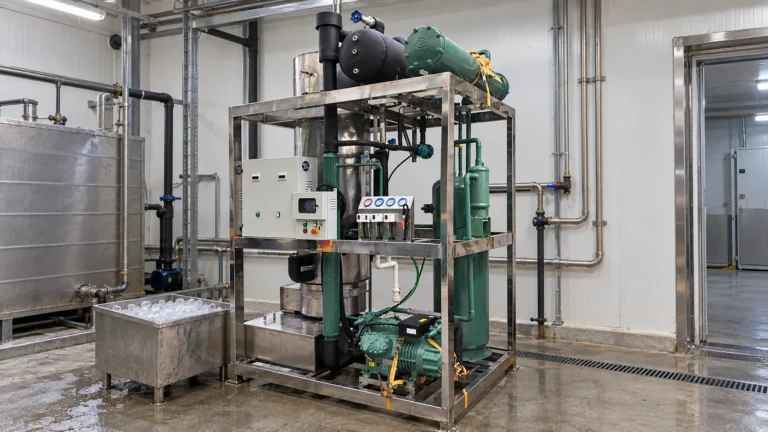
If the thermal control plan specifies batch ice, evaluate ice production, storage, weighing, conveying, and delivery as one system. The available flake ice machine range provides daily capacity options, but daily output alone does not establish whether enough ice will be available during the busiest batching period.
Contingency capacity should address the operation that could interrupt the placement. A standby component is useful only when it can be connected and operated within the time allowed by the placement procedure.
Placement Readiness Checks
Before the first batch is released, confirm that the current approved documents are available and that the site, access routes, forms, reinforcement, placement equipment, curing materials, insulation, monitoring system, lighting, communications, and contingency resources are ready.
Verify sensor identification and operation before they become inaccessible. Where embedded cooling pipes are specified, complete the required inspection, pressure testing, connection checks, and operating trial before concrete placement.
Compare the weather forecast, ingredient temperatures, and measured fresh-concrete conditions with the range addressed by the approved thermal plan. Conditions outside that range require review before placement begins.
How Should Mass Concrete Be Placed?
Mass concrete should be placed according to the approved sequence while maintaining concrete quality, continuity, embedded-system integrity, and traceable records. Field convenience should not override the placement procedure or thermal control plan.
Delivery Acceptance Checks
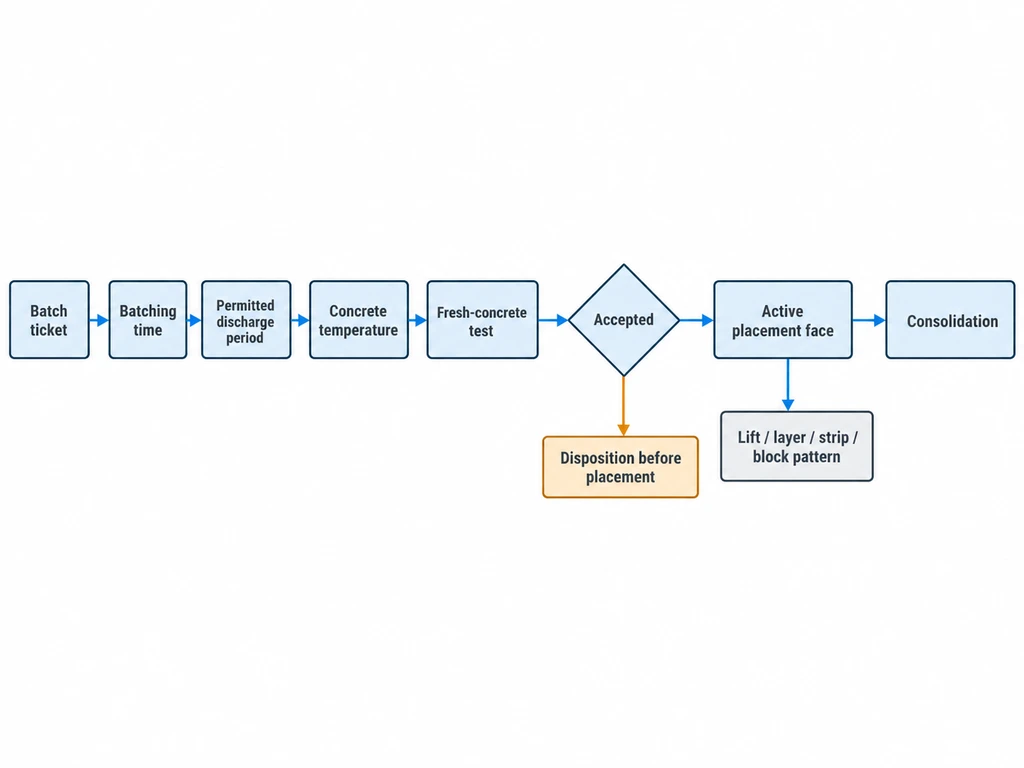
Check each delivery against the approved mixture and project acceptance procedure. Review the batch ticket, batching time, permitted discharge period, measured concrete temperature, and required fresh-concrete test results.
Do not add water, admixture, or other material outside the approved procedure. A delayed truck, rejected load, unexpected concrete temperature, or test result outside the acceptance range requires a documented disposition before the affected concrete is placed.
Delivery acceptance should remain coordinated with the active placement face. Holding too many trucks can increase discharge time and concrete temperature, while insufficient supply can interrupt the approved sequence.
Approved Placement Sequence
Follow the specified lift, layer, strip, block, or placement pattern, including layer thickness and time limits between adjoining placements. Maintain an active placement face that supports proper consolidation and limits cold-joint risk.
Changes to lift height, layer direction, placement rate, construction joints, or adjoining-placement timing can alter heat-loss boundaries, restraint, and the relevance of sensor locations. Route such changes through the designated approval process instead of making an undocumented field adjustment.
Concrete Consolidation
Consolidate conventional concrete around reinforcement, embedded items, and forms without segregation, missed zones, or excessive vibration. Where the procedure requires layered placement, consolidation should produce the required bond with the preceding layer.
Match vibration equipment and crew coverage to the actual placement rate. Congested reinforcement, deep lifts, limited access, or rapid supply may require additional equipment or adjusted work positions.
Self-consolidating concrete requires its own approved placement and inspection procedure. Its flowability does not remove the need to control segregation, filling, lift behavior, and obstruction around congested areas.
Embedded Item Protection
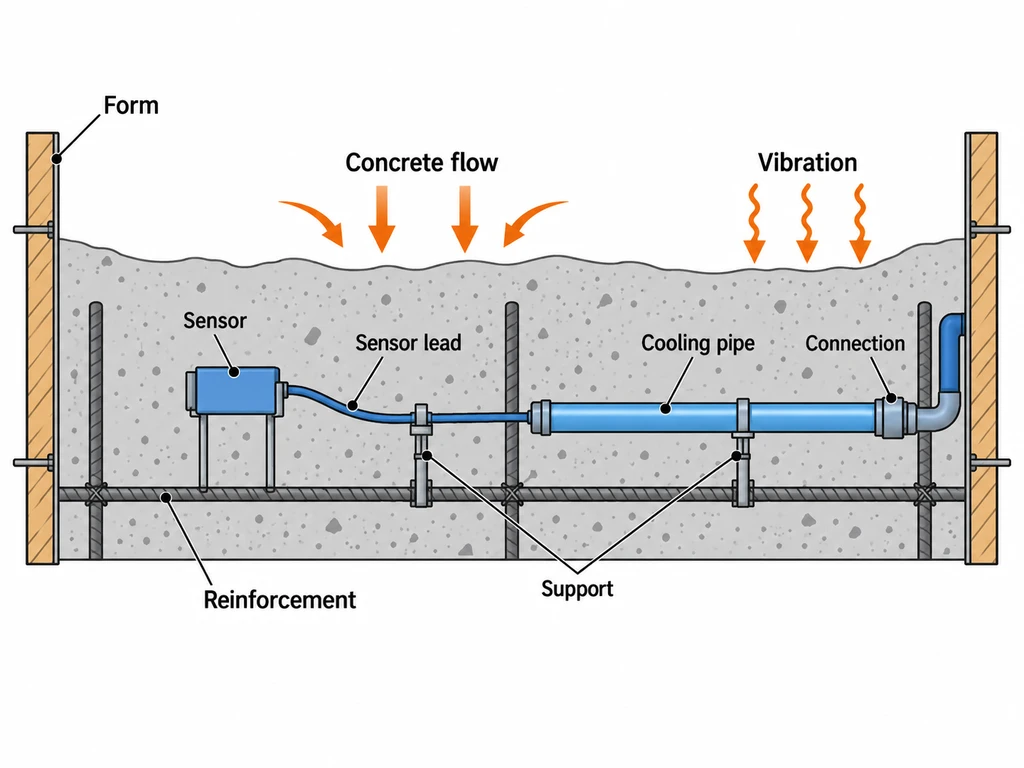
Secure sensors, leads, cooling pipes, waterstops, anchors, conduits, and other embedded items before placement. Their supports should resist concrete flow, pump discharge, workers, and vibration without shifting from the approved position.
Inspect critical items as the concrete rises. A displaced sensor may no longer represent its intended measurement location, while a damaged cooling pipe can affect thermal control and closeout work.
Protect exposed sensor leads, pipe connections, and data cables from traffic and finishing operations. Record any displacement or damage and obtain the required disposition before relying on the affected system.
Placement Coordination
Coordinate batch release, truck arrival, testing, pump movement, placement, consolidation, and finishing against the target rate. One responsible person should maintain the overall operating picture and communicate delays, equipment changes, test holds, or production adjustments.
A contingency is effective only when the crew understands its trigger, authority, and implementation time. Backup equipment should be accessible, connected where practical, and capable of supporting the critical placement function.
When production slows or stops, record the affected location, duration, concrete condition, and approved response. The team should evaluate both cold-joint risk and changes to the assumed thermal history.
Placement Quality Control
Inspect fresh-concrete properties and workmanship at the frequencies required by the project specification. Compare measured temperature, delivery interval, placement rate, lift thickness, consolidation, and weather with the approved limits and assumptions.
Testing identifies the condition of the sampled concrete; the project acceptance procedure determines whether the required action is acceptance, correction, rejection, a temporary hold, or engineering review.
Quality-control personnel should communicate results quickly enough for the placement team to act before additional affected concrete is discharged.
Placement Records
Record batch tickets, fresh-concrete test results, concrete temperature, weather, start and finish times, actual placement rate, interruptions, equipment changes, and approved field adjustments. Link significant events to a batch number, time, and placement location where practical.
Also document sensor or cooling-system damage, insulation repairs, rejected loads, delayed deliveries, and changes authorized during the pour.
Complete records allow the project team to compare actual conditions with the approved assumptions and explain the measured temperature behavior after placement.
How Is the Thermal Control Plan Applied?
The thermal control plan is applied in the field by controlling starting temperature, maintaining the required surface protection, monitoring the concrete, and implementing approved responses throughout the specified control period.
Field personnel should execute the approved requirements rather than redesign the thermal strategy during the pour.
Approved Placement Temperature Criteria
Identify the applicable fresh-concrete temperature limit, measurement location, test method, acceptance authority, and permitted response. ASTM C1064/C1064M-23 covers measurement of freshly mixed hydraulic-cement concrete temperature when that method is specified.
Fresh-concrete temperature at testing is not the same quantity as the highest temperature reached after placement. For projects governed by ACI SPEC-301-20, ACI lists default mass-concrete limits of 160°F (70°C) for maximum temperature after placement and 35°F (19°C) for the center-to-surface temperature difference. The contract documents may establish different requirements, so the project-specific criteria control.
Record the measurement at the required time and location. An unexpected result should trigger the project’s verification and disposition procedure before placement continues.
Concrete Precooling Measures
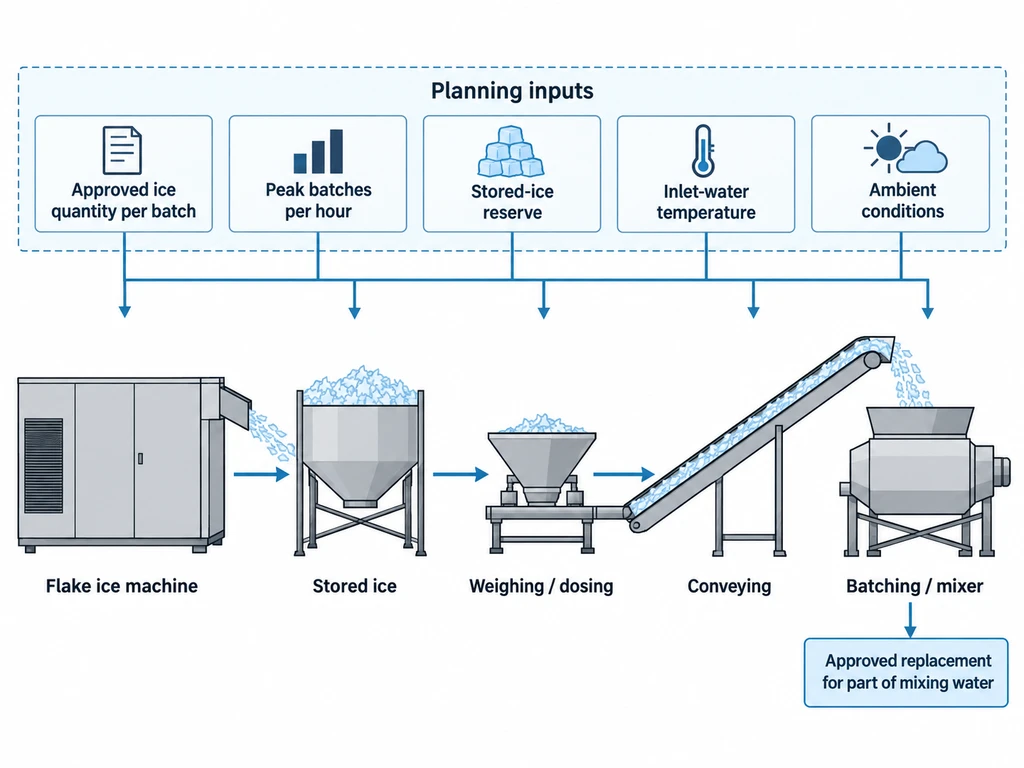
Precooling can include chilled mixing water, cooled aggregates, or ice used as an approved replacement for part of the mixing water. Ice must be included in the total water balance; it is not additional water added to the mixture.
Verify the required ice quantity for each batch, the method of weighing or dosing it, and the time needed for complete incorporation. The batching procedure should prevent unaccounted water, unmelted ice, or inconsistent delivery between batches.
Equipment capacity should be based on the approved ice quantity per batch and the peak number of batches per hour. A 20 ton flake ice machine is rated at 20,000 kg per 24 hours under stated standard conditions of 30°C ambient temperature and 20°C inlet-water temperature. That nominal daily rating does not by itself confirm hourly production, stored-ice availability, conveying capacity, utility demand, or output under the project’s actual conditions.
Insulation and Surface Protection
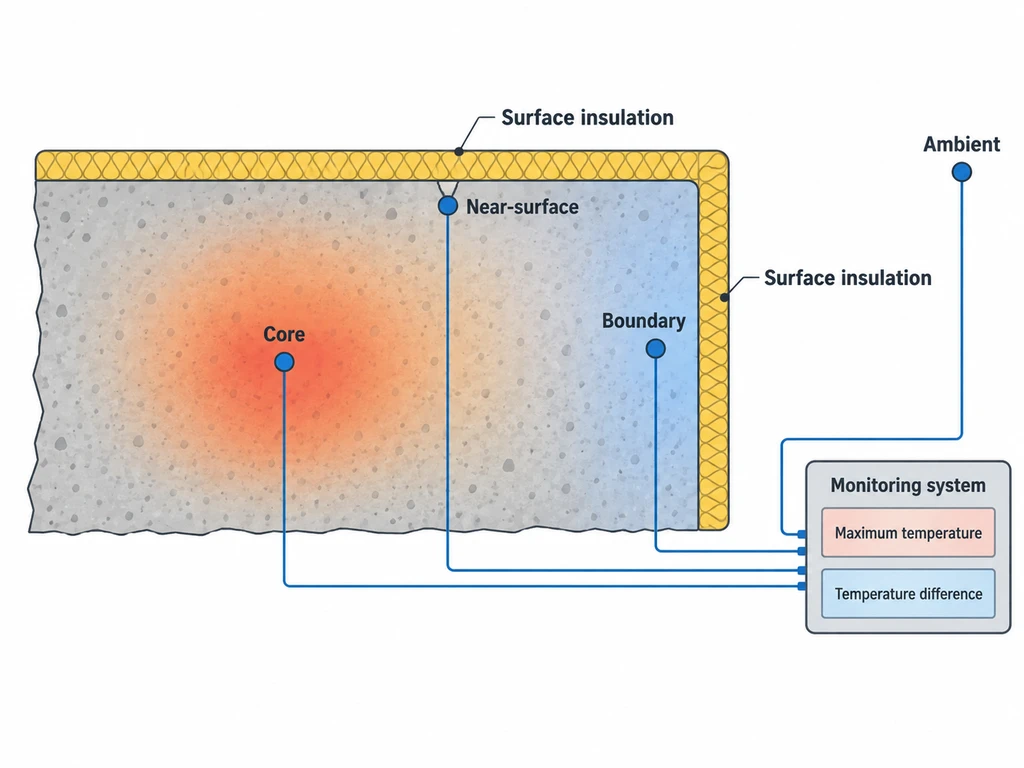
Insulation limits rapid surface cooling and helps control the temperature difference between the warmer interior and exposed boundaries. Forms, blankets, edges, corners, penetrations, and changing weather can create different heat-loss conditions around the same placement.
Install the specified insulation continuously and protect it from displacement, water damage, traffic, and wind. Inspect laps, joints, corners, form interfaces, and penetrations because small unprotected areas can cool differently from the surrounding surface.
Insulation can retain heat as well as limit surface cooling. Its type, coverage, installation time, and removal sequence should therefore follow the approved thermal plan and measured temperature data. Do not remove or reduce protection solely because ambient conditions appear favorable.
Temperature Monitoring
Install and protect sensors at the approved core, near-surface, boundary, and ambient locations. Where redundancy is required, confirm that the backup sensor is separately identified and connected.
Before placement, verify sensor identification, operation, logging interval, communication, power, data storage, and backup retrieval. After placement begins, check that readings remain plausible and that data are being retained.
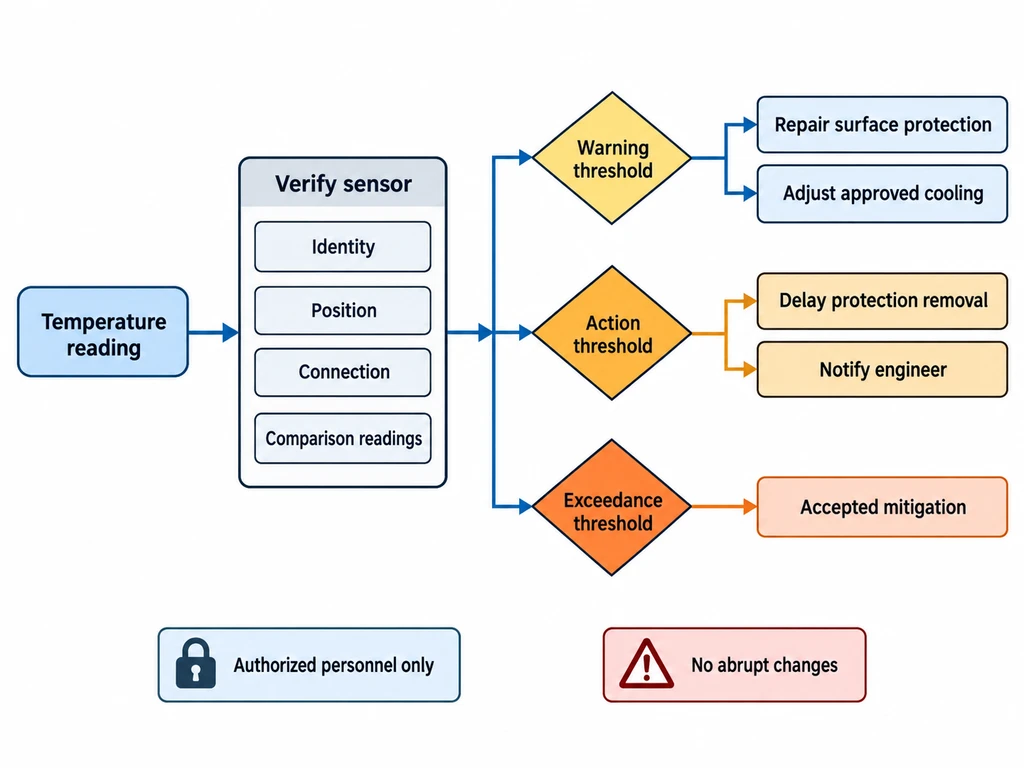
Monitoring should continue for the specified period and report maximum temperature and the controlling temperature differences separately. Before treating an unusual reading as a concrete event, check sensor identity, position, connection, nearby field activity, and comparison readings without delaying any required protective action.
Temperature Response Procedures
Warning, action, and exceedance thresholds should be established before placement. Field responses may include verifying the sensor, repairing surface protection, adjusting an approved cooling operation, delaying protection removal, notifying the engineer, or implementing an accepted mitigation procedure.
Only authorized personnel should change an active thermal-control measure. An aggressive correction can create a new temperature gradient, so cooling flow, insulation, or exposure should not be changed abruptly without the required technical review.
The guide on using flake ice for batch-plant concrete cooling explains why approved water replacement and peak delivery requirements must be established before ice equipment is selected or operated.
What Happens After the Mass Concrete Pour?
After placement, curing, thermal protection, monitoring, inspection, and documentation continue until the project’s completion criteria are satisfied. Finishing the surface does not end thermal control.
Concrete Curing
Begin the approved curing method at the required time and maintain moisture and temperature protection without damaging the surface. Coordinate curing compounds, wet curing, forms, and insulation so that one measure does not interfere with another.
Inspect exposed surfaces, edges, penetrations, joints, and damaged insulation. Record repairs and weather events that could change surface cooling.
Maintain access to monitoring equipment and cooling-system controls throughout the required period. Activities on or near the placement should not damage leads, insulation, manifolds, or temporary protection.
Protection Removal Criteria
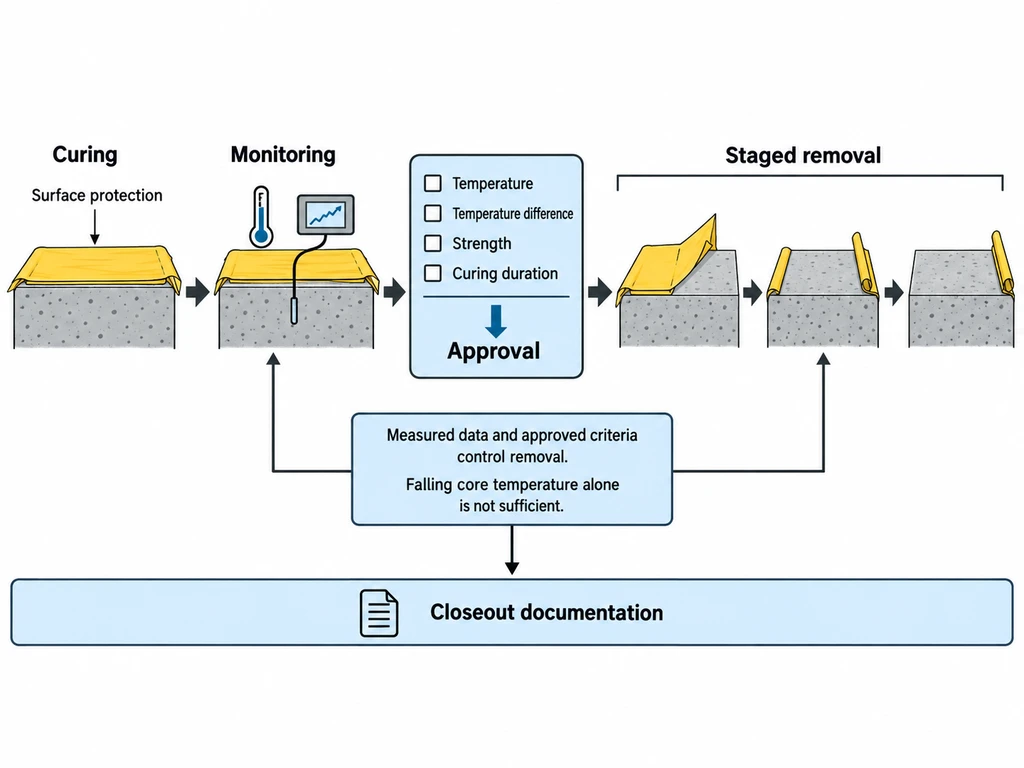
Remove forms or insulation only after the applicable temperature, temperature-difference, strength, curing-duration, and approval criteria have been met. A falling core temperature alone is not sufficient because exposing the surface can increase the temperature difference.
Use measured data and the approved staged-removal sequence. Temporary protection may still be necessary during cold, windy, wet, or rapidly changing conditions.
Record the time, location, temperature condition, weather, and authorization for each material change in surface protection.
Closeout Documentation
Closeout records should document temperature results, fresh-concrete tests, placement interruptions, alarms, corrective actions, protection changes, and approvals. Compare measured temperature behavior with the approved predictions and resolve unexplained gaps, sensor failures, or acceptance issues.
Where embedded cooling pipes were used, complete shutdown, flushing, draining, pressure testing, grouting, or connection removal as required by the project documents.
The closeout package should identify the accepted completion date, final condition of temporary systems, unresolved exceptions, responsible approvals, and records retained for future placements.
When Does a Mass Concrete Pour Require an Ice Supply Plan?
Prepare an ice supply plan when the approved mixture and thermal control plan require batch ice during peak production. The plan should translate the approved ice quantity per batch into the production, storage, weighing, and delivery capacity needed for the actual pour schedule.
Before requesting an equipment review, provide the approved ice quantity per batch, peak batches per hour, expected pour duration, required stored-ice reserve, inlet-water temperature, ambient conditions, power supply, cooling-water availability, site layout, and ice-delivery arrangement.
These inputs allow Mike Ice Machine to review preliminary production, storage, and conveying feasibility. Equipment selection does not establish the project’s concrete temperature limits, approved water replacement, or acceptance requirements.
External Sources
- ACI PRC-207.1-21: Mass Concrete—Guide
- ACI 207.4R-20: Report on Cooling and Insulating Systems for Mass Concrete
- ACI: Temperature Limits for Mass Concrete
- ACI: How to Control Mass Concrete Temperature During Construction
- ASTM C1064/C1064M-23: Standard Test Method for Temperature of Freshly Mixed Hydraulic-Cement Concrete
- Mass Concrete for Buildings and Bridges