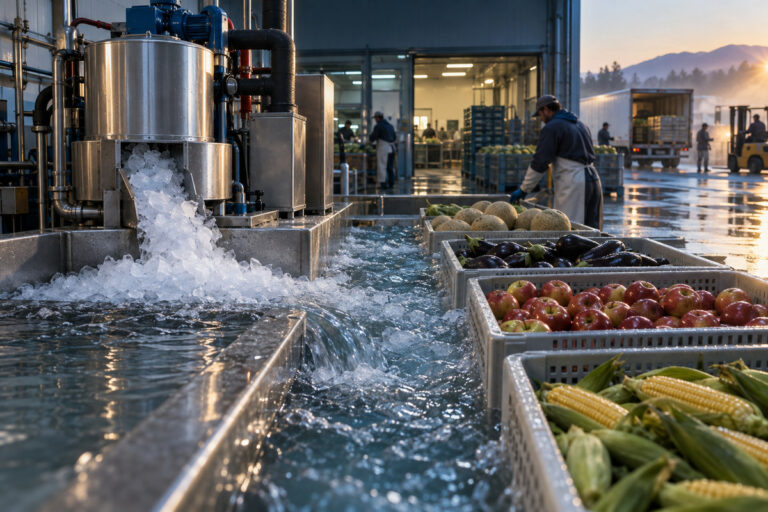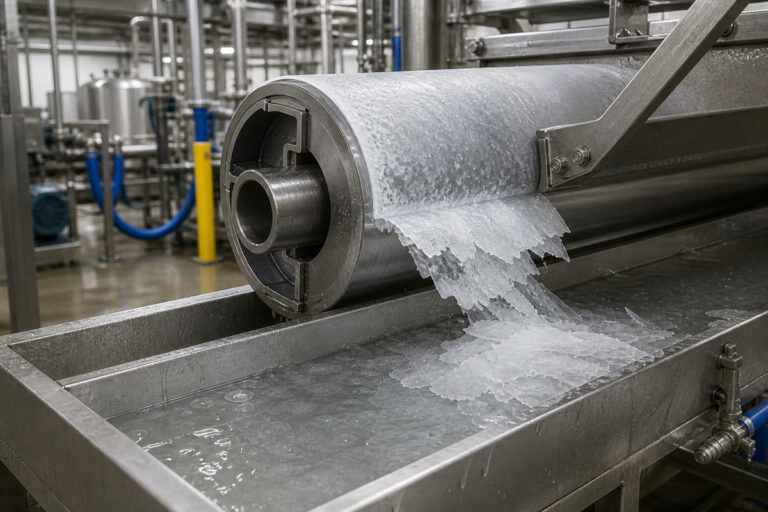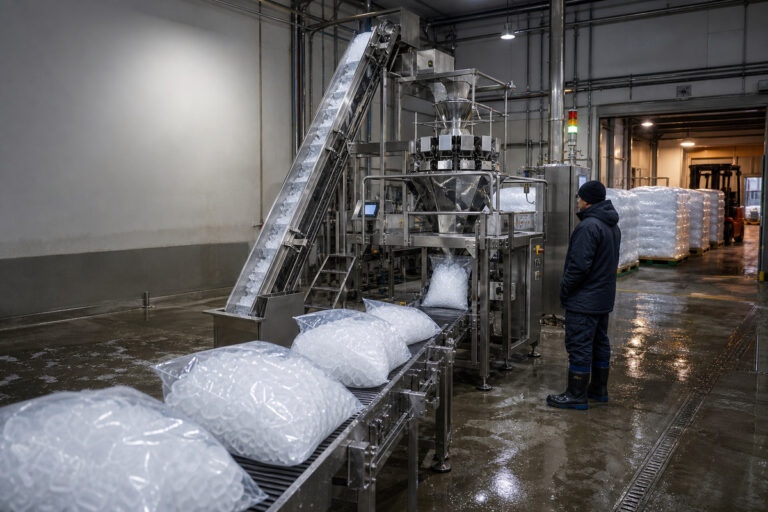

Use flake ice when the approved mix design needs ice to replace part of the mixing water so concrete can meet its specified temperature at discharge. The batch plant must also confirm the approved water replacement and peak ice delivery; hot weather alone does not establish the need for ice.
When Should a Batch Plant Use Flake Ice for Concrete Cooling?
Use flake ice when the project temperature requirement, approved mix, and plant controls all support measured ice replacement. Batching ice in place of mixing water is one way to produce a lower as-placed concrete temperature.
| Batch-Plant Condition | What to Confirm | Decision Meaning |
|---|---|---|
| A specification sets a concrete temperature at discharge or placement | The exact limit, measurement point, and acceptance responsibility | Use the project requirement, not a generic seasonal target. |
| Trial batches or an approved temperature calculation show that chilled water alone will not meet the limit | The approved ice replacement amount and total mixing-water balance | Ice may be a justified cooling measure. |
| The approved mix allows ice to replace part of the mixing water | The maximum replacement amount and the batching sequence | The mix can accommodate an ice-based temperature-control measure. |
| The batch plant can weigh and deliver the planned ice amount for each batch | The ice path, weighing point, and short-dose response | The plant can control the approved dose during production. |
The available sources do not establish a universal flake thickness, melt time, or temperature reduction for concrete. Confirm those project outcomes through the approved mix design and testing before production.
What Temperature Requirement Should Control the Decision?
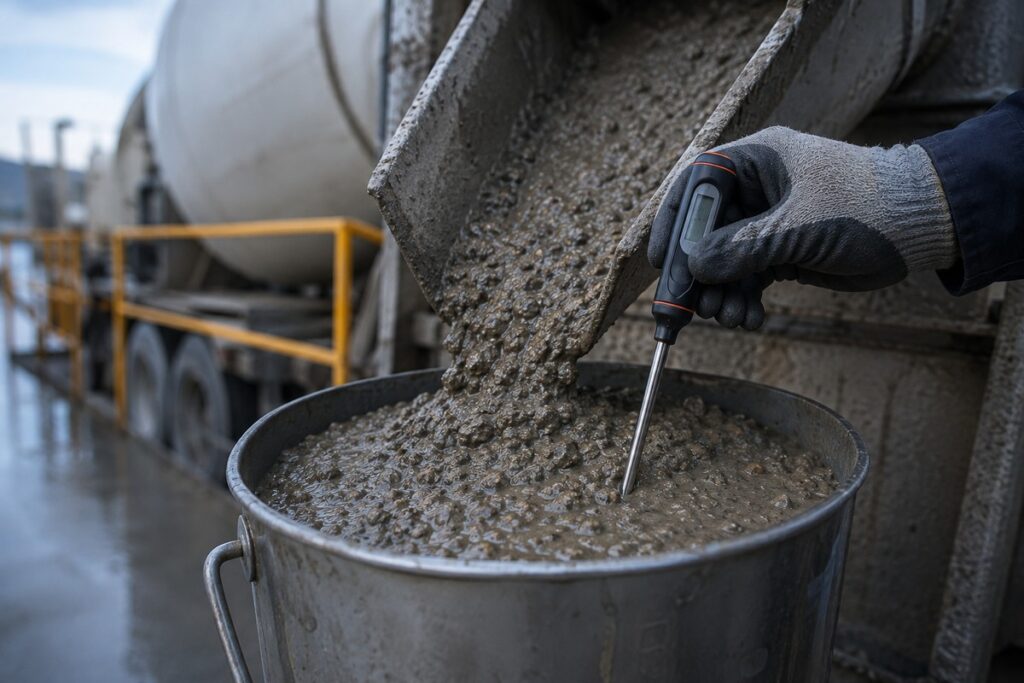
The project temperature requirement controls the concrete cooling decision. Tie that requirement to a defined measurement point and acceptance process before the batch plant selects an ice allowance or equipment capacity.
Project Temperature Requirement
Use the project specification and its qualification requirements. Hot-weather work involves more than setting one concrete temperature: delivery, mixing, placing, curing, and environmental conditions can all affect the result. (ACI 305R-20)
Ask the engineer of record which temperature governs, where the team will measure it, and what testing or field experience supports the approved mix. Size the flake ice system to that documented requirement rather than to an assumed weather condition.
Flake Ice as Part of the Control Plan
Flake ice can be one component of the control plan when other conditions also affect concrete temperature or placement. Material selection, cooling aggregates and mixing water, batching ice in place of some mixing water, placement planning, and curing measures are among the controls a project may use. (ACI temperature-control FAQ)
Use flake ice when the approved calculation shows that replacing part of the mixing water is practical. If the water allowance is too small, or aggregate and delivery heat dominate the result, confirm the right measure with the concrete engineer instead of assuming a larger ice machine will solve the problem.
How Should a Batch Plant Plan Ice Demand and Delivery?
Plan ice demand around the highest sequence of approved batches, not the daily total. The system must make, store, weigh, and deliver the required ice when each batch needs it while preserving the approved water balance.
Setting the Approved Ice Allowance
Set the ice allowance from the approved mix design, expected material temperatures, and trial-batch results. Methods exist for estimating concrete temperature with ice, but an estimate does not replace qualification of the actual mixture under expected conditions. (ACI 305R-20)
Record the target temperature, approved ice replacement, batch size, mixer sequence, and acceptance measurement in one control sheet. This record lets the batch plant compare the planned amount with the amount that enters each batch.
Meeting Peak Batching Demand
Production recovery, usable storage, and delivery rate must match the busiest batching window. Convert the approved ice allowance into demand for that window, then check each part of the ice path against it before selecting equipment.

A nominal daily production rating does not show whether enough ice is available during a concentrated pour. After the project team sets the trial-batch allowance, the industrial ice machine sizing guide can help organize the production, storage, and peak-demand inputs that a daily rating can hide.
Controlling the Ice Handoff
The plant should weigh ice at the approved batching point and deliver it through a defined path to the mixer. Confirm which control system releases the ice, what batch record shows the measured weight, who responds to a short delivery, and who can stop production when a measured dose falls outside the approved procedure.
This weighing-and-handoff process is a plant requirement, not a claim about a specific machine configuration. When documenting that handoff, the flake ice machine selection guide can help the procurement team turn the ice path, weighing point, and control boundary into supplier questions.
When Does a Concrete Cooling Project Need a Separate Technical Review?
Mass concrete and low-water mixes need a separate technical review before the plant applies a general hot-weather ice plan. These cases can change both the temperature-control strategy and the amount of mixing water that ice may replace.
Mass Concrete Thermal Planning
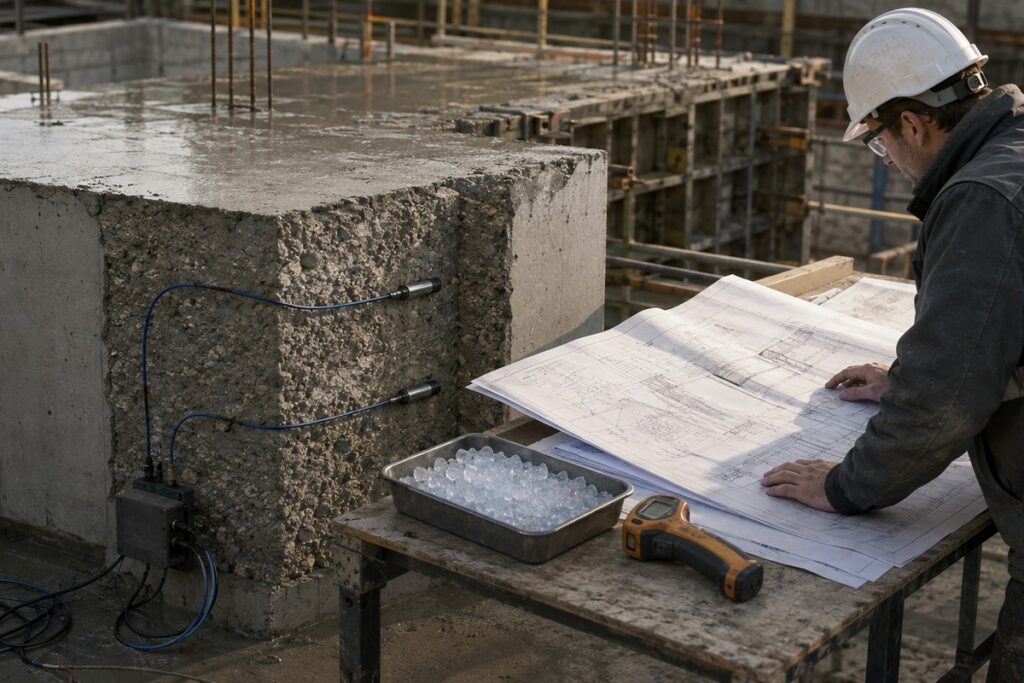
Mass concrete requires a project thermal plan rather than a generic hot-weather target. Projects with mass-concrete temperature, volume-change, or cracking concerns need mass-concrete guidance rather than a general hot-weather plan; its listed controls include materials, cooling before batching, placement planning, curing, embedded cooling, and insulation. (ACI technical Q&A on hot-weather temperature limits)
For a mass-concrete project, the engineer should define the placement temperature, temperature-differential limits, monitoring plan, lift sequence, and any post-cooling requirements. Flake ice may be part of that plan, but it is not the entire thermal-control solution.
Limited Water-Replacement Allowance
Little allowable water replacement can limit how much cooling ice can contribute. That limit is an inference from the approved water balance: the approved mix design limits the amount of mixing water that ice can replace.
Confirm the allowable water replacement with the concrete engineer before selecting the ice system. If the allowance is small, the project may need another temperature-control measure or a combined control plan.
What Should the Batch Plant Send for an Ice-System Quote?
Send the approved temperature-control inputs, the actual batch schedule, and the site conditions that affect the system. Provide the following data before asking for a capacity recommendation.
| Input Group | Include in the Quote Request | Why It Matters |
|---|---|---|
| Concrete requirement | Target temperature, measurement point, mix design, maximum ice replacement, and qualification record | Shows whether the mix permits ice and how much the process must deliver. |
| Batch schedule | Batch size, peak batches per hour, pour duration, daily total, and recovery periods | Determines peak production, storage, and delivery needs. |
| Plant interface | Mixer type, ice entry point, weighing control, control-system boundary, and short-dose procedure | Defines how the approved ice amount reaches each batch. |
| Site conditions | Ambient conditions, available utilities, layout, delivery distance, and project duration | Identifies configuration questions that daily tonnage alone cannot answer. |
With those inputs set, an initial equipment comparison can include the 20 Ton Flake Ice Machine, which Mike Ice Machine lists as water-cooled with a 20-tons-per-24-hours rating. That rating does not replace the project calculation or the quote-request data above.
If the calculated demand calls for another output range, compare the flake ice machine range against the same peak-demand requirement rather than selecting by product family alone.
Where utilities or heat rejection affect the review, the air-cooled versus water-cooled guide gives the team context for that specific question. This guide does not establish the right configuration for this project.
FAQs
Can a Batch Plant Add Flake Ice as Extra Water?
No. Treat flake ice as planned mixing water, not as extra unplanned water: the approved mix must state the amount of water that ice can replace. (ACI temperature-control FAQ)
Can a Project Use a Concrete Temperature Above 95°F?
Yes, but not by treating 95°F as a universal limit or waiving the project qualification process. The 95°F maximum applies to general hot-weather construction; a higher mixture temperature requires successful past field experience or testing before construction, with the request submitted to the architect or engineer before placement. (ACI technical Q&A on hot-weather temperature limits)
How Is Concrete Temperature Verified?
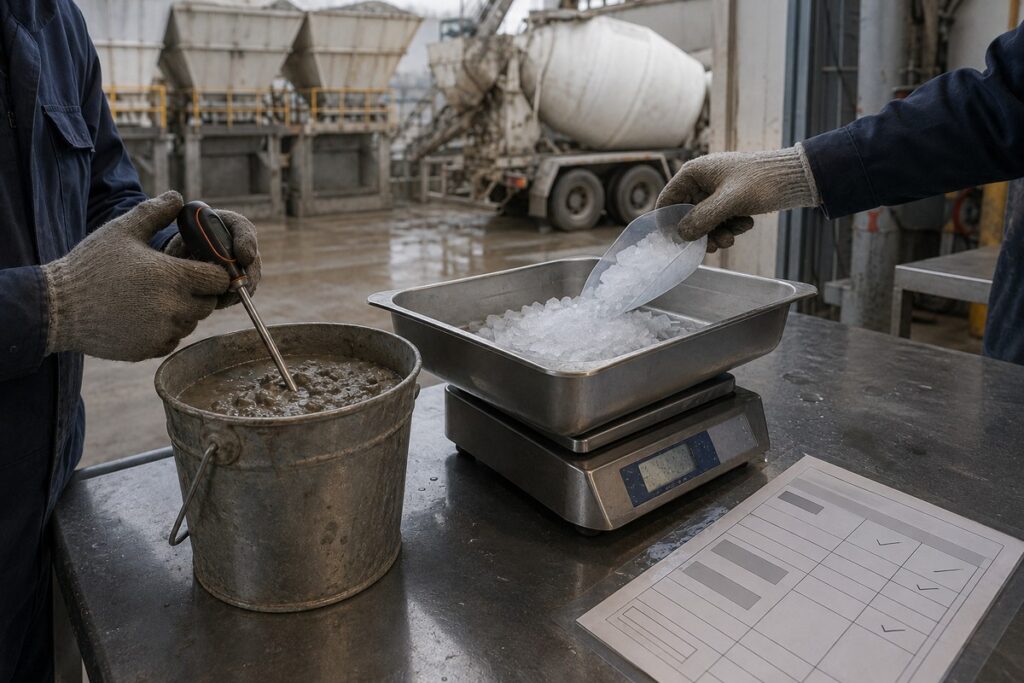
Verify fresh-concrete temperature with the project-specified acceptance procedure. ASTM C1064 is the standard test method: read the temperature from a measuring device inserted into freshly mixed concrete. (ACI FAQ 825)
When the documented inputs are ready, send them to Mike Ice Machine for a project-specific equipment review.