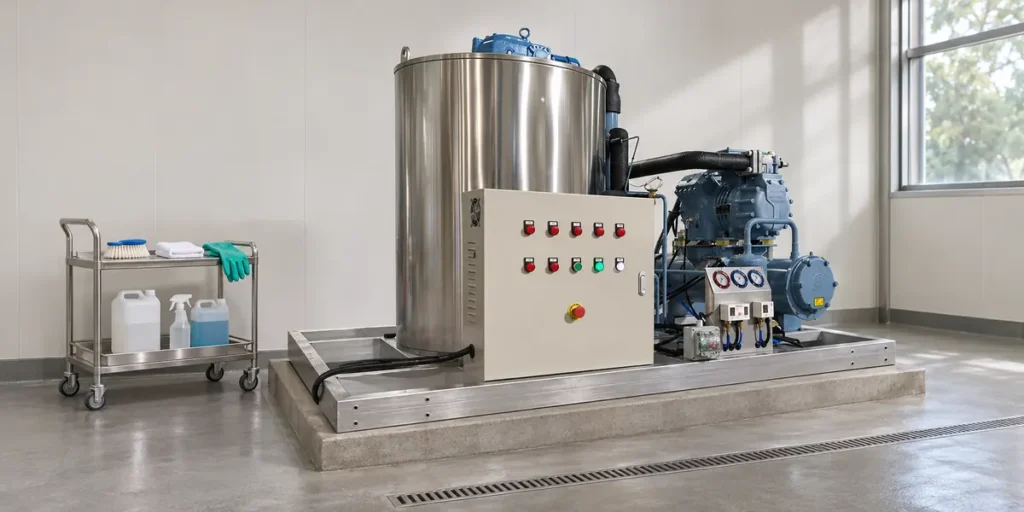
Maintaining a flake ice machine involves three separate tasks: cleaning removes loose debris and residue, descaling dissolves mineral deposits from the water system and freezing surfaces, and sanitizing reduces microorganisms on cleaned surfaces. Service is complete once the required rinse or flush finishes and any ice designated for disposal is gone.
Procedures vary by model, so first check how your machine circulates cleaning solution, where ice goes during maintenance, and which parts you can safely remove.
What to Check Before Cleaning a Flake Ice Machine
Before shutting down the equipment or mixing chemicals, confirm your model’s service requirements, trace its water and ice paths, and stage the required supplies.
Use the model and serial number on the nameplate to find the correct manual. Check how the machine drains, whether it has a dedicated clean cycle, and which parts require a technician. Some models circulate solution through a separate maintenance program; others use part of the normal ice-making cycle. If there is no clean button, follow the manual’s cleaning and sanitizing procedure before operating the controls.
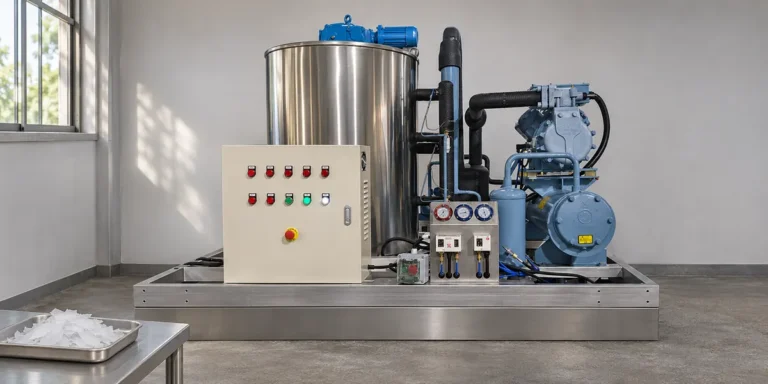
Trace both paths through the installation. The water path runs through components such as the reservoir, pump, and water distributor to the evaporator, where ice forms. The ice path starts at the discharge chute and continues through the bin or any separate conveyor. Knowing how flake ice forms and leaves the drum helps you see where both paths meet and where to check for buildup.
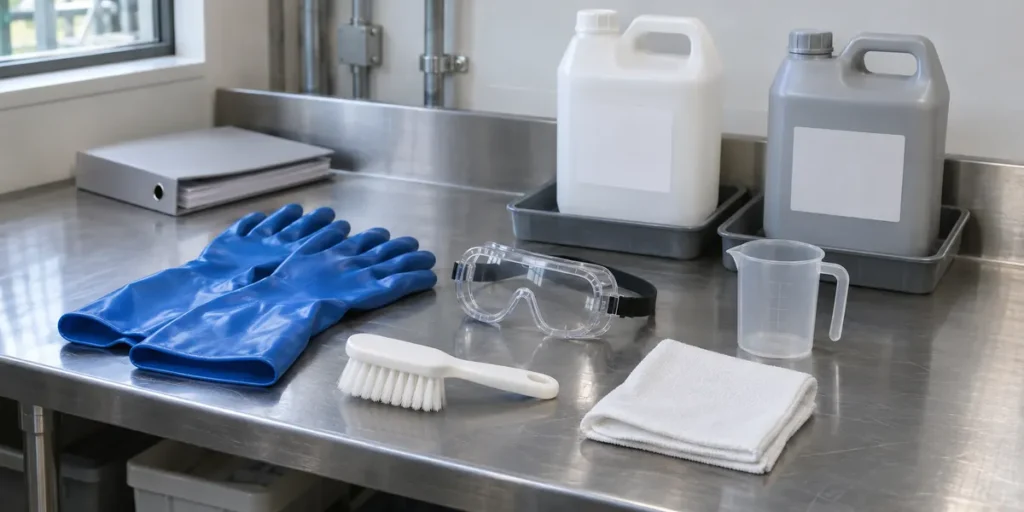
Stage the approved descaler and sanitizer, clean tools, and the protective equipment listed on the product labels. Verify dilution, water temperature, contact time, and rinse instructions before mixing either solution. If production relies on a steady ice supply, arrange backup ice and allow time for flushing and restart checks.
How to Clean a Flake Ice Machine Step by Step
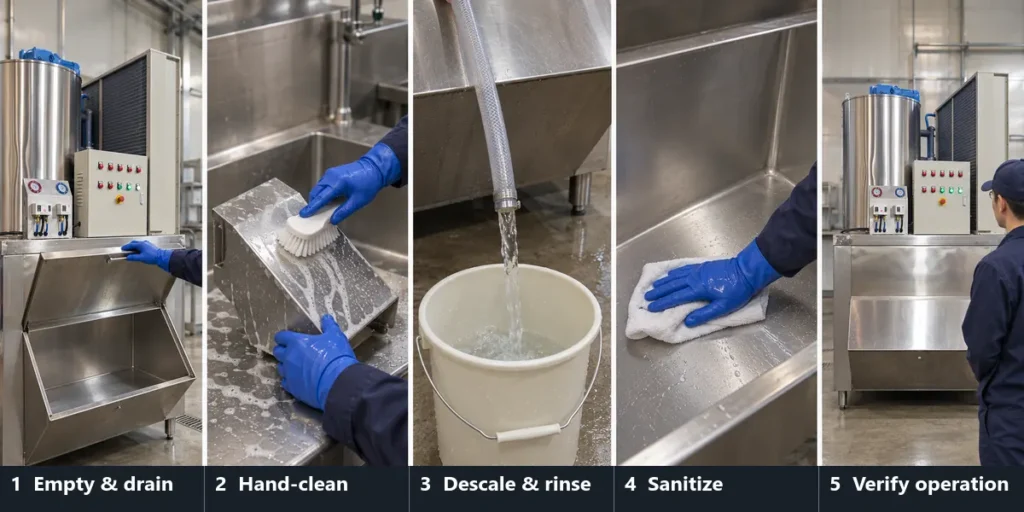
Follow these five steps in order to isolate and drain the unit, clean ice-contact surfaces, descale and sanitize the system, and verify normal operation before returning the machine to service.
Step1: Stop Ice Production, Empty the Bin, and Drain the Water System
Stop normal ice production, take the bin or downstream ice-handling equipment out of service, and empty the bin before introducing chemicals. Discard any ice that may have contacted contaminated surfaces.
Shut off the ice-making water supply, then drain the reservoir and other points listed in the procedure. Because some models need power to operate a drain valve or circulate solution, follow the site’s energy-isolation procedure before reaching inside or removing parts that expose moving components. Restore power for a machine-run cycle only when the manual specifies.
Step2: Clean Ice-Contact Surfaces and Removable Parts
Clear out loose ice and debris, then wash the bin liner, discharge chute, and other specified ice-contact surfaces. For industrial installations with separate storage or conveying equipment, clean those units per their instructions as well.
Remove only parts the manual designates for routine cleaning, such as a chute cover or baffle on some models. Clean seams, corners, and the bin drain with a soft brush or cloth where permitted. Leave any part scheduled for post-descaling removal in place until that step.
Step3: Descale and Rinse the Water System
Add an approved descaler for the evaporator and water-contact materials at the specified fill point, then run the prescribed circulation or soak. Discard any ice produced during descaling, isolate separate conveyors or storage systems, and keep an integrated bin out of service until final bin treatment is complete.
Drain the used solution and complete the specified fresh-water rinse or flush before adding sanitizer. If heavy buildup causes grinding, squealing, or repeated shutdowns on a screw-driven machine, stop and call a technician; severe scale on affected models can prevent the standard cleaning cycle from finishing.
Step4: Sanitize the Water System and Ice-Contact Surfaces
After clearing the descaler, apply the approved sanitizer to the water circuit and cleaned ice-contact surfaces as directed. For consumable or food-contact ice, use a food-contact sanitizer and keep surfaces wet for the required contact time. Prepare sanitizer separately; never mix it with descaler.
Rinse requirements may differ between the bin liner and the internal circuit, so check the label for each application. Complete the specified rinse, drain, or final treatment for each surface, and discard any ice made with sanitizing solution.
Step5: Verify Operation Before Returning the Machine to Service
Reinstall all parts, drain fittings, panels, and guards, then restore the water supply and controls in the order specified by the manual. During the first run, check for proper filling and drainage, leaks at disturbed connections, and steady ice discharge without alarms or abnormal noise.
Complete the model’s startup flush and discard any maintenance ice. If maintenance ice or solution entered the bin, finish the prescribed bin cleaning, rinse, and food-contact sanitization before releasing ice. Record the service date, chemicals used, and any follow-up issues.
How Often Should You Clean a Flake Ice Machine?
Set separate intervals for the water system and storage bin. Howe’s Rapid Freeze maintenance instructions, for instance, call for cleaning and sanitizing the flaker every six months and servicing bins and carts every one to three months. Follow your equipment’s schedule, and shorten it if scale or residue appears early.
| Maintenance Task | When to Do It | Signs It Is Needed Sooner |
| Clean and sanitize the storage bin and ice-contact parts | Per bin and machine schedules; promptly after any contamination. | Visible residue, slime, mold, or contamination from handling |
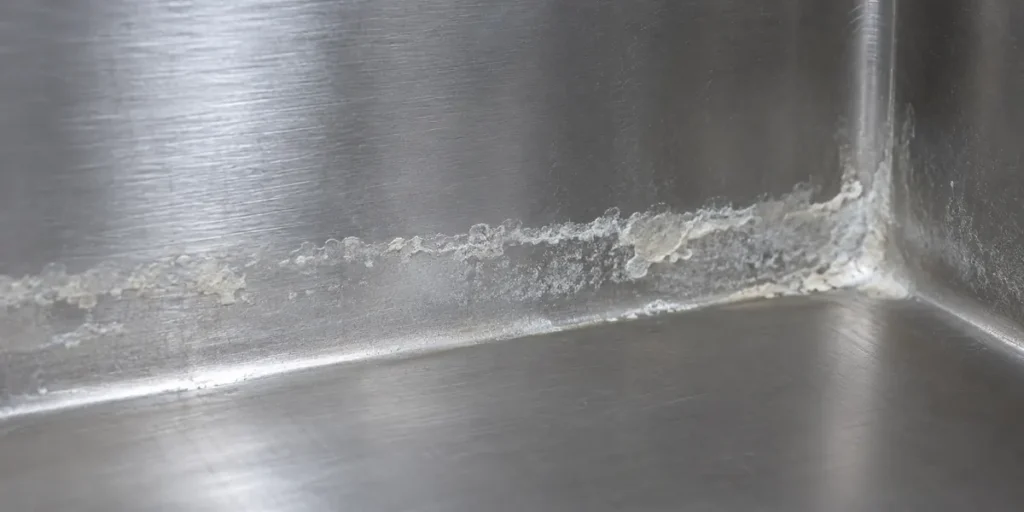
| Descale the water system | At the model’s specified interval; shorten if deposits appear between services. | Mineral deposits on water-contact parts or restricted flow through the distributor |
| Sanitize the water system | Per the model’s schedule, and on cleaned food-contact surfaces before reusing for food-use ice. | Visible slime or suspected contamination (stop serving ice, clean, and sanitize before restarting). |
For maintenance guidance on a Mikeicemachine flaker, share your model and operating conditions.
FAQs
How Can You Prevent Scale From Coming Back in a Flake Ice Machine?
Test the inlet water and compare its hardness against the manufacturer’s water-quality guidance. Hardness comes mainly from dissolved calcium and magnesium, which pass through sediment filters. If hardness drives the buildup, select a machine-approved water treatment and verify that treated water falls within the model’s allowable range. On machines with an adjustable purge that drains mineral-rich water, confirm it operates at the specified setting.
How Do You Prepare a Flake Ice Machine for an Extended Shutdown?
Follow the model’s long-term shutdown procedure to clear trapped water before storage, especially where temperatures may drop below freezing. Emptying the reservoir alone can leave water in the supply line, evaporator, or separate condenser circuit on water-cooled units. Use the manual’s drain points and sequence, have a qualified technician service the condenser circuit or lines if required, and leave the storage bin clean and dry.
Why Is Ice Production Still Low After Cleaning?
Check items most likely altered during service: confirm the inlet valve is fully open, the filter passes sufficient water, and the drain hose or plug is properly reinstalled. If the machine fills normally but output stays low, compare production over equal run times under similar inlet-water and ambient temperatures. Persistent low output, abnormal noise, or an alarm requires diagnosis before running another chemical clean.
External Sources
- Howe Rapid Freeze Ice Flaker and Ice Storage System Maintenance Instructions
- Scotsman Prodigy Plus D Series Modular Flaked and Nugget Ice Machines Installation and User Manual
- Hoshizaki Modular Flaker Instruction Manual
- Manitowoc Service Bulletin on Cleaning Heavily Scaled Flake, Chiplet, and Nugget Ice Machines
- Scotsman Product Application Bulletin on Water Softeners
- FDA Food Code 2022