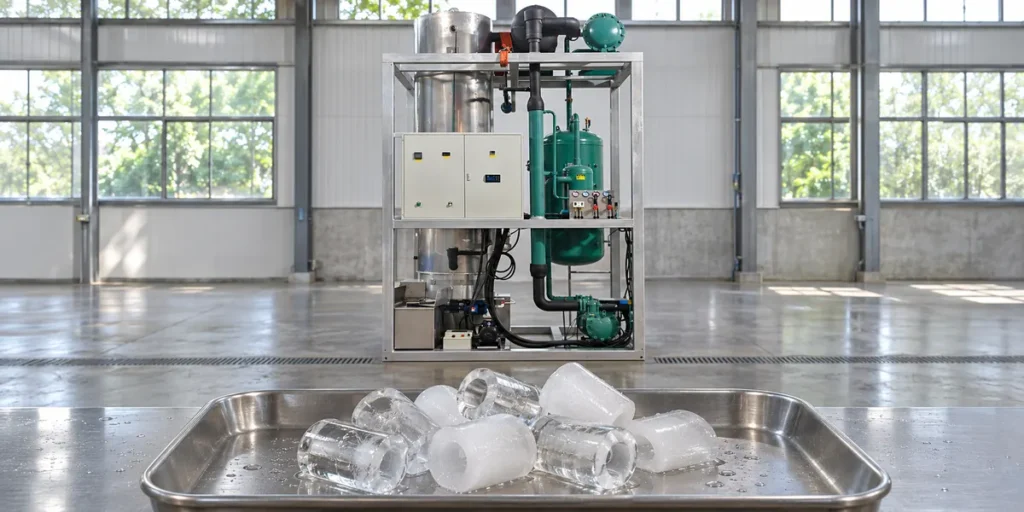
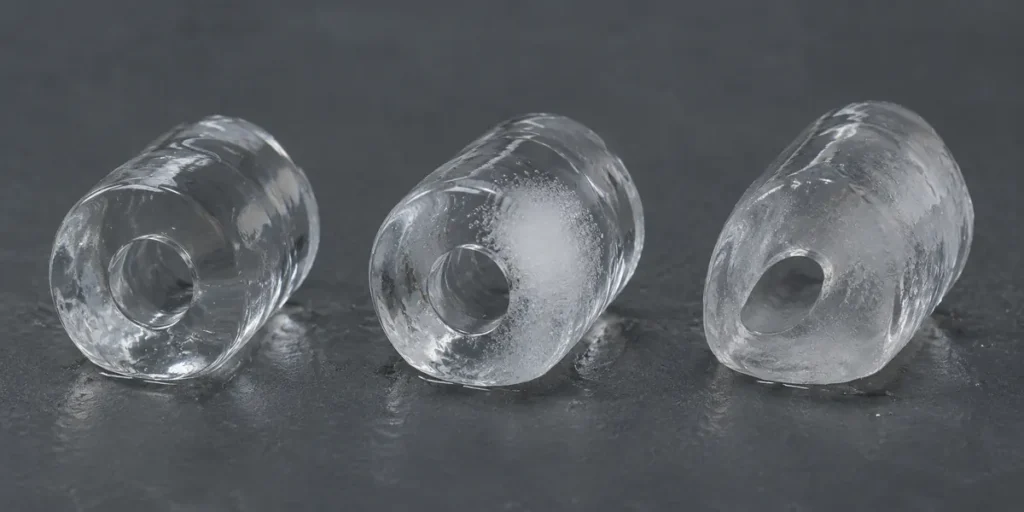
Tube ice turns cloudy when dissolved minerals concentrate in the circulating water, or when air bubbles and suspended particles get trapped during freezing. Uneven water flow can also leave individual pieces cloudy and misshapen. When ice leaves the machine clear and turns white later, the cause is usually surface frost or melting and refreezing during transfer or storage.
Start by checking where the whiteness sits. Cloudiness inside a freshly harvested piece points to the freezing process itself, while a white coating that forms later indicates a change after harvest.
What Causes Cloudy Tube Ice?
In an industrial tube ice machine, water flows down the inside of chilled metal tubes, freezing against the walls and growing inward. Most dissolved material stays in the remaining liquid water and drains back into the tank. If the machine discharges too little of this concentrated water, dissolved solids build up over successive cycles and cloud the ice.
Dissolved air can gather along the freezing front and form tiny bubbles that scatter light once trapped in the ice, giving it a white appearance. Suspended particles in the water can get trapped the same way. Because different causes produce similar-looking ice, rely on water readings and the pattern across the batch to narrow down the source.
When only part of a batch turns out cloudy, suspect water distribution. Deposits or debris in a distributor alter how water flows down individual tubes. If cloudy pieces also have uneven walls or irregular center holes, check whether each tube receives an even flow.
How to Fix Cloudy Tube Ice
Work through the checks below in order, starting with visual inspection at discharge before moving to water readings, machine blowdown, and post-harvest handling.
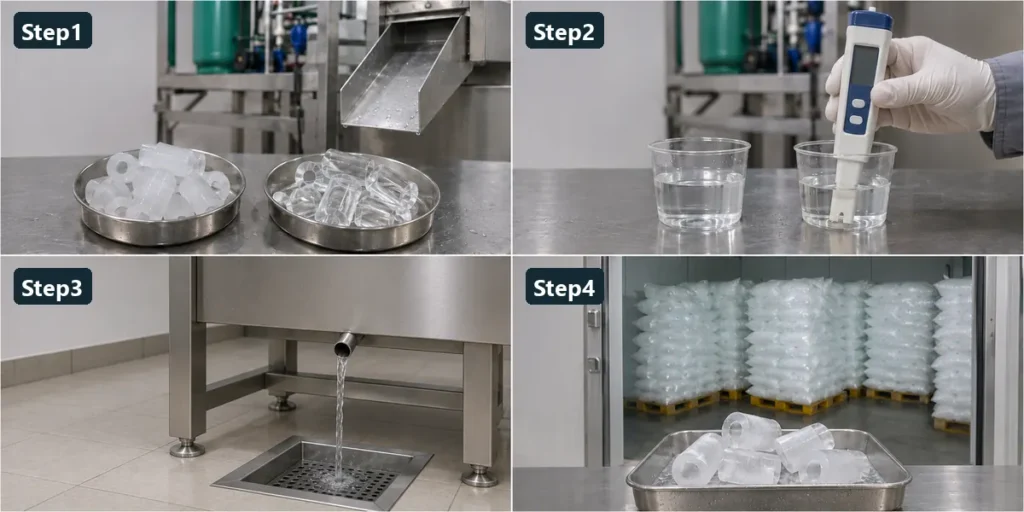
Step1: Identify When and Where the Cloudiness Appears
Compare pieces from the same batch right at the machine discharge and again after their normal time in storage. Inspect them under the same lighting by looking through the side of each piece. Note whether the whiteness sits inside the ice or on the surface, and whether it affects most of the batch or only a few pieces.
| What You See | What to Check First |
| Most pieces look milky inside as soon as they leave the machine | Compare incoming and circulating water in Step2. |
| Some pieces are cloudy and have uneven walls or irregular holes | Check the water distributors in Step3. |
| Ice leaves the machine clear and develops a white surface later | Follow the batch through transfer and storage in Step4. |
Step2: Compare Makeup Water and Recirculating Water
Collect one sample of makeup water (the fresh water entering the ice-making circuit after treatment) and another from the recirculating tank. Test both with the same meter. If your meter estimates TDS from conductivity, enable temperature compensation as directed or bring both samples to the same temperature first. When comparing readings across batches, always sample the tank at the same point in the freeze cycle, since freezing, refilling, and draining shift the concentration.
Total dissolved solids (TDS) measure the amount of dissolved material in the water. Compare both current readings against logs from when the machine produced clear ice. A rise in makeup-water TDS points to a change in your water source or treatment system. When inlet readings hold steady but tank TDS climbs above its normal range during production, check the blowdown in Step3. Tank readings naturally rise as water freezes, so compare the spread between inlet and tank TDS against your clear-ice baseline. Without a baseline, sample at the exact same point across several cycles; a widening gap alongside steady inlet water means you should verify blowdown timing and volume.
If TDS stays near normal levels yet you see scale or visible particles, test for hardness and suspended solids separately. Hardness primarily measures dissolved calcium and magnesium, and a standard TDS meter cannot tell you whether scale-forming minerals or sediment are causing the cloudiness.
Step3: Check Ice-Making Water Blowdown and Distribution
Blowdown discharges a portion of the recirculating water so fresh makeup water can replace it and keep dissolved solids from building up. Locate the water discharge described in your model manual and watch whether water drains at the expected point in the cycle. Depending on the model, discharge happens during freezing, during harvest, or both. If that discharge is missing or weak, have maintenance inspect the drain line and the unit’s valve or siphon before adjusting any settings.
When only part of the batch turns out cloudy with irregular center holes, have maintenance check the distributors for scale deposits, debris, or poor seating. A low tank level during freezing points to an issue with the makeup water supply or level control rather than a blockage limited to individual tubes. Always follow the model’s shutdown procedure before opening the machine. Where deposits restrict flow, a service technician should clean the affected parts according to the manual; the tube ice machine maintenance guide outlines how inspection, descaling, and restart checks fit into that process. If freshly harvested ice remains cloudy after you have verified water quality, blowdown, and distribution, log the freeze and harvest times along with any alarms, and pass those records to a qualified technician to inspect the circulating pump and refrigeration system.
Step4: Inspect Ice Transfer and Storage Conditions
If the ice leaves the machine clear, trace that batch along the chute or conveyor into the storage bin or cold room and mark the exact point where the surface turns white. When whitening happens during a pause at the packing line, check the dwell time and look for early signs of melting. When it develops inside storage, cross-check the affected batches against room temperature logs, door openings, and total holding times.
Surface frost on otherwise clear pieces indicates a post-harvest change rather than an internal freezing issue. Clumped ice frozen together, particularly alongside meltwater, shows that the batch partially melted and refroze. Focus first on wherever the ice warms up or sits waiting before entering cold storage.
How to Confirm the Fix and Prevent Recurrence
After completing repairs, verify ice clarity under the original operating conditions and track shift readings so you can catch water quality drift early.
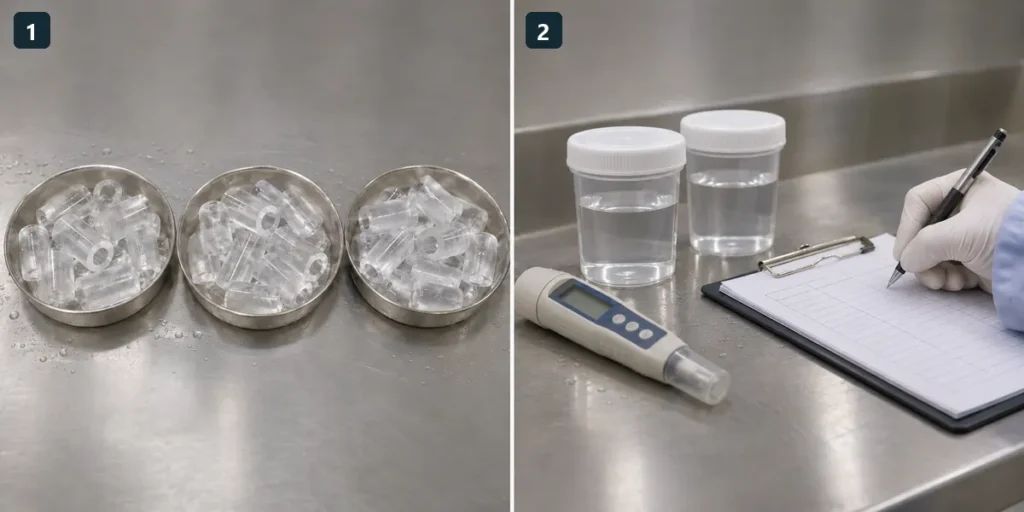
Verify Ice Clarity Under the Conditions That Caused the Problem
After completing repairs, inspect several batches using the exact same sampling points and lighting. When cloudiness previously showed up late in a shift, run the machine for a comparable duration before rechecking the ice and tank water. When the issue only developed after storage, hold a test batch for the normal storage period and inspect it at the same stage. A reliable fix must hold up under the same operating or storage conditions that originally triggered the problem.
Track Water Quality and Blowdown During Production
Log basic checks each shift: ice clarity at discharge, makeup and tank TDS, normal blowdown operation, and any adjustments to filters, water treatment, or machine settings. If the earlier problem occurred during storage, record holding times and temperature spikes as well. Keeping this baseline lets the next shift catch drift early. When tank TDS starts climbing against steady makeup-water readings, operators can inspect blowdown before the ice turns visibly cloudy again.
FAQs
Can Tube Ice Still Look Cloudy When TDS Is Low?
Yes. Tiny air bubbles can still form and get trapped during freezing even in low-TDS water. When freshly discharged ice is cloudy despite low TDS readings, check whether the cloudiness affects the entire batch or only misshapen pieces. That pattern tells you whether to inspect the water distributors next.
Will a Water Softener Make Tube Ice Clearer?
It can help if hardness scale is restricting water flow. However, a conventional ion-exchange softener simply swaps calcium and magnesium for other dissolved ions, leaving the overall TDS reading roughly unchanged. When dissolved solids are building up in the tank, verify your blowdown operation before adding or modifying softening equipment.
Why Is Only One Tube Ice Machine Producing Cloudy Ice?
When multiple machines share one water supply, start by comparing inlet and tank readings on the affected unit against a machine making clear ice. First confirm both units receive the same treated feedwater. Where inlet TDS matches but the problem unit’s tank runs above its normal range, compare blowdown performance between the two machines. If the cloudy ice also shows irregular center holes, inspect that unit’s water distributors first.
Get Help With Cloudy Tube Ice
For model-specific troubleshooting, share your machine details with MIKE Ice Machine. Include your machine model, photos of the ice at discharge and after storage, the point when cloudiness first appears, and any makeup or tank water readings you have recorded.