Begin troubleshooting at the discharge where ice leaves the machine. A low bin level points to slow production, interrupted operation, or ice melting in storage. Ice that leaves the machine in good condition can still turn wet inside the bin. New noises are easier to isolate when you note when they start and whether production changes at the same time.
Flake Ice Machine Troubleshooting Chart
Match the symptom observed with covers and guards in place, then begin with the check in the last column.
| Symptom | What to Observe | First Check |
| Low output | Ice falls slowly, the machine stops often, or the bin runs low. | Check the status display for stops or alarms. If the machine runs steadily, measure output at the discharge. |
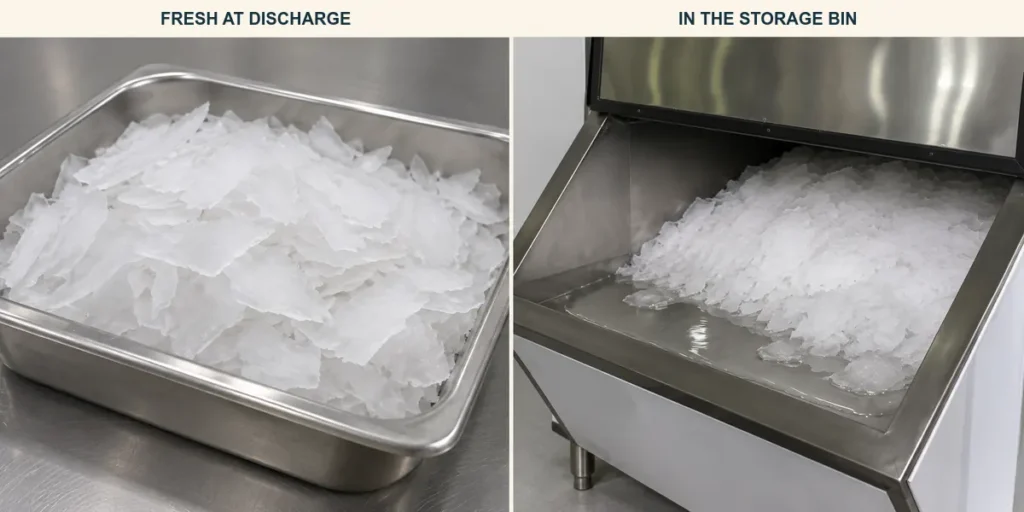
| Wet ice | Water drips from the discharge, or normal ice turns wet in storage. | Compare fresh ice at the discharge with ice in the bin to locate where water first appears. |
| Unusual noise | A new grinding, knocking, or squealing sound develops during operation. | Note when and where it occurs. Stop the machine if you hear sustained metal scraping, see severe vibration, or get repeated drive overload alarms. |
Why Is My Flake Ice Machine Producing Less Ice?
When the bin runs low, first determine whether the machine makes less ice while running or spends less time in production. Each case requires different checks.
Confirm That Ice Output Has Dropped
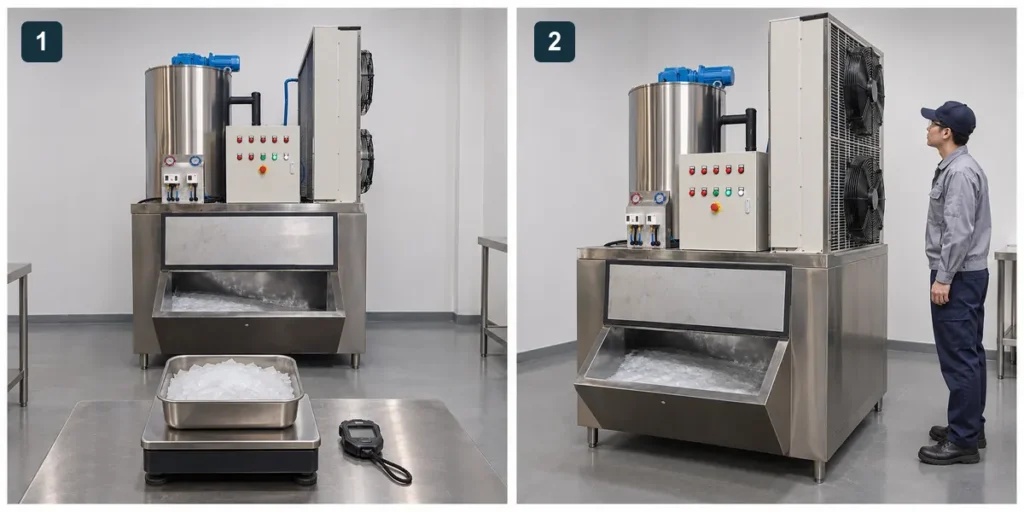
Once the machine reaches steady operation, collect and weigh the ice at the discharge over the period specified in the model’s capacity test. If the test requires removing a chute or guard, have a qualified technician perform the procedure.
Record the inlet water temperature and the cooling conditions listed in the model’s capacity chart, such as the condenser entering air temperature on an air-cooled unit. Convert the sample weight into the units used on the model’s rating before comparing figures. Collecting 5 kg over 15 minutes of steady operation equals 20 kg per hour, or 480 kg over 24 hours of continuous running. Compare that rate with the manufacturer’s rating under the closest test conditions, and use actual ice-making hours to calculate total output for a shift. Warmer inlet water adds heat the machine must remove before freezing starts, which lowers output on hot days even when the unit works normally.
If the measured rate matches the rating but the site runs short by the end of a shift, check how long the machine actually spent making ice. When both rate and run time are normal, compare ice use against production and inspect for melting or losses between the machine and the bin.
Check Operating Conditions
If the machine stops while the bin still has room, read the status display before restarting it. A bin-full indication with space remaining calls for inspecting the bin control and checking for ice piled near the sensing point. A low-water alarm indicates a supply issue. Verify that the inlet valve is open and check whether an external filter restricts flow. If the system displays water pressure, compare the running reading with the model’s specified range.
If the machine runs continuously at a low output rate, inspect heat rejection at the condenser, which transfers heat from the refrigeration system to air or water. For air-cooled units, check the condenser intake for blocked airflow and visible dirt. For water-cooled units, confirm that cooling water is available and compare its temperature and flow with the model’s requirements where readings are available. Inadequate heat rejection lowers ice output or triggers a protective shutdown.
If supply and cooling conditions fall within range and output remains low, have a technician inspect the evaporator freezing surface for mineral scale and test the refrigeration system. Scale slows heat transfer to the freezing surface. An output measurement alone cannot identify a refrigerant fault.
Why Is My Flake Ice Machine Making Wet Ice?
Determine whether liquid water exits with the flakes at the discharge or develops after the ice enters the bin. Inspect the ice through the standard viewing point or collect a sample at the discharge with guards in place. Watch for steady dripping or pooling where the ice lands. Evaluate samples promptly, as ice left in a warm container generates meltwater on its own.
When flakes exit with visible liquid water, inspect any safely visible sections of the water system for overflow or uneven flow. On drum-style machines, water must reach the cold surface and freeze into a layer before the scraper removes it. A blocked outlet in the distribution pan redirects water, while an overflowing pan can send water into the ice chute. The way water freezes and releases from the evaporator varies by machine design. If the water path appears normal yet fresh ice remains unusually wet, especially alongside reduced output, have a technician verify whether the freezing surface reaches the model’s operating conditions.
If freshly discharged ice looks normal and turns wet only inside the bin, check for water dripping from above or collecting at the bottom. A blocked drain holds meltwater in contact with the ice, while an open lid or damaged door seal admits warm air and accelerates melting. Ice also clumps during long storage.
Why Is My Flake Ice Machine Making Unusual Noise?
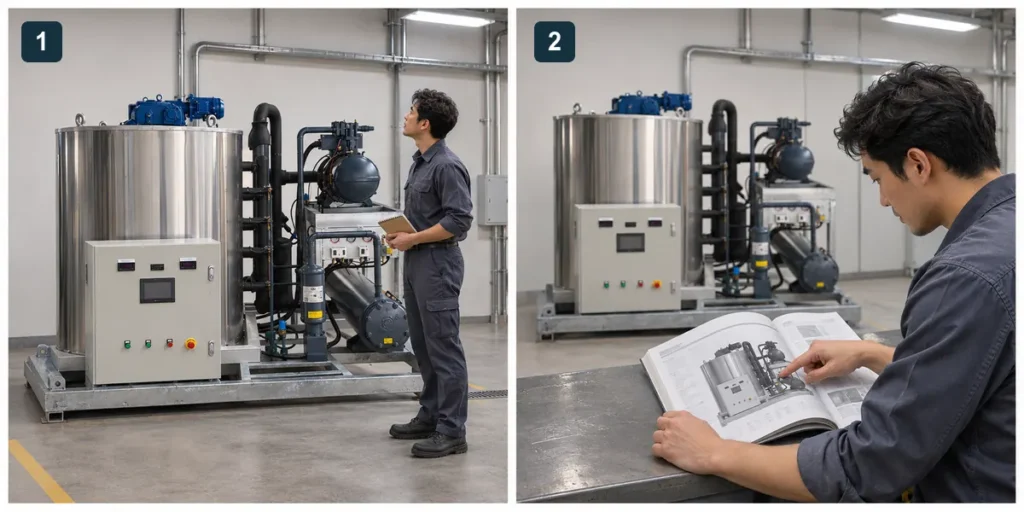
Pinpoint when the noise starts and where it comes from, then check the model manual to see which components operate during that stage.
Identify When and Where the Noise Occurs
Note whether the sound starts when the fan or drive motor starts, continues throughout steady production, or happens only as ice lands in the bin. Standing outside the guards, record where the sound is loudest and whether it coincides with vibration, lower output, or an alarm.
A brief noise occurring only when flakes hit the bin points to the discharge or storage area, whereas repeated scraping near the ice-making section during steady operation directs a technician to a different starting point.
Use the Model Manual to Narrow Down the Cause
Look up the service manual by model number to confirm how the machine removes ice. On drum-and-scraper units, noise from the drum assembly typically leads a technician to inspect the scraper, bearings, and drive. Auger-style units use a rotating screw inside a freezing cylinder, so noise from that area directs the technician to check for scale around the auger or inspect the gearbox driving it.
Occasional creaks or pops occur during normal production on some auger models, though their manuals flag excessive grinding or squealing as a possible sign of heavy scale. Compare the noise against the machine’s usual sound and the manual’s guidance to decide if service is required.
When to Stop the Machine and Call for Service
Shut the unit down immediately if severe vibration or repeated protective shutdowns occur, or schedule service when basic checks do not resolve low output or wet ice.
Stop the machine and call for service if you hear sustained metal scraping, see severe vibration, or get repeated overload or protective shutdowns. Leave the unit off until a qualified technician inspects it, as repeated resets place the drive back under the same load that caused the trip.
Arrange service if output stays low after basic water and cooling checks, or if water continues entering the ice stream from an unclear source. Provide the technician with the model and serial number, alarm code, and the time the symptom started. Include collected weight, test duration, and operating temperatures for low-output issues, or note where liquid water first appeared for wet ice. If you already have a recording of the noise, include it with the time in the operating cycle when it occurred.
Industrial Flake Ice Machines from MIKE Ice Machine
When replacing a machine or planning a new installation, size the equipment based on daily ice demand and available production hours. MIKE Ice Machine manufactures industrial flake ice machines and evaporators in freshwater and seawater configurations for seafood handling, food processing, and other cooling applications. To identify the right configuration for your site, discuss your flake ice machine requirements with MIKE Ice Machine.