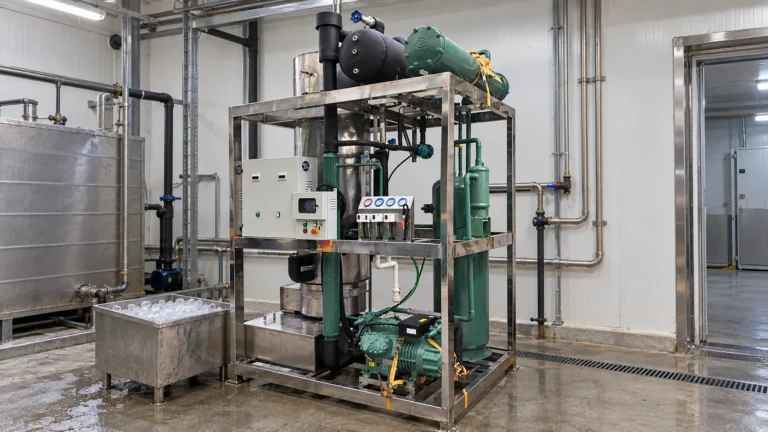
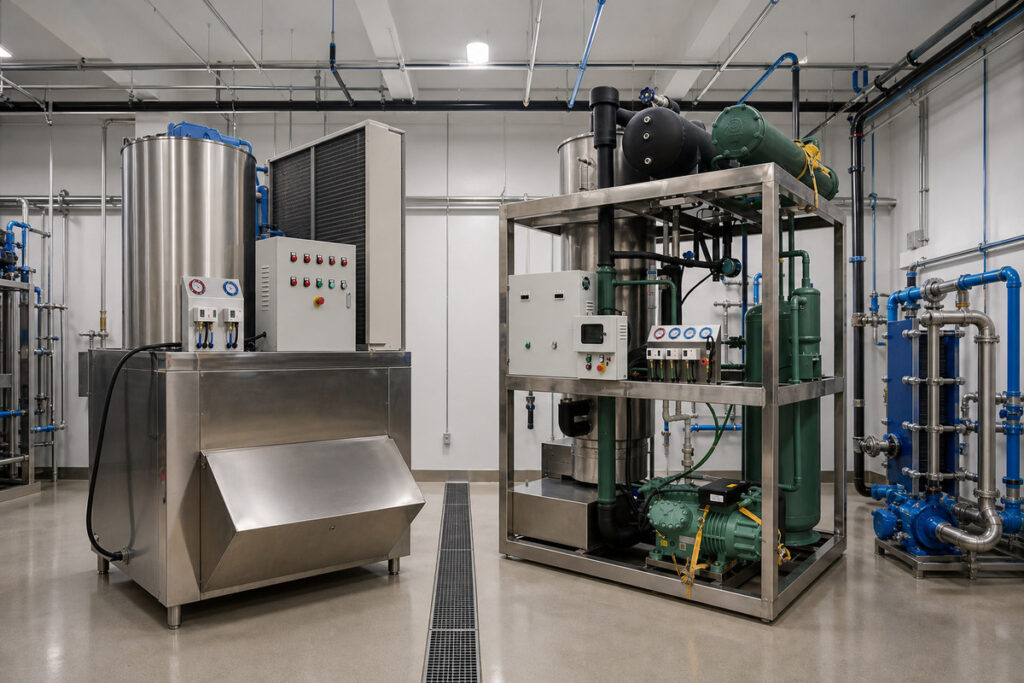
The condenser type changes the site’s airflow, heat-rejection, water, and drainage requirements. An air-cooled machine may lose production if heat builds up around the condenser or airflow is blocked. A water-cooled machine needs separate condenser-water connections and an approved drain or cooling loop.
This guide compares air-cooled and water-cooled ice machines by site fit, production stability, operating cost, and service demand. It also shows what buyers should verify before ordering, including rated conditions, condenser configuration, utilities, and RFQ data.
What Is the Main Difference Between Air-Cooled and Water-Cooled Ice Machines?
The difference is how the condenser releases heat. Air-cooled machines transfer heat to moving air. Water-cooled machines transfer heat to a separate water stream or approved recirculating loop.
| Decision factor | Air-cooled machine | Water-cooled machine |
|---|---|---|
| Heat destination | Room air or an approved remote condenser | Condenser water, then a drain or heat-rejection loop |
| Main site need | Clean intake air and clear discharge airflow | Controlled water temperature, flow, pressure, and chemistry |
| Indoor impact | Adds heat where the condenser operates | Releases much less condenser heat into the machine room |
| Main operating cost | Fan power and possible room cooling | Water, sewer, pumps, treatment, and tower service as applicable |
| Common maintenance risk | Dirty or blocked condenser fins | Scale, sediment, corrosion, or biological fouling |
Heat Rejection Through Air Versus Condenser Water
An ice machine moves heat from the ice-making water into the refrigerant. The compressor raises refrigerant pressure, and the condenser releases the absorbed heat plus compressor heat. Air or condenser water then carries that heat away. Buyers who need the full cycle can review how a tube ice machine works.
Air-Cooled Condenser Operation
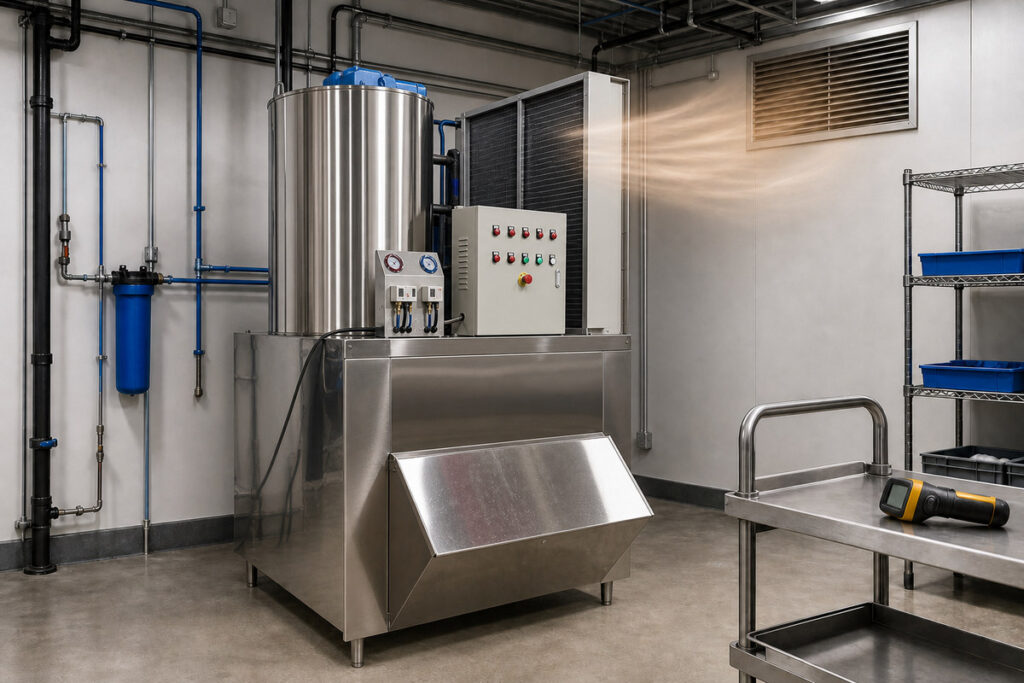
An air-cooled condenser uses fans to move air across a finned coil. As the refrigerant releases heat through the coil, warmer air leaves the condenser.
The machine needs clear intake and discharge paths. If hot discharge air returns to the intake, the rising condenser temperature can reduce output or stop the machine on high-pressure protection. Dust, grease, fibers, and salt deposits can produce the same result when they block the fins.
Water-Cooled Condenser Operation
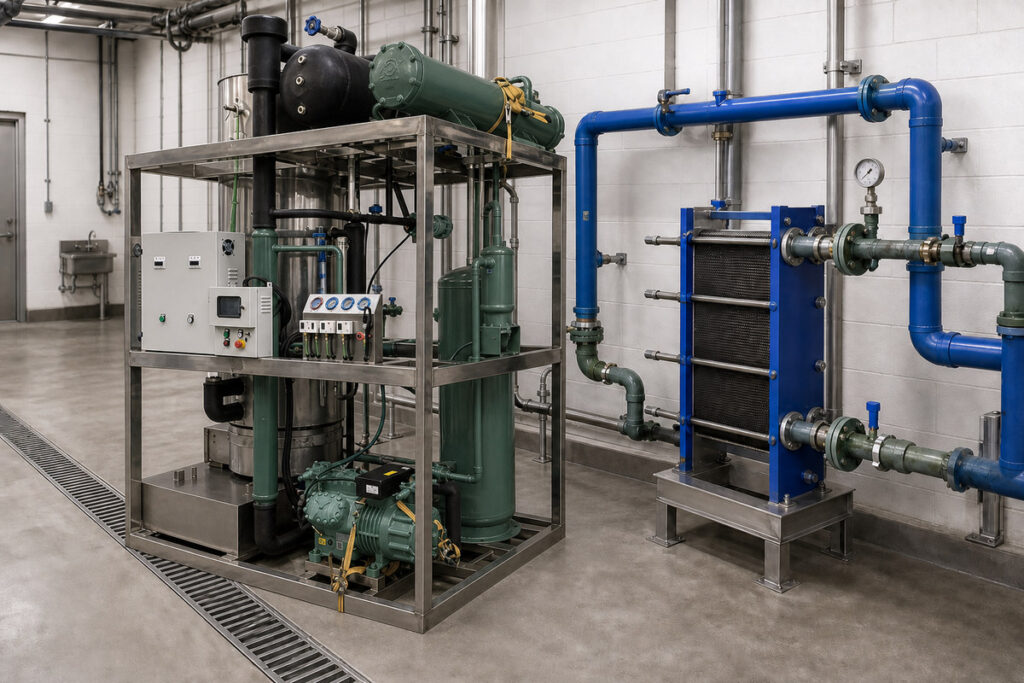
A water-cooled condenser passes a separate water stream across a refrigerant heat exchanger. Depending on the model, a regulating valve may change water flow as refrigeration pressure changes. The warmed water then drains or returns to a heat-rejection loop.
Condenser water does not become ice. Ice-making water follows a separate path to the evaporator. Installation drawings should show separate ice-making water, condenser-water, and drain connections so the installer can prevent cross-connections.
Which Site Conditions Determine Cooling Method Suitability?
The condenser must reject heat under the site’s hottest expected operating conditions. Available floor space alone does not determine the correct method.
Airflow, Space, and Ambient Temperature
Measure temperature at the condenser intake during the hottest production period. A wall thermostat may miss heat trapped around the machine, especially in a small equipment room or roof space.
Use the manufacturer’s required intake, discharge, and service clearances. If the room cannot remove the released heat, add suitable ventilation or consider an approved remote condenser. A remote system must still meet limits for line length, elevation, outdoor temperature, electrical supply, and weather exposure.
Air Quality and Outdoor Exposure
Air-cooled coils need reasonably clean intake air. Flour, grease, lint, packaging fibers, construction dust, and salt can coat the fins, which increases cleaning demand and restricts airflow.
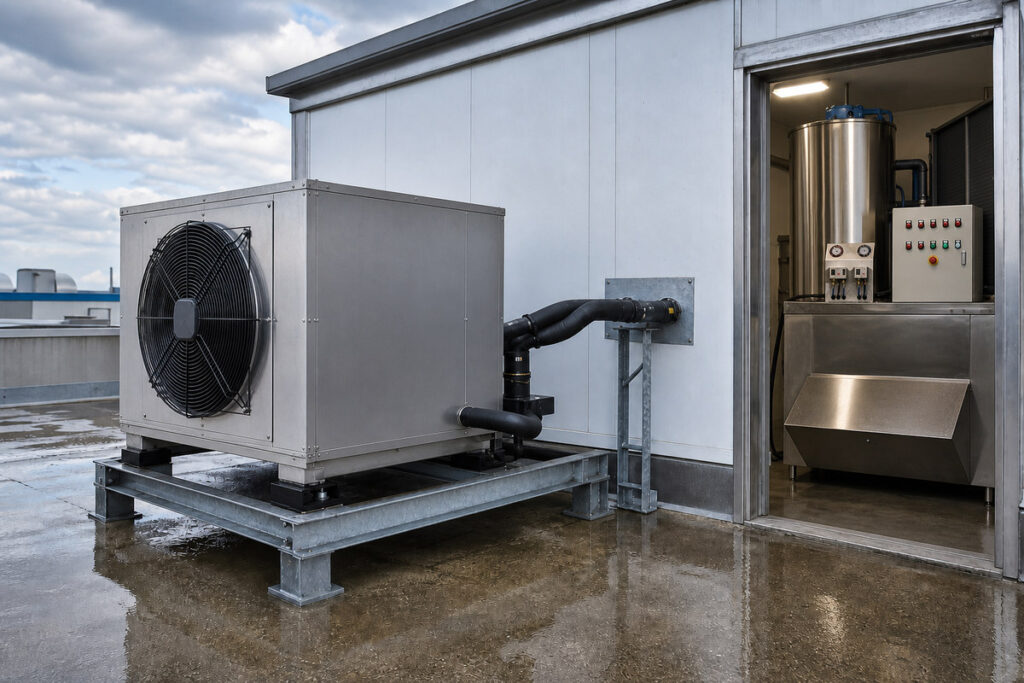
Outdoor equipment faces rain, sun, debris, salt spray, wind, and temperature extremes. A remote condenser is suitable outdoors only when the quoted component carries the required enclosure, corrosion, mounting, and environmental ratings. Do not treat an indoor ice-making head as outdoor equipment.
Condenser Water Supply, Quality, and Discharge
Confirm condenser-water temperature, pressure, flow, pressure drop, and chemistry against the selected model. The installation also needs correctly sized piping, isolation valves, service access, and an approved return or discharge route. Local rules may restrict once-through condenser water.
Scale, sediment, corrosion products, and biological growth reduce heat transfer. Water treatment must match the source water, condenser materials, operating temperature, and supplier limits. A current water analysis gives the treatment provider a defensible starting point.
How Should Buyers Compare the Operating Impact?
Compare site output and total annual cost. A catalog efficiency claim cannot account for local climate, utilities, building cooling, or maintenance.
Capacity Stability Under Actual Site Conditions
Rated production applies at stated test conditions. Hot intake air, warm ice-making water, low condenser-water flow, fouled surfaces, or blocked airflow may reduce output. Ask for capacity data at the site’s design conditions, then use the same conditions when comparing bids.
The method used to calculate tube ice machine capacity should include peak withdrawal and recovery time. Storage can cover a short demand spike, but it cannot correct a persistent production shortfall.
Utility and Indoor Cooling Costs
An air-cooled condenser uses fan power and releases heat where it operates. When the coil sits in an air-conditioned room, the building cooling system must remove much of that heat. A remote condenser moves the heat outdoors but adds piping and installation work.
A water-cooled condenser reduces the machine-room heat load, yet it adds water-side costs. Once-through systems may incur water and sewer charges. Recirculating systems need pumps, heat-rejection equipment, makeup water, treatment, and maintenance. Compare those costs at local rates and expected operating hours.
Water Treatment, Cleaning, and Service Demands
The two condenser types require different service work. Air coils need access for inspection and fin cleaning. Water-cooled condensers need water-side inspection and may require descaling. Cooling towers or fluid coolers add their own treatment and seasonal tasks.
Condenser service does not replace sanitation of the ice-making circuit. A model-specific tube ice machine cleaning and maintenance plan should separate food-contact cleaning, descaling, condenser work, and refrigeration service.
What Must Buyers Verify Before Ordering?
Verify the exact condenser configuration, rated conditions, site output, and installation scope before accepting a quotation.
Available Condenser Configurations and Rated Performance
Do not assume that every model comes in both configurations. Available condensers may change with capacity, refrigerant, voltage, or market. The tube ice machine range is a useful model shortlist, but the quotation must identify the condenser supplied with the selected machine.
The current 10 Ton Tube Ice Machine page identifies a water-cooled condenser. Before ordering, request the model code, rated conditions, condenser heat rejection, site-output calculation, utility schedule, and permitted operating range in writing. A “10 ton” label alone does not define actual site production.
Installation and Utility Requirements
The final submittal should assign responsibility for each connection. Verify:
- Electrical supply, circuit protection, and local compliance
- Airflow, ventilation, service clearance, lifting access, and floor loading
- Ice-making water, condenser water, piping, and separate drains
- Pumps, heat-rejection equipment, treatment, controls, and freeze protection where required
Site Data for the RFQ
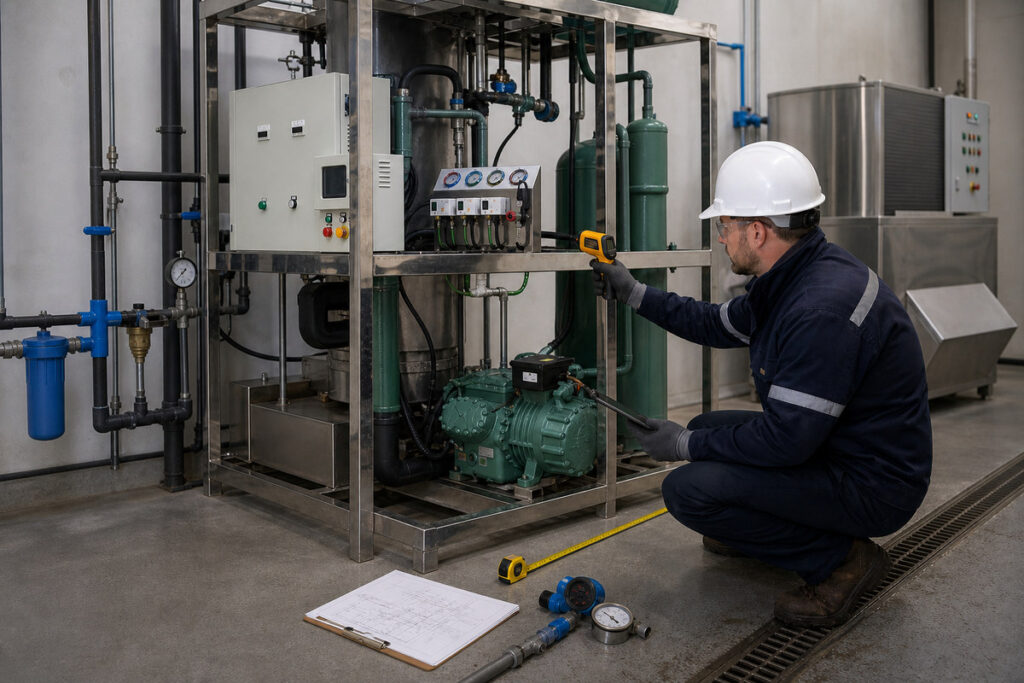
Give the supplier enough site data to size the condenser and state its operating limits:
- Required ice type, daily demand, peak withdrawal, and operating schedule
- Design-day condenser intake temperature and room ventilation
- Ice-making water analysis, temperature, pressure, and available flow
- Condenser-water conditions, including chemistry, flow, pressure, and return or discharge plan
- Power supply, installation location, airborne contamination, equipment scope, and service responsibility
MikeIceMachine can use these inputs to prepare a site-specific quotation. The final proposal should identify the model, condenser type, rating conditions, expected site output, connections, included equipment, exclusions, and acceptance documents.
Frequently Asked Questions
Can a Water-Cooled Ice Machine Use a Cooling Tower or Recirculating Loop?
Yes, if the manufacturer approves the loop for the exact model. The system must meet the condenser’s heat-rejection, entering-water temperature, flow, pressure, pressure-drop, and water-quality limits. Include pumps, controls, treatment, makeup water, freeze protection, and local code requirements where they apply.
Does the Cooling Method Change the Type or Shape of Ice Produced?
No. The evaporator, water circuit, and harvest or cutting method determine the ice form. The condenser only removes heat from the refrigeration system. Poor condenser conditions may reduce output or interrupt operation, but they do not change tube ice into flake, cube, or block ice.
Can the Condenser Type Be Changed After the Ice Machine Is Ordered?
Usually not through a simple field change. A conversion may require a different condenser, valves, controls, refrigerant charge, electrical parts, piping, and warranty approval. Ask whether the manufacturer offers an approved conversion for the exact model and serial number. If not, order the required condenser configuration from the factory.
Does Condenser Water Mix with the Water Used to Make Ice?
No, not during normal operation. Condenser water removes heat in a separate circuit, while ice-making water flows to the evaporator. Separate connections and drains help prevent cross-connections. Shut down the machine and request service if the site suspects a leak, contamination, or incorrect plumbing.
Can Seawater Be Used for Condenser Cooling?
Use seawater only when the manufacturer has designed and approved the full condenser-water circuit for it. Standard freshwater condensers may corrode or foul in seawater. A seawater ice machine may use seawater as ice-making water without accepting seawater in the condenser. Confirm wetted materials, salinity limits, cleaning, treatment, and warranty coverage in writing.