Tube ice is not inherently more expensive than flake ice. The quoted price depends on rated output, operating conditions, refrigeration components, ice specifications, and the equipment included in the supply scope.
A useful comparison must therefore cover both how the ice will be used and how each supplier has configured the plant. Matching these conditions reveals whether a price difference reflects machine design, project scope, or an incomplete quotation.
Why Tube Ice and Flake Ice Machine Prices Differ at the Same Capacity
Two machines carrying the same tonnes-per-day rating may have different prices because nominal capacity does not make their configurations equivalent. Use this industrial ice machine cost guide to compare rating conditions, equipment scope, site work, and commercial terms on the same basis.
Capacity Rating Conditions
Capacity must be compared at the same ambient temperature, inlet-water temperature, operating period, and condenser conditions. Warmer feedwater requires the refrigeration system to remove more heat from each kilogram of water. A higher condensing temperature also reduces available refrigeration capacity unless the system is sized accordingly.
Ask suppliers to state guaranteed net ice output under your site conditions rather than comparing model names alone. The available tube ice machine range illustrates capacities in tonnes per 24 hours, but the final selection still requires the actual production window and peak demand.
A machine designed to produce the requested output in a hot climate may need a larger compressor, condenser, or heat-transfer surface than a model rated under milder conditions. That configuration can cost more even though both quotations show the same daily capacity.
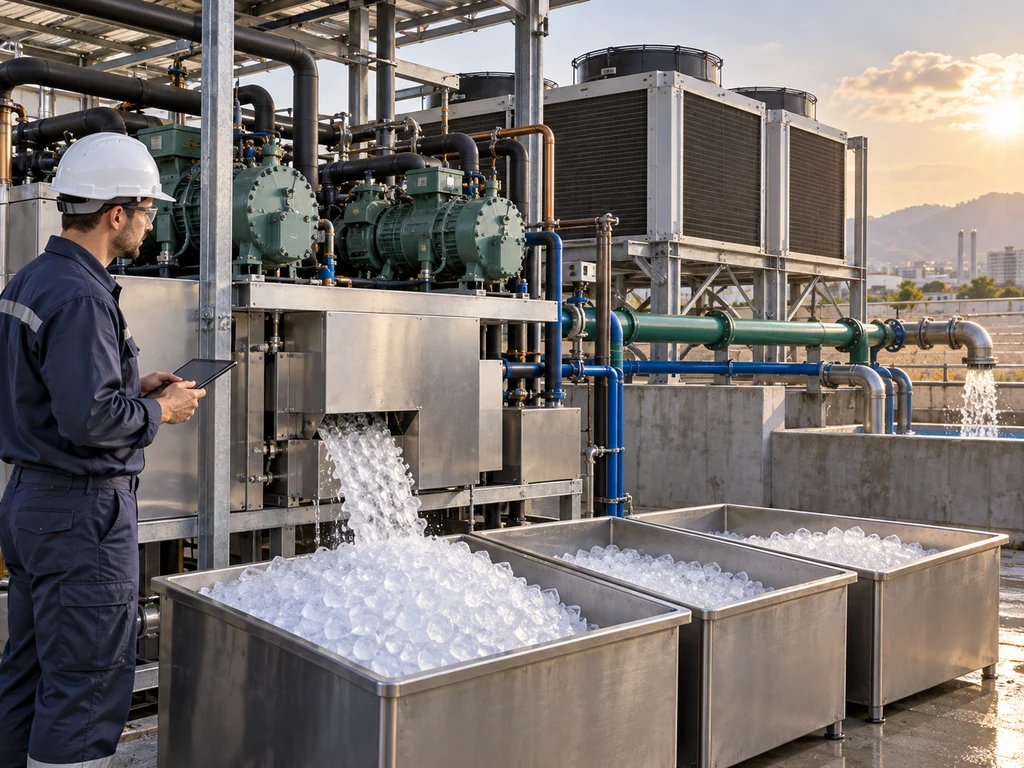
Ice Specifications
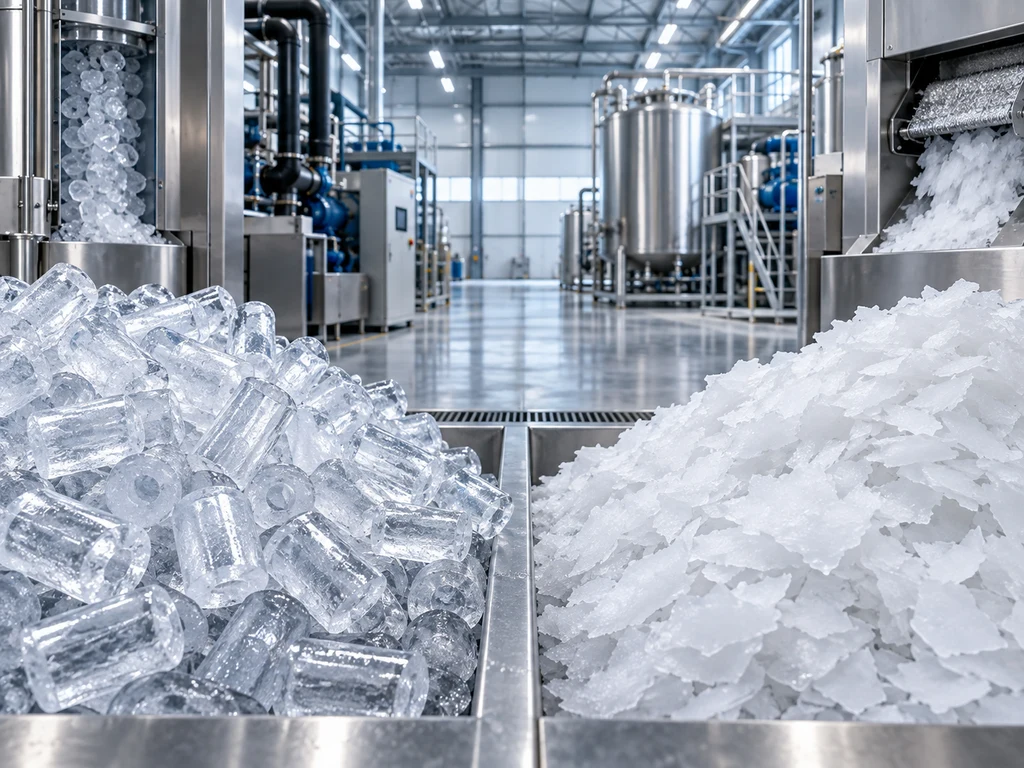
Ice dimensions change the freezing and harvesting process. For tube ice, diameter, wall thickness, hollow-center size, cut length, and any crushing requirement affect the evaporator, cutter, operating cycle, and downstream handling equipment. Flake thickness, dryness, and discharge form likewise affect the evaporator settings and refrigeration load.
Specifications also influence the intended market. Beverage and bagged-ice buyers may require consistent tube dimensions and food-contact materials, while industrial cooling users may prioritize coverage, rapid heat transfer, and easy distribution.
Options vary by model rather than applying to every tube ice machine. For example, the published 5-ton tube ice machine specifications list several available diameters and identify the rating conditions used for that model. A quotation should record the selected dimensions instead of referring only to “standard ice.”
Refrigeration System Configuration
Compressor brand, compressor type, refrigerant, controls, oil management, and system architecture affect both the purchase price and operating requirements. A lower-priced compressor package may have different service coverage, spare-parts availability, efficiency at the design condition, or control capability.
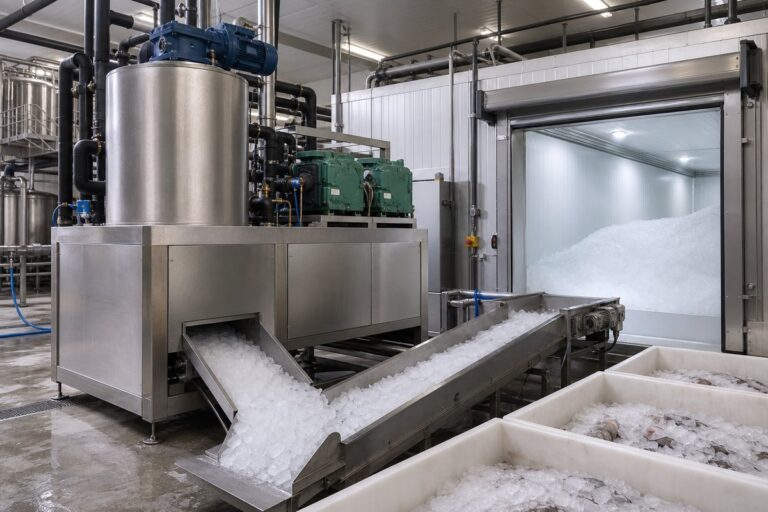
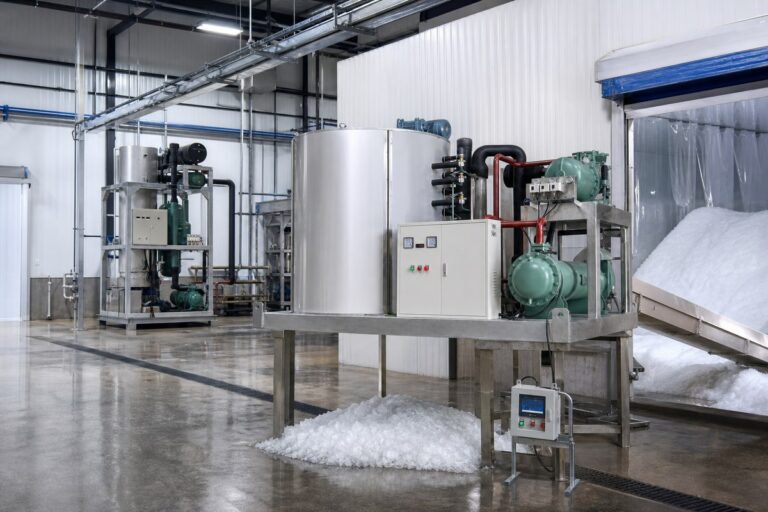
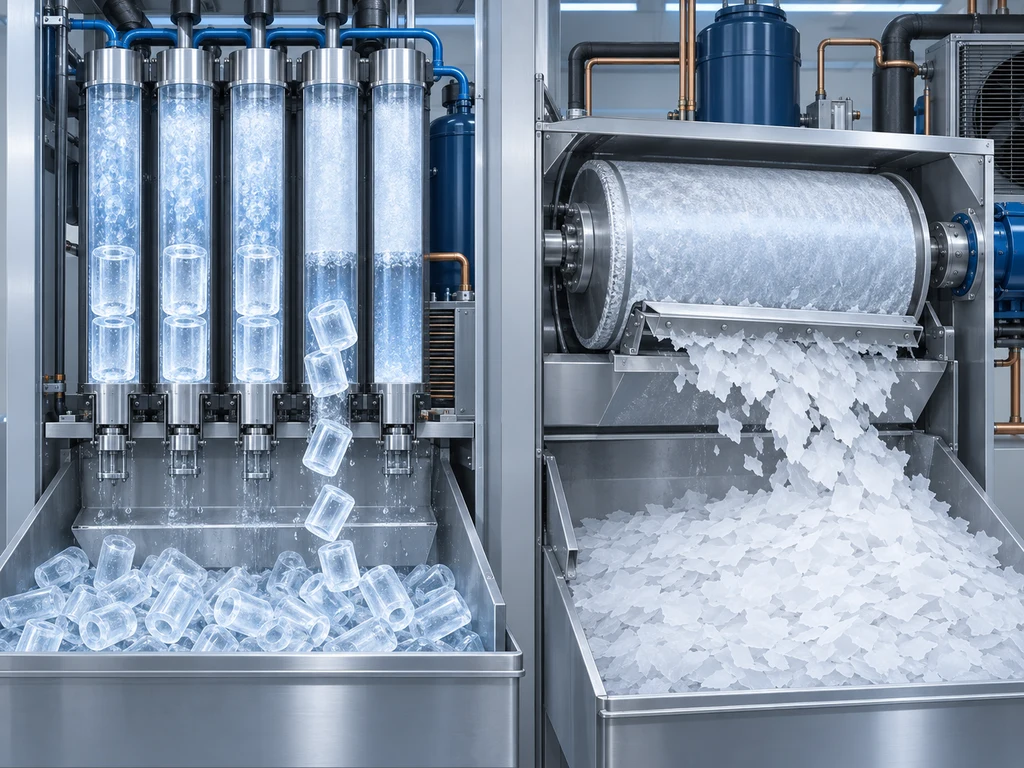
The ice-making process also matters. Tube ice normally freezes inside vertical tubes and uses a harvest cycle to release the cylinders. Flake ice is scraped continuously from a refrigerated surface. These processes require different evaporators, controls, and operating conditions, but neither design establishes a universal price advantage.
Equipment price is only one cost measure. Electricity consumption at the actual site condition, scheduled maintenance, replacement parts, water use, and downtime exposure contribute to lifecycle cost. These items should be evaluated using model-specific data rather than general claims about one ice type.
Condenser and Site Conditions
Condenser selection must match climate, water availability, installation space, and utility cost. An air-cooled system avoids cooling-water infrastructure but needs adequate airflow and may require more heat-rejection capacity in high ambient temperatures. A water-cooled system may operate under more stable condensing conditions, but it can add pumps, a cooling tower, water treatment, piping, and maintenance.
Dust, humidity, altitude, ventilation, and equipment-room temperature can also change the required configuration. A compact standard package quoted for a ventilated indoor site is not directly comparable with equipment engineered for a hot, dusty, or restricted location.
Request the condenser type, design ambient or cooling-water temperature, expected water consumption, and excluded site work. These details show whether a price difference comes from the ice machine itself or from the heat-rejection system required to deliver the stated output.
Auxiliary Equipment Scope
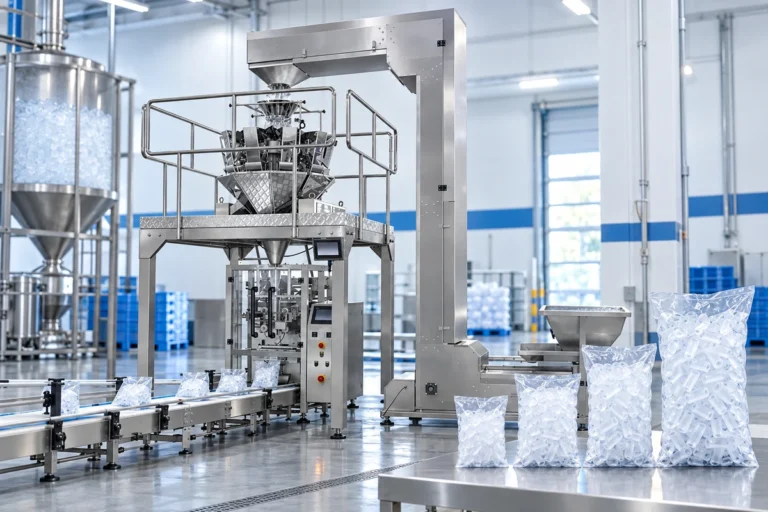
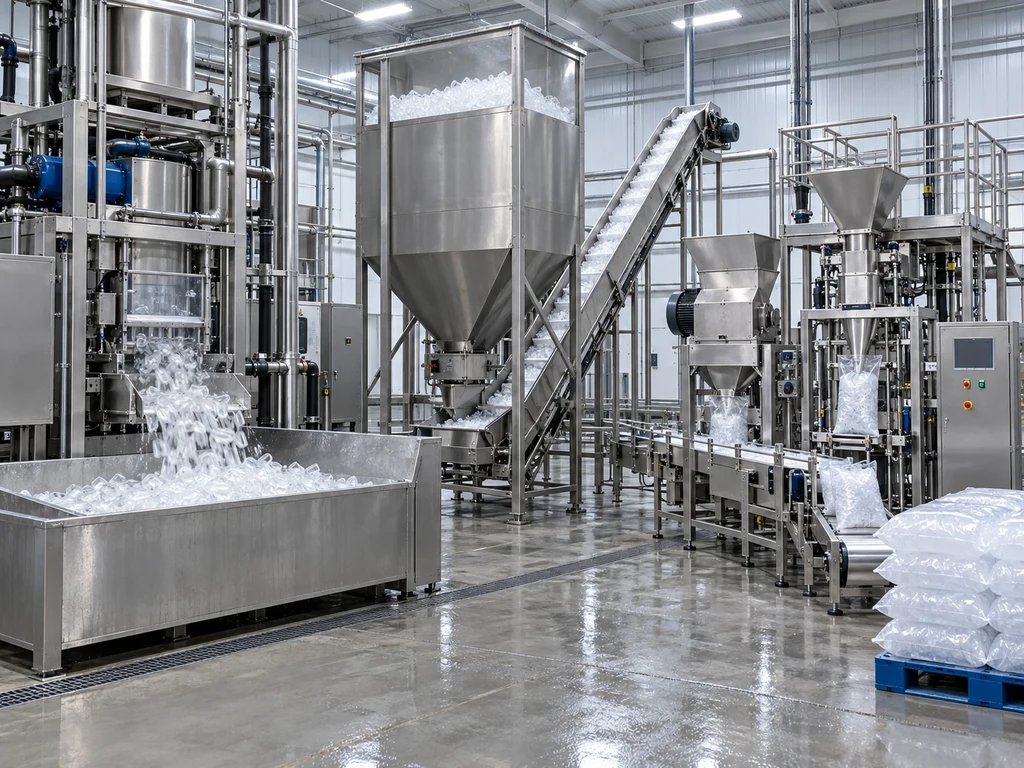
A machine-only price normally covers the ice maker and its defined refrigeration package. A complete ice plant may also include water treatment, storage, rake or discharge systems, conveyors, crushers, weighing and packing equipment, electrical controls, platforms, piping, and other interfaces.
Installation and commissioning require the same scrutiny. Freight, foundations, lifting, utility connections, refrigerant charging, local labor, travel, testing, and operator training may be included, optional, or assigned to the buyer. The phrase “complete plant” is insufficient unless the quotation identifies each responsibility.
Storage and packing capacity must also match peak withdrawal rather than only daily production. The guide to matching tube ice production, storage, and packing explains why the slowest downstream stage can restrict usable plant output. Compare suppliers against one written scope to avoid treating an incomplete offer as the lower-cost system.
Tube Ice vs Flake Ice Applications and Which Machine Fits Your Project
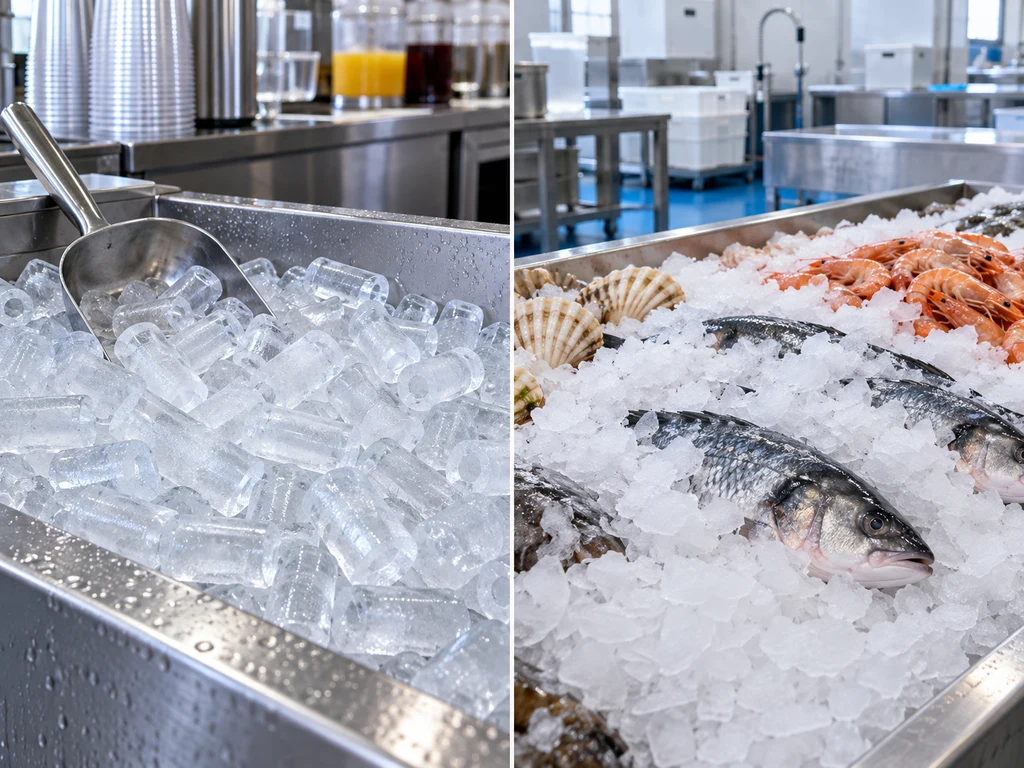
Tube ice is usually the first option for beverages, retail bags, and applications needing discrete, durable pieces. Flake ice is generally evaluated first for direct product contact and industrial processes that benefit from broad surface coverage and rapid cooling. The initial choice still requires confirmation against handling, hygiene, storage, and operating conditions.
| Project requirement | Usual first ice type to evaluate | What to confirm before selection |
| Bagged edible ice for retail distribution | Tube ice | Diameter, cut length, water treatment, food-contact materials, packing rate, and storage method |
| Beverage service or hospitality supply | Tube ice | Preferred piece size, clarity requirement, daily demand, and whether crushing is needed |
| Fish, seafood, meat, or produce cooling | Flake ice | Required cooling rate, contact method, drainage, sanitation, and storage volume |
| Concrete cooling | Flake ice | Batch heat load, ice dosing method, delivery rate, and integration with the batching plant |
| Industrial process cooling | Flake ice or tube ice | Required particle form, melting behavior, available storage space, and method of transfer |
| Fishing-vessel production using seawater | Seawater flake ice | Salinity, corrosion-resistant configuration, vessel power, motion, space, and cooling-water arrangement |
Equal weights of freshwater ice provide broadly comparable latent cooling capacity, but their shape changes contact area, cooling rate, handling, and required storage volume. Flake ice can conform to irregular product surfaces and provide rapid cooling when the ice remains in effective contact with the product and meltwater can drain properly.Tube ice is easier to count, bag, convey, and use as a recognizable beverage product.
Food-contact projects require source water, food-contact materials, cleaning access, enclosed handling, and packaging controls that comply with the regulations applicable in the destination market. Industrial cooling equipment may use a different material and automation scope, but its water quality must still protect the machine and avoid contaminating the process.
Get a Project Matched Tube Ice or Flake Ice Quote from Mike Ice Machine
Compare quotations using the same output, rating conditions, ice specifications, and supply scope. Send your application, site conditions, power supply, and required auxiliary equipment to Mike Ice Machine for a configuration-based quote.
FAQs
Should Tube Ice and Flake Ice Capacity Be Stated in Metric Tonnes per 24 Hours?
Yes, metric tonnes per 24 hours provide a clear international comparison basis; one metric tonne equals 1,000 kilograms. The quotation should also state the ambient temperature, inlet-water temperature, condenser condition, and actual operating period behind that rating.
How Do High Ambient and Inlet-Water Temperatures Affect Tube Ice and Flake Ice Output?
High inlet-water temperature increases the heat that must be removed before water freezes, while high ambient temperature can raise the condenser load. Output may fall if a machine rated under cooler conditions is moved to a hotter site without resizing the refrigeration and heat-rejection equipment. A supplier can maintain the target capacity by designing the system for the declared site conditions.
Does Water Treatment Differ Between Bagged Tube Ice and Industrial Cooling Ice?
Yes. Bagged edible tube ice requires water treatment and hygienic handling appropriate to food intended for human consumption, including compliance with applicable local drinking-water and food-safety rules. Industrial cooling water treatment focuses on equipment protection and process compatibility, although sanitary controls remain necessary when the ice contacts food or another contamination-sensitive product.
When Is a Seawater Flake-Ice Configuration Relevant?
A seawater flake-ice configuration is relevant for fishing vessels, ports, and remote marine operations where making ice from available seawater reduces dependence on stored freshwater or shore-supplied ice. The selected seawater flake ice machine must be checked for salinity, corrosion-resistant materials, vessel utilities, installation space, and the intended fish-contact method.