Ice-fed hydrocooling works when the produce and packaging tolerate water, the cooling load is seasonal or intermittent, and the packhouse can control recirculated water. A dedicated water-chilling system may fit steady, high-volume operation better. Before choosing either route, confirm the commodity limits, required temperature change, peak throughput, sanitation plan, and refrigerated holding available after cooling. This guide covers ice used to chill the water, not ice placed inside the package.
How Does Ice-Fed Hydrocooling Work?
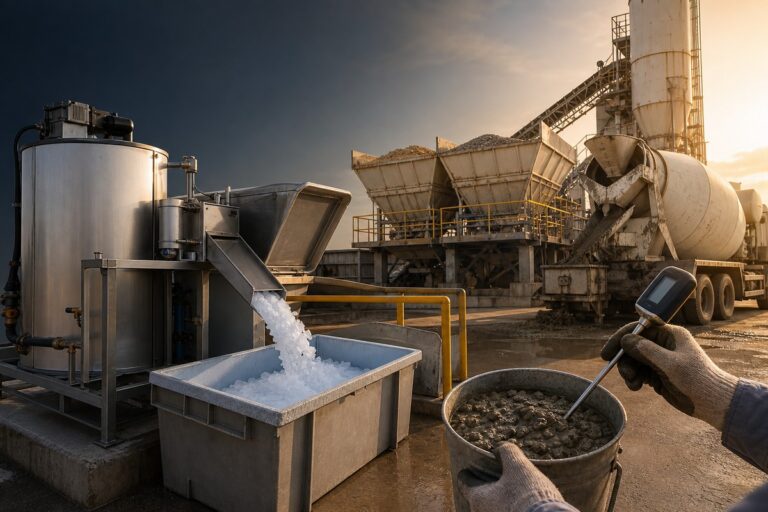
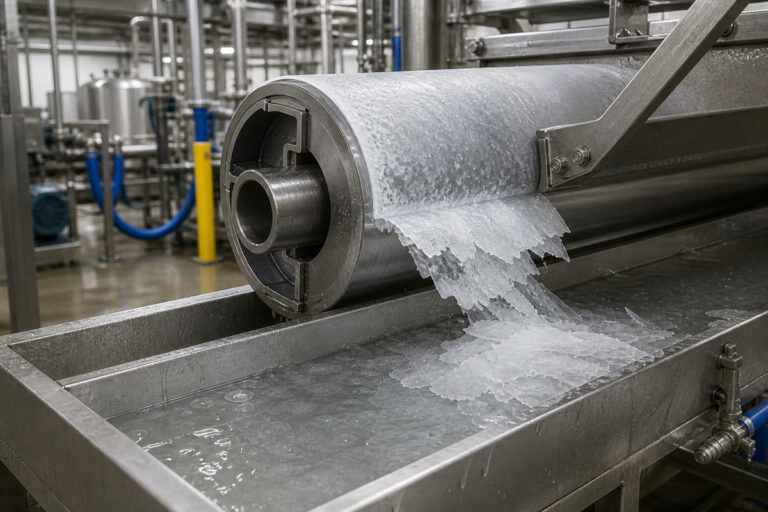
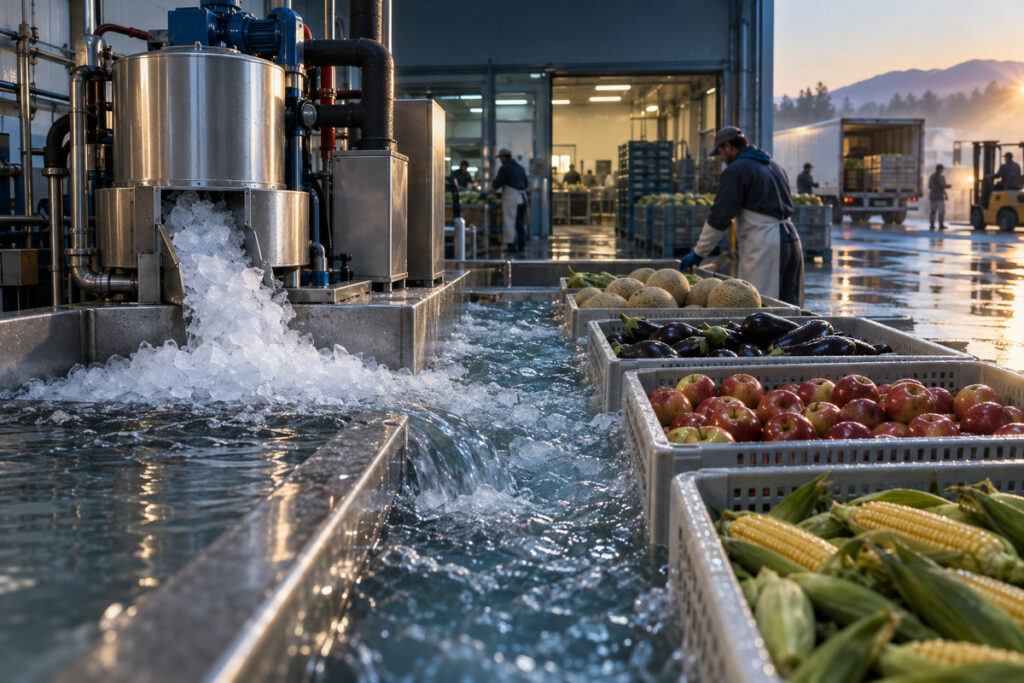
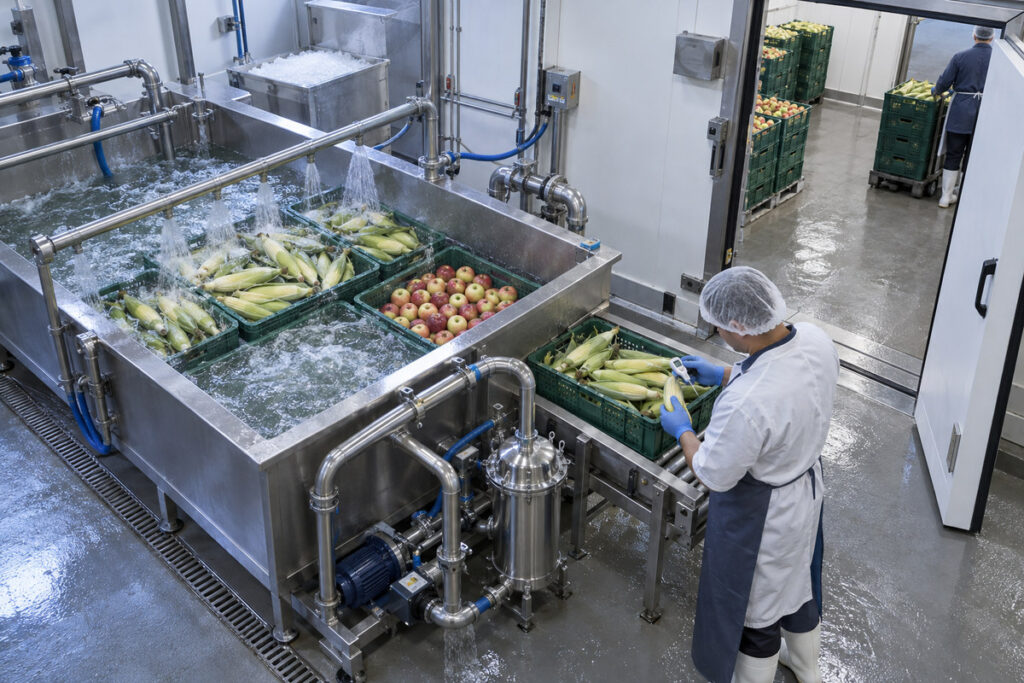
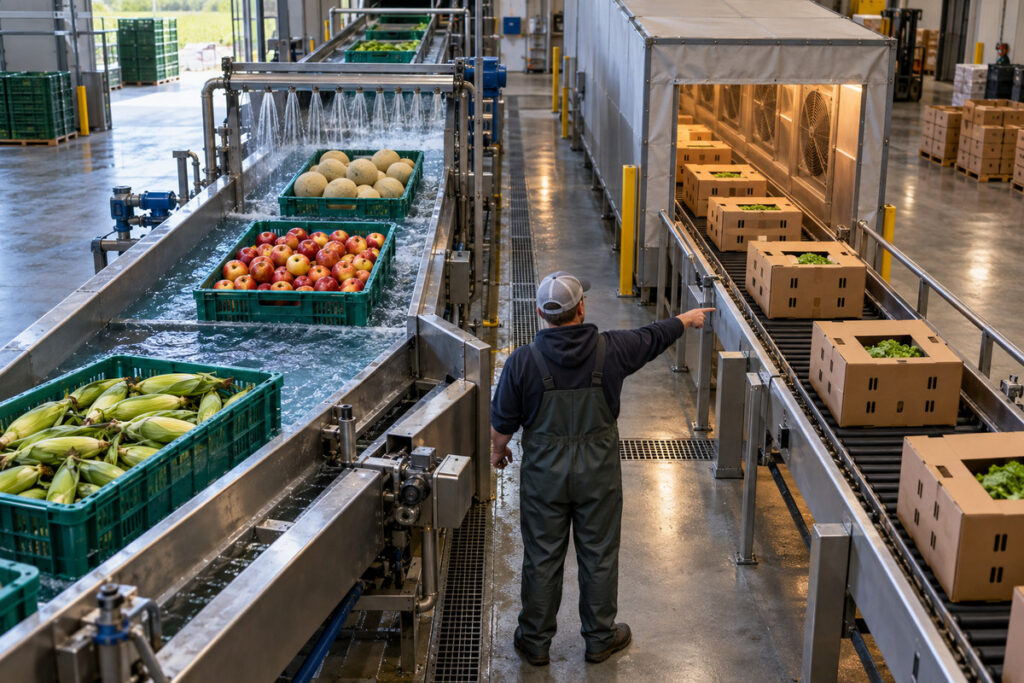
Hydrocooling removes field heat by moving chilled water over or around warm produce. A conventional system pumps water through the product load, then returns the warmed water to a reservoir for re-cooling. Large hydrocoolers commonly use vapor-compression refrigeration and a heat exchanger. Smaller operations may add crushed or chunk ice to the reservoir when the cooling season is short or the product volume does not justify dedicated refrigeration. NC State Extension describes both arrangements.
Ice-fed hydrocooling differs from package icing. The hydrocooler uses ice as the cold source for circulating water. Package icing puts crushed ice or an ice-water mixture directly into or onto the produce package, where the ice keeps absorbing heat as it melts. Both methods require water-tolerant produce and packaging, but they use different equipment and create different handling requirements. FAO treats hydrocooling and direct icing as separate pre-cooling methods.
Mike Ice Machine includes vegetable cooling within its broader food processing ice application scope. That application fit does not establish hydrocooler compatibility for a specific crop or line.
When Is Ice-Fed Hydrocooling a Good Fit?
Ice-fed hydrocooling fits when the crop, package, operating schedule, water controls, and downstream cold chain all pass review. A low-cost ice source does not offset crop damage, carton failure, contamination, or missing refrigerated holding.
Produce and Packaging That Tolerate Wetting
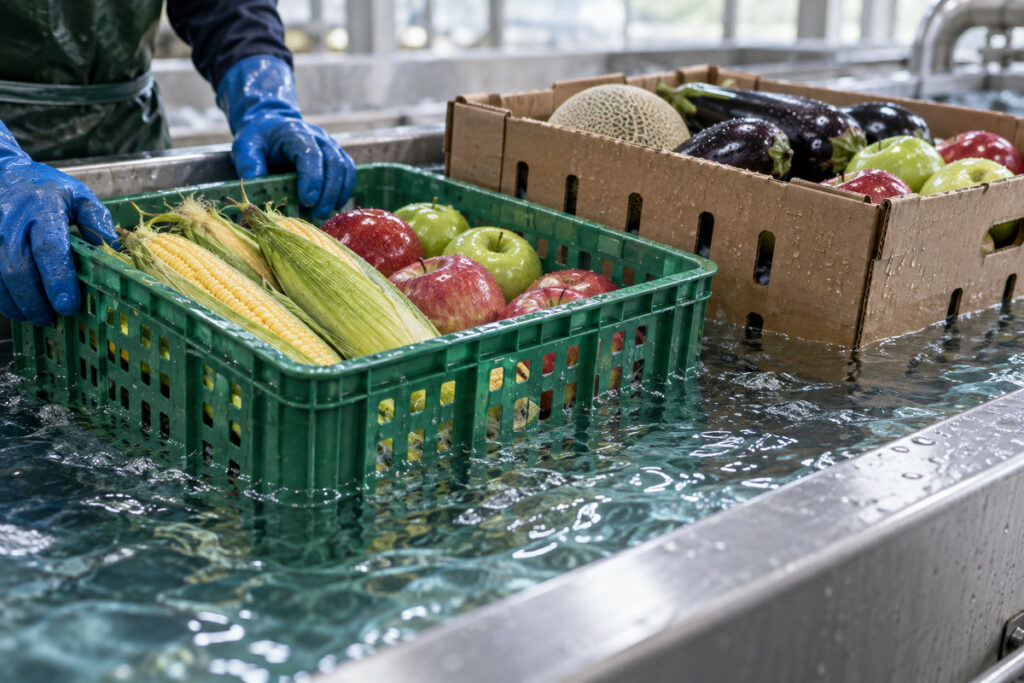
The commodity must tolerate direct contact with cold water. Produce with a large volume relative to its surface area, including sweet corn, apples, eggplant, cantaloupes, and peaches, can respond well to hydrocooling. Penn State Extension lists berries, storage potatoes, sweet potatoes, bulb onions, and garlic among the products for which hydrocooling is inappropriate. Use the crop specification or a qualified postharvest specialist instead of a general ice-machine recommendation.
The container must stay stable when wet and allow chilled water to reach the product. Suitable formats include plastic bins, totes, wooden crates, wire-bound crates, and moisture-resistant cartons. Ordinary paper cartons can weaken. Poor venting or dense stacking can channel water around the produce and leave warm spots.
Seasonal or Intermittent Cooling Loads
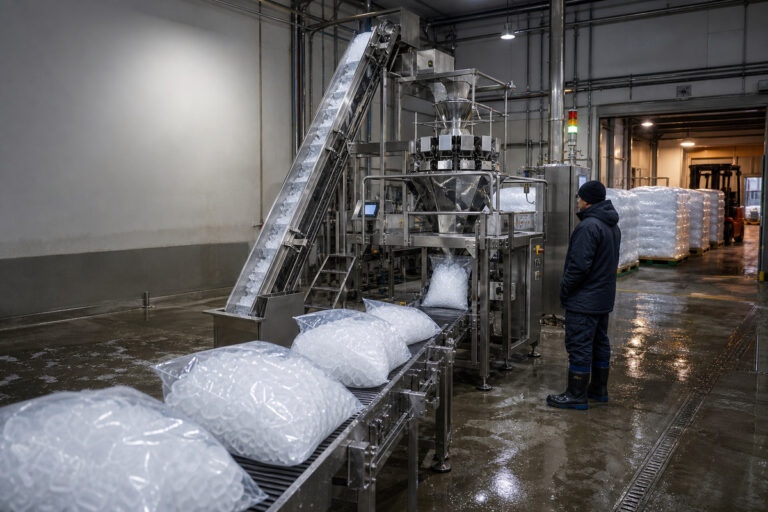
Ice may make sense when harvest creates a short cooling season, cooling runs in batches, or the plant already has an ice supply. The packhouse can produce and store ice before the peak cooling window. The economic check must include the cost of making, buying, storing, moving, and melting the ice. NC State Extension notes that an ice-cooled system needs a reliable ice source at a reasonable cost.
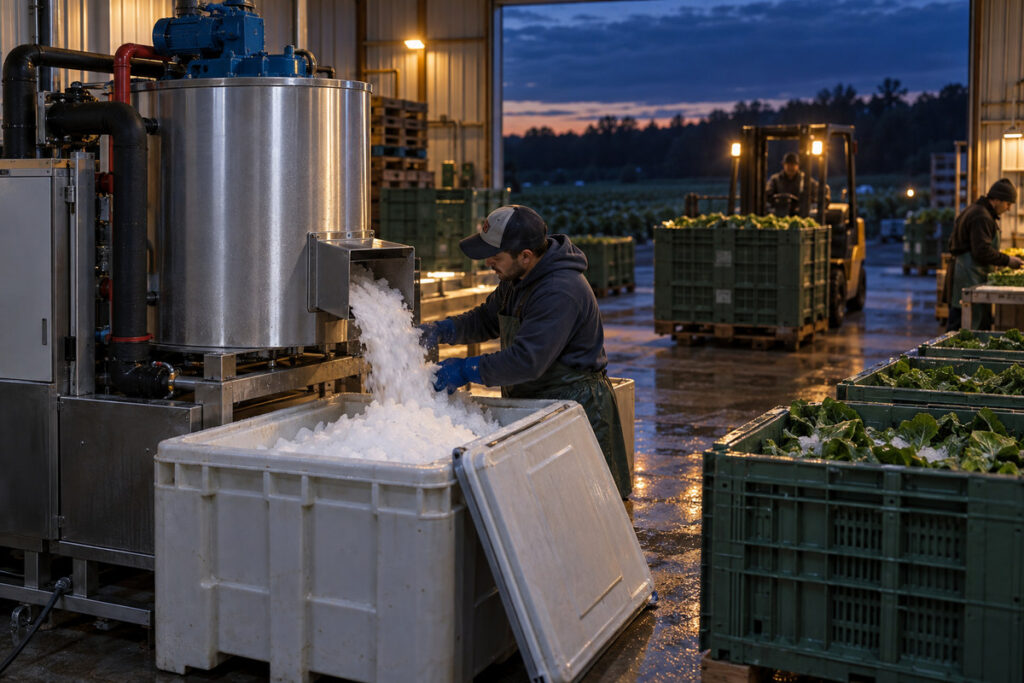
Continuous high-volume operation changes the decision. A dedicated refrigeration system can re-cool circulating water without repeated ice handling and may hold tighter control over long production runs. Compare both options using the same incoming and target temperatures, load per hour, schedule, energy price, labor scope, water load, and maintenance boundary.
If onsite production remains the preferred cold source, confirm the batch schedule and storage requirement before comparing the calculated load with the available flake ice machine range. The collection shows equipment options but does not replace the process calculation.
Sanitary Water and Immediate Cold Storage
Recirculated water can carry decay organisms and human pathogens from contaminated produce to clean product. The facility needs a documented water treatment and monitoring program based on the commodity, applicable rules, sanitizer label, water chemistry, and operating conditions. UF/IFAS states that recirculated hydrocooling water requires sanitation and warns that poor control can spread spoilage organisms and human pathogens. The organization also separates hydrocooling from direct-contact icing in its postharvest guidance.
Hydrocooling ends the rapid cooling step, not the cold chain. Move cooled produce directly into refrigerated storage or transport to prevent rewarming. The plant also needs a plan for filtration, cleaning, water replacement, and wastewater disposal.
When Should You Use a Different Pre-Cooling Method?
Choose another method when water would damage the crop, the package cannot handle water, the load is continuous enough to support a dedicated chiller, or the product needs cooling inside its shipping package.
| Pre-Cooling Path | Consider It When | Main Limit to Check |
|---|---|---|
| Ice-fed hydrocooling | The crop tolerates wetting, the load is seasonal or intermittent, and the site can handle ice and sanitary recirculated water | Ice supply, storage, handling labor, water control, and actual system losses |
| Refrigerated hydrocooling | The plant has steady or high throughput and needs continuous water-temperature control | Capital cost, refrigeration load, utilities, maintenance, and heat-exchanger sizing |
| Forced-air cooling | The crop or package should stay dry, or the package allows airflow | Cooling time, airflow path, package venting, and moisture loss |
| Package icing | The crop and package tolerate direct ice and meltwater, and cooling must continue during handling or shipment | Drainage, package strength, ice distribution, sanitation, and added shipping weight |
FAO compares hydrocooling, forced-air cooling, room cooling, vacuum cooling, and icing as different methods rather than interchangeable cold sources. The final choice should follow the commodity handling specification and the packhouse process when multiple crops share one line. Record the reason for the selected method, its rejection conditions, and who owns the process design.
How Much Ice Does the Process Need?
Start with the heat removed from the produce, then add the actual loads and losses in the hydrocooling system. Dividing daily produce weight by a guessed ice ratio can undersize storage, overload the ice machine, or create unused capacity.
Calculating the Produce Heat Load
Estimate the sensible heat removed from the commodity with:
Qp = m × Cp × (Tin – Tout)
Where:
- Qp: heat removed from produce
- m: product mass
- Cp: commodity-specific heat capacity
- Tin: incoming product temperature
- Tout: target product temperature after cooling
Use one consistent unit system and obtain the specific heat and target temperature from an approved commodity source. The incoming temperature should reflect the warmest credible operating condition, not a seasonal average that hides peak load. Express throughput over time (pounds per hour or pallets per batch) because the same daily mass can create different peak demand.
Converting Heat Load Into Operational Ice Demand
At 32°F, melting one pound of ice into water at 32°F absorbs about 144 Btu. The theoretical ice needed for the produce load is:
Theoretical ice mass (lb) = Qp (Btu) / 144 (Btu/lb)
This value covers the stated product heat under the stated temperature change. NC State Extension uses the same heat-load and phase-change method and shows how an assumed system efficiency can raise actual ice demand above the theoretical value. The example efficiency in that source is not a universal design factor.
Operational demand must also account for cooling the reservoir water, tanks, piping, conveyor, and packages; heat entering from the room and incoming water; ice melting during storage and transfer; and the time available to rebuild inventory between batches. Use measured data, an equipment supplier’s documented performance, or a process engineer’s approved loss factor. Then compare the required ice per batch, peak hour, and operating day with both production and storage capacity. The industrial ice machine sizing guide explains why buyers must check peak demand and recovery time alongside daily output.
What Should You Confirm Before Selecting an Ice Machine?
Complete the hydrocooling method review and load calculation before selecting an ice machine. Record these inputs in the equipment inquiry:
- Commodity, package, and peak product mass per hour, batch, and day
- Incoming and target product temperatures and commodity-specific heat source
- Reservoir volume, starting water temperature, and target operating range
- Batch schedule, season length, and daily hours
- Product heat load plus documented system losses; required ice rate, storage, and recovery time
- Available power, make-up water, condenser conditions, drainage, and site environment
- Responsibility for hydrocooler, controls, sanitation, testing, and wastewater
A supplier cannot validate equipment size when these inputs remain estimates from unrelated crops or mild weather. Use the warmest credible intake condition and the actual peak schedule, then mark every provisional value for confirmation before purchase. A nominal tons-per-day rating is one of these inputs; compare the required peak delivery window with the machine’s rated production conditions, storage arrangement, and the site’s actual ambient and inlet-water conditions.
If the validated process calls for flake ice, Mike Ice Machine can review the required daily output, peak delivery window, and site conditions for an industrial ice equipment quotation. The hydrocooler design, commodity limits, sanitation controls, and post-cooling cold chain should remain with the buyer’s process team.
Frequently Asked Questions
What Water Temperature Should You Use for Hydrocooling Produce?
There is no universal hydrocooling water temperature. The starting product temperature, target center temperature, crop size, water temperature, flow, and contact time all affect the result. NC State Extension recommends comparing hydrocoolers by the quantity of a named commodity they can cool per hour from one stated temperature to another. Set the operating target from approved commodity guidance, then verify it with measured water and product temperatures.
How Do You Check Whether the Whole Load Cooled Evenly?
Measure product temperature at representative positions selected for the load, including the center and documented warm spots, and confirm that each sample reaches the required endpoint. Reservoir temperature alone cannot show whether water reached the produce inside every package. NC State Extension notes that chilled water can channel through conventional and batch hydrocoolers, leaving parts of a load not fully cooled. Check package openings, stacking, water distribution, flow, and residence time before accepting the run.
Can One Hydrocooler Handle Different Crops?
One hydrocooler can process different crops when the facility validates separate crop settings and controls shared water between runs. Crops differ in wetting tolerance, chilling limits, cooling rate, packaging, and target temperature. NC State Extension warns that shared hydrocooling water can move pesticide residues from one crop to another. UF/IFAS explains that recirculated water can spread spoilage organisms and human pathogens. The operating plan should define crop sequence, changeover, filtration, sanitation, water replacement, and verification before mixed-crop use.