Flake ice works best for fresh food displays requiring a moldable bed and direct contact around unpackaged items. Nugget ice suits sealed packaging and bottled goods where wrapping ice closely around delicate surfaces is unnecessary. Product contact type, display layout, and ice volume determine the practical choice.
Key Differences Between Flake Ice and Nugget Ice
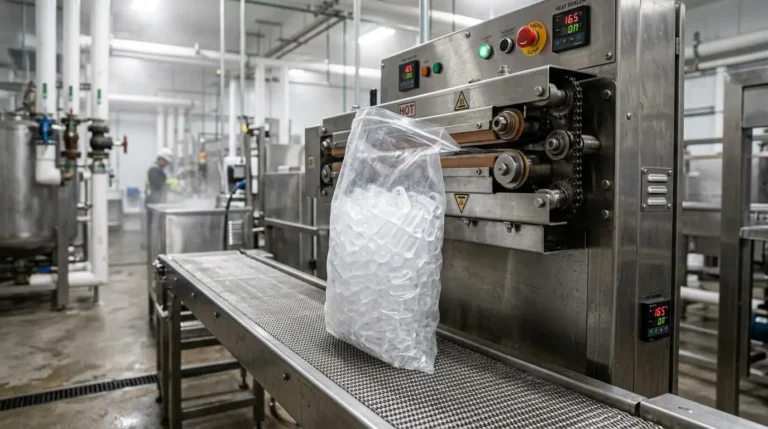
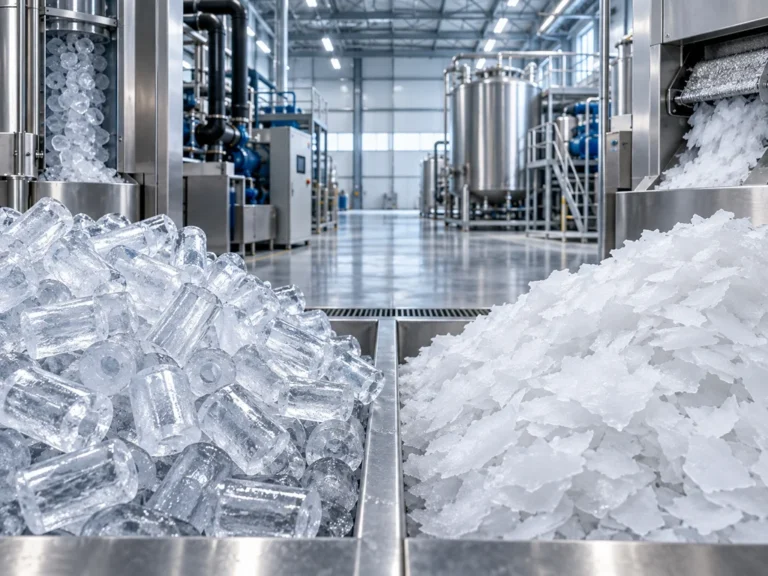
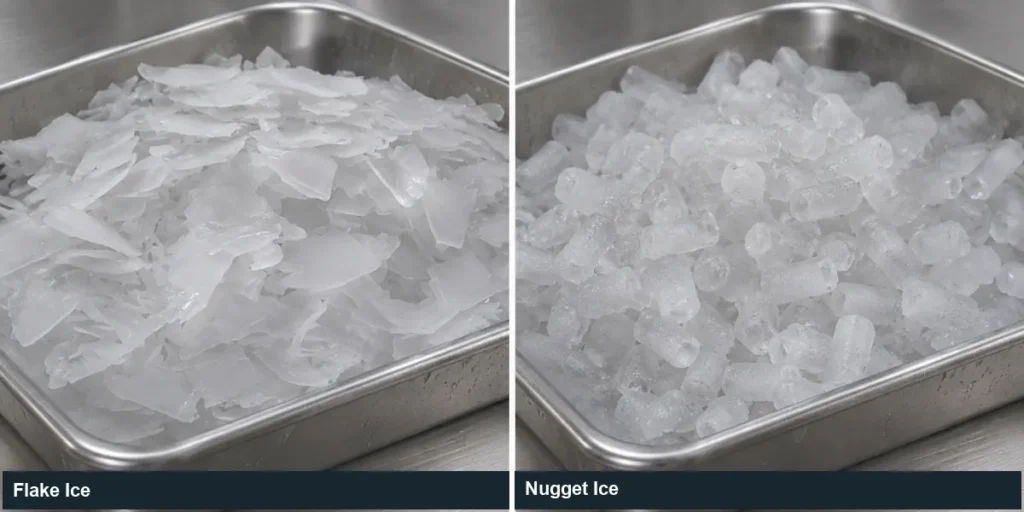
Flake ice consists of loose, irregular pieces shaved from an evaporator drum. Commercial flake ice machines produce thin, moldable ice that packs around irregular items. Nugget ice is made by extruding and compressing ice flakes through a die, creating compact cylindrical pellets.
Machine models vary in thickness, hardness, and moisture content:
| Comparison Factor | Flake Ice | Nugget Ice |
| Shape and texture | Loose flakes; texture varies from fine particles to dry, thin sheets | Compact pieces or pellets |
| Moldability | Spreads readily around irregular products | Forms a bed with more distinct individual pieces |
| Food contact | Useful where close coverage around food is needed | Suitable for selected displays, particularly sealed packages |
| Cooling performance | Close distribution can support fast, even cooling | Effective cooling requires adequate contact and ice coverage |
| Melting behavior | Thin pieces can lose their shape quickly as they melt | Compacted pieces can retain their individual shape longer |
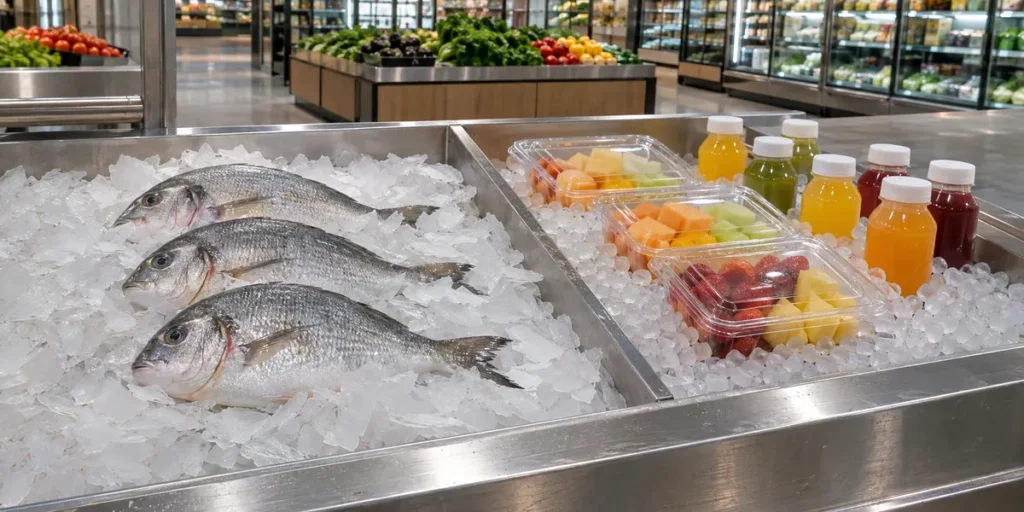
| Typical display applications | Fish, suitable fresh produce, and beds around food containers | Sealed packaged foods and bottled beverages |
Heat transfer depends on surface contact between ice and product, not melting rate alone.
Which Ice Works Best for Your Food Display?
Base the ice selection on whether it touches raw food, insert pans, or outer packaging.
Fresh Fish and Unpackaged Seafood
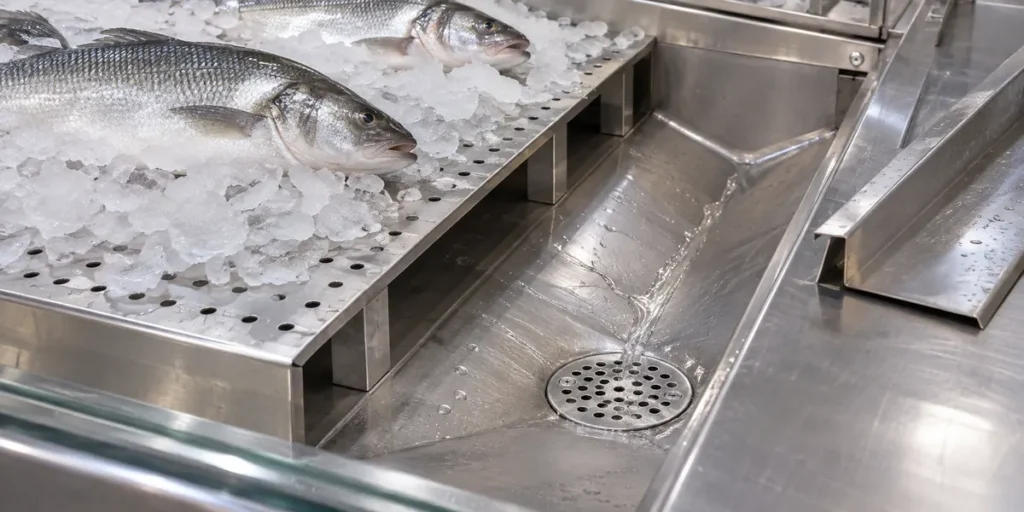
Flake ice distributes evenly across irregular surfaces, making it standard for raw fish displays. Staff can fill hollows beneath whole fish and re-level the bed as items sell. Spread ice gently over delicate items without pressing heavy layers onto fillets. When using display trays, confirm thermal contact between the tray base and the ice bed while verifying product temperature. These handling practices apply strictly to chilled food holding rather than live seafood tanks.
Fresh Produce Displays
Ice directly only those crops that tolerate near-freezing temperatures and continuous moisture. Moisture-sensitive and chilling-sensitive crops will suffer damage on either flake or nugget ice. Review top icing for fresh produce to identify tolerant crops. For unfamiliar produce, verify its critical handling temperature and surface water tolerance before preparing an ice bed.

Salad Bars and Buffet Pans
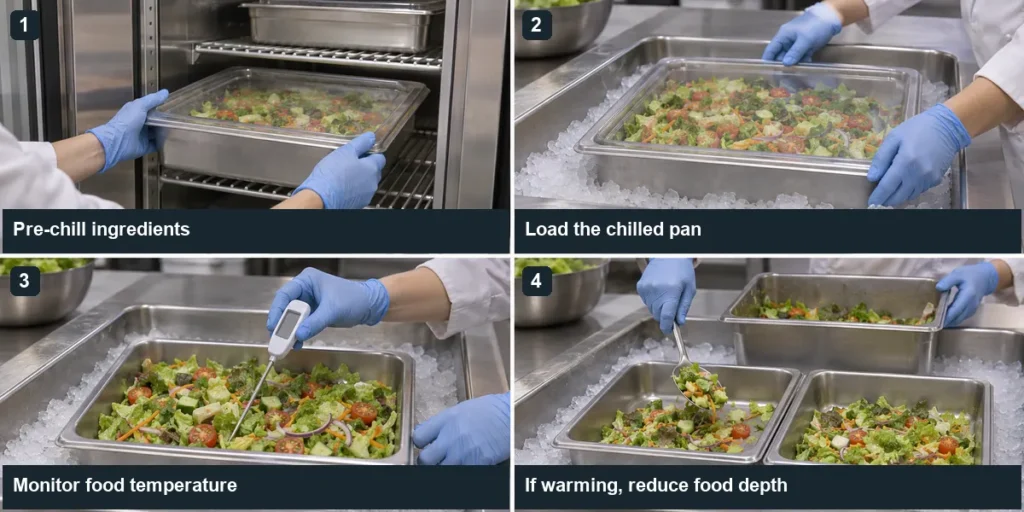
Flake ice packs tightly around metal food pans, whereas nugget ice works if packed continuously along pan sides. Maintain ice levels around the product zone while ensuring meltwater stays below pan rims. Pre-chill ingredients before loading them into service cases. Ice surrounding only the base of a deep pan leaves upper layers vulnerable to warming, so monitor surface temperatures regularly and decrease food holding depth if readings climb.
Packaged Fresh Foods
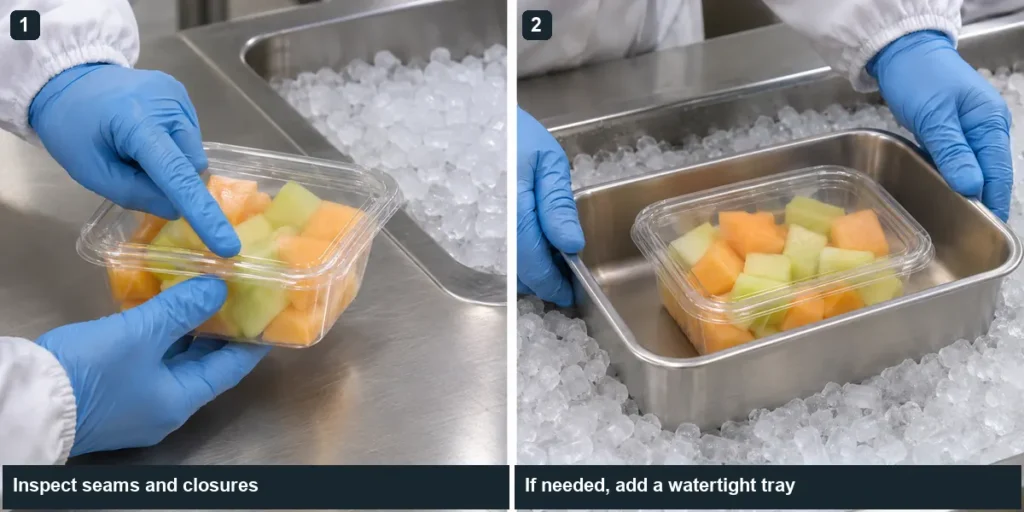
Nugget ice works well for sealed packages built for wet displays, as sealed goods do not need complete surface contouring. Verify that container seams, lids, and cardboard sleeves resist water penetration. If packaging can admit water, place an impermeable barrier between the items and the ice bed.
How Ice Affects Display Operation
Ice displays require continuous contact as the bed melts. Monitor internal food temperatures, bed depth, refill volume, and drainage.
Cooling Performance
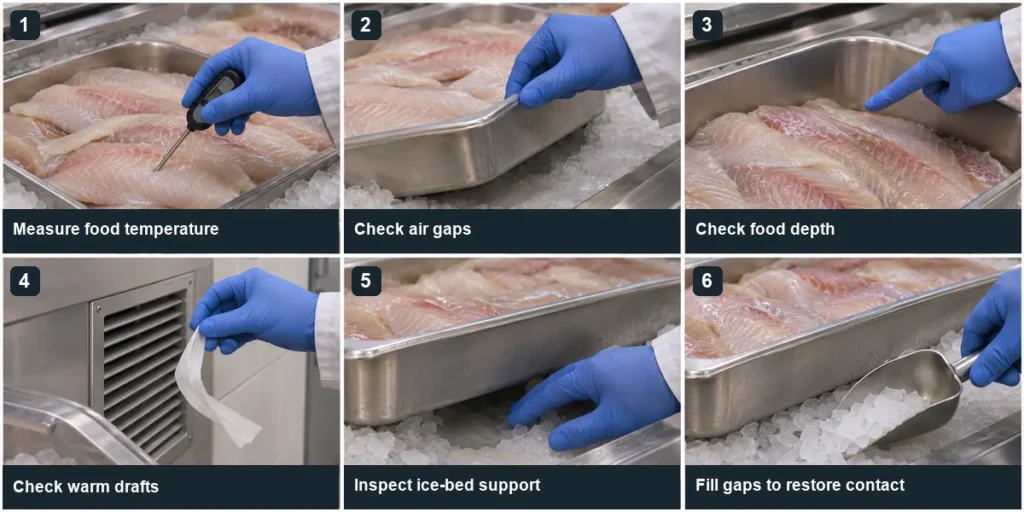
Continuous contact allows ice to draw heat from food as it melts. Air pockets insulate product, and thick items take longer to cool through to the center. Verify food temperatures with a calibrated probe thermometer. If product temperatures climb while ice remains, check for air pockets, excessive food depth, or warm ambient drafts before adding more ice. Melting indicates active heat absorption from the product and surroundings.
Ice Bed Stability
An ice bed must support items without shifting. As ice melts, product trays and whole fish settle or tilt out of alignment. Inspect beneath items during service. Pack fresh ice directly into hollow pockets under the food to maintain contact and support.
Ice Replenishment Frequency
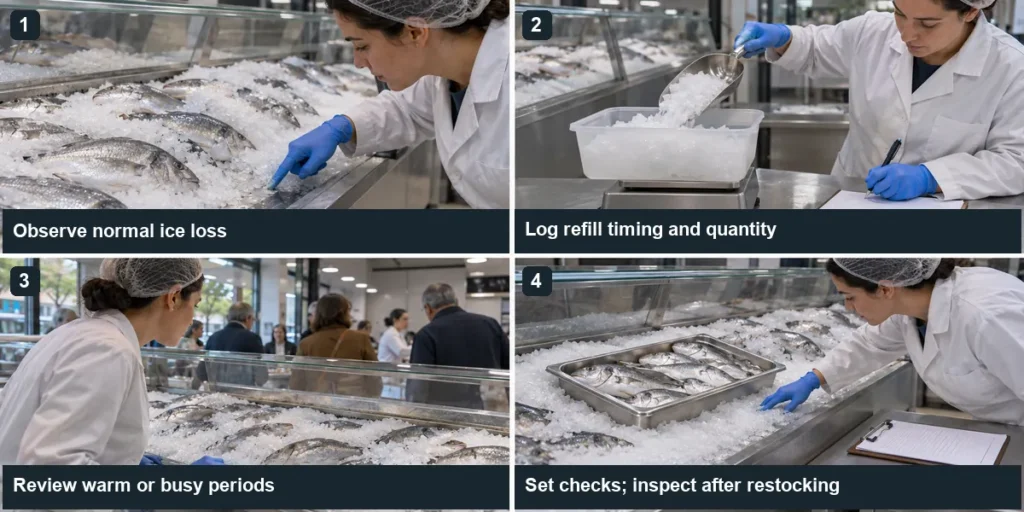
Establish refill schedules by tracking ice melt under normal working conditions. Note how often beds require rebuilding and log the weight or volume added. Re-evaluate consumption during warm seasons or high-traffic periods. Ambient air, case lighting, unchilled product loads, and case refrigeration affect ice consumption. Use these observations to set regular inspection intervals and inspect the case after major restocking.
Meltwater Drainage
Fish display cases require continuous drainage to prevent product submersion. Stagnant runoff carries bacteria and accelerates spoilage. Keep drainage holes and sub-pan channels clear of ice fragments and scale. Route raw seafood drainage away from ready-to-eat foods. Discard display melt ice after use; never reuse it for drink service or food prep.
Choosing an Ice Machine for Your Display
Calculate daily demand and batch draw times before selecting equipment. An ice machine sizing calculation balances total 24-hour usage, opening setup requirements, and recovery hours.
Ice Production Capacity Under Actual Operating Conditions
Size equipment using peak summer ambient air and inlet-water temperatures. Standard 24-hour ratings reflect laboratory test conditions and do not represent ice available immediately at opening. Separate opening bed-building requirements from daytime replenishment, accounting for washdowns and shared usage across other store departments. For example, small flake ice machines rated at 200 to 1,000 kg per 24 hours under standard 30°C air and 20°C water ratings produce less ice in hotter facilities. Request derating charts that reflect your mechanical room’s actual peak conditions.
Ice Storage Capacity
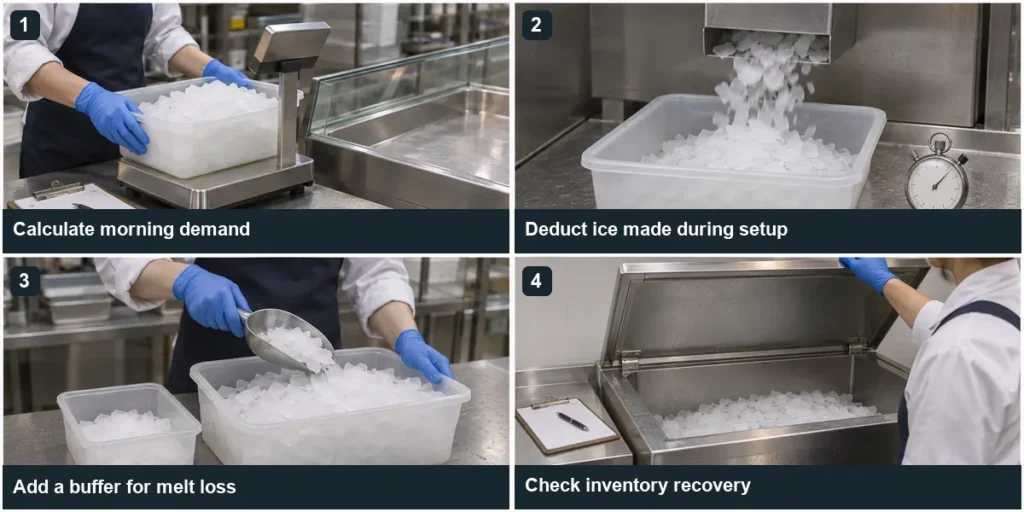
Storage bins must handle the largest single withdrawal that exceeds ongoing production. Morning case setups often demand substantial stored volume even when total daily consumption is moderate. Calculate morning requirements, deduct ice produced during setup hours, and add a safety buffer for melt loss. Confirm bin inventory recovers before afternoon replenishment. For larger systems, regulate ice storage temperature to prevent clumping and size storage around usable scoop volume rather than gross dimensions.
Installation Requirements
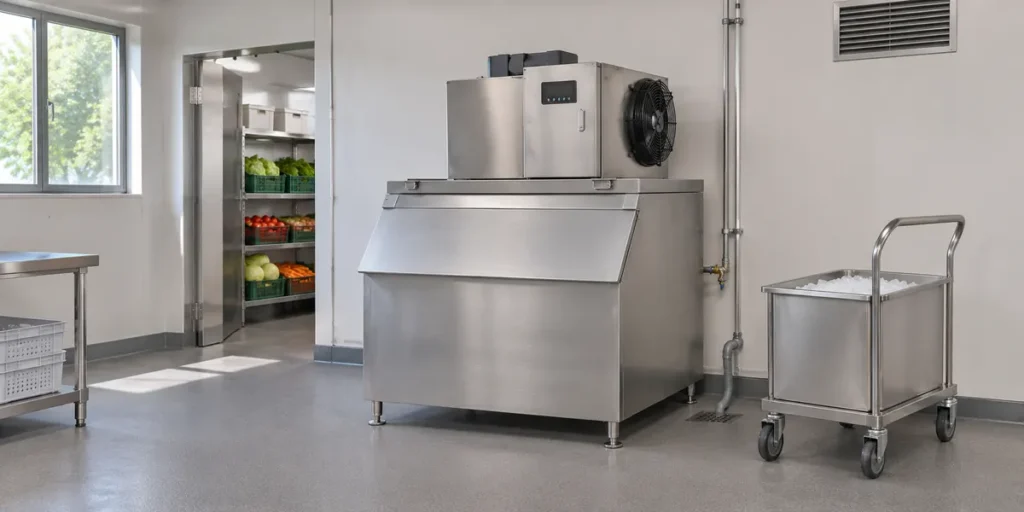
Ensure site utilities match equipment specifications: supply voltage, phase, circuit ampacity, water pressure, drain pitch, and ventilation clearances. When comparing air-cooled versus water-cooled ice machines, evaluate mechanical room heat dissipation. Air-cooled units require continuous mechanical ventilation, while water-cooled units need dedicated cooling tower loops or cold water supplies. Keep transport routes between storage bins and retail cases wide and level to reduce handling labor.
Cleaning and Maintenance
Select equipment with accessible water troughs, evaporators, and storage bins. Descaling dissolves mineral scale, while sanitizing eliminates pathogens on clean contact surfaces. Review maintenance manuals prior to purchase to confirm part accessibility, chemical approvals, and rinse cycles. Set deliming frequency based on local water hardness testing. Dedicate specific scoops and transport carts to ice handling, and clean storage bins and floor drains on a set schedule.
Total Cost of Ownership
Account for capital purchase, utility consumption, filtration replacement, cleaning labor, and scheduled mechanical maintenance over the asset’s life. Factor in condenser water charges and manual labor hours spent hauling ice. Evaluate energy efficiency using kWh per 100 kg of usable ice under realistic operating temperatures.
To determine equipment sizing, discuss your display requirements with details on your product mix, peak pull volume, ambient temperatures, and utility connections.