Size an ice packing machine from the ice that needs bagging during the busiest packing window, not from the plant’s daily output alone. Convert that peak flow into bags per hour, then ask the supplier to confirm the complete packing path under the proposed project conditions.
Daily production still matters, but it does not describe a short dispatch cutoff, a packing shift, or a loading peak. This guide is for industrial tube ice plants that need to match production, storage, bagging, and a project-specific quotation without assuming an unpublished machine rate.
What Ice Flow Must the Packing Line Handle?
The packing line must handle the ice scheduled for bagging before a defined dispatch time. Start with the ice mass that must leave storage or production in that window, then divide it by the actual packing hours. The result is the peak ice flow into the bagging path.
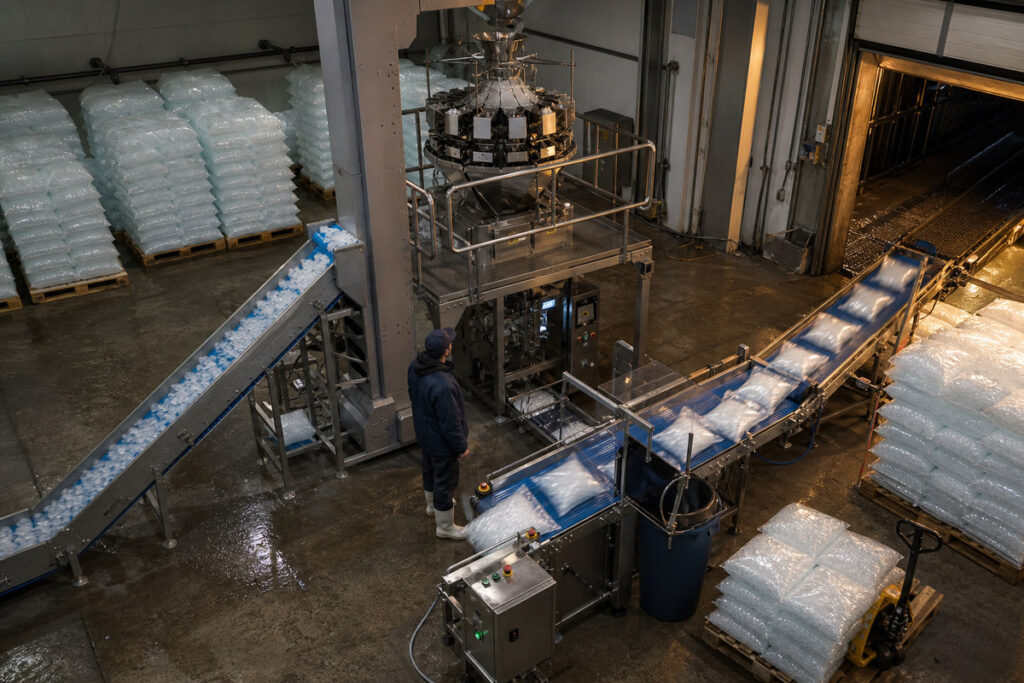
For example, a plant can produce enough ice over a full day and still have a packing shortfall if most bags must be ready during one shorter shift. Keep daily production flow and peak dispatch flow as separate planning figures. The higher required flow is the one that the transfer, weighing, filling, sealing, and finished-bag path must support. Use the same peak-flow basis when reviewing industrial ice machine sizing.
How Do You Calculate the Required Bags Per Hour?
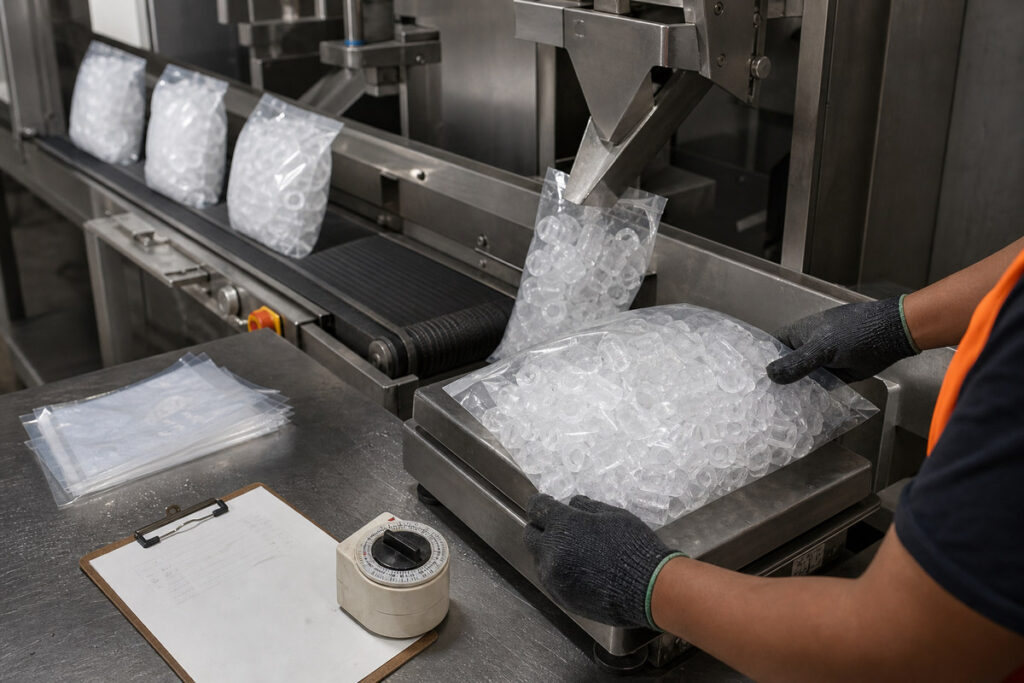
Required bags per hour come from the peak ice flow and the target net bag mass. The result is a project requirement, not a published machine capacity, because the complete line still needs to handle the ice, bag, and operating conditions in the proposal. Apply the same operating basis to tube ice capacity planning.
Set the Target Bag Weight
Use one consistent mass unit for the calculation. If the plant will pack more than one bag size, calculate each dispatch schedule separately and use the format that creates the highest bags-per-hour requirement.
| Input | Symbol | Calculation |
|---|---|---|
| Ice to pack in the window | M | Planned ice mass for the dispatch window. |
| Available packing time | T | Actual hours available to bag that ice. |
| Net bag mass | B | Required ice mass per finished bag. |
| Required bags per hour | R | R = (M / T) / B |
Test the Whole Packing Path
Treat the calculated bag rate as valid after every step can sustain it. Review the route from ice delivery to weighing, bag forming or placement, filling, sealing, and finished-bag handling. A rate stated for one machine does not establish the capacity of the complete packing path.
Ask the supplier to state the proposed bags per hour, bag format, ice form, interfaces, and operating conditions in writing. That record lets the buyer compare the calculated requirement with the offered system boundary instead of treating a daily ice figure as a packing guarantee.
Can Storage Cover a Packing Gap?
Storage can cover a timing gap when ice available for bagging can reach the packing line at the required peak flow and the inventory can recover before the next dispatch peak. Gross room volume does not answer either condition.
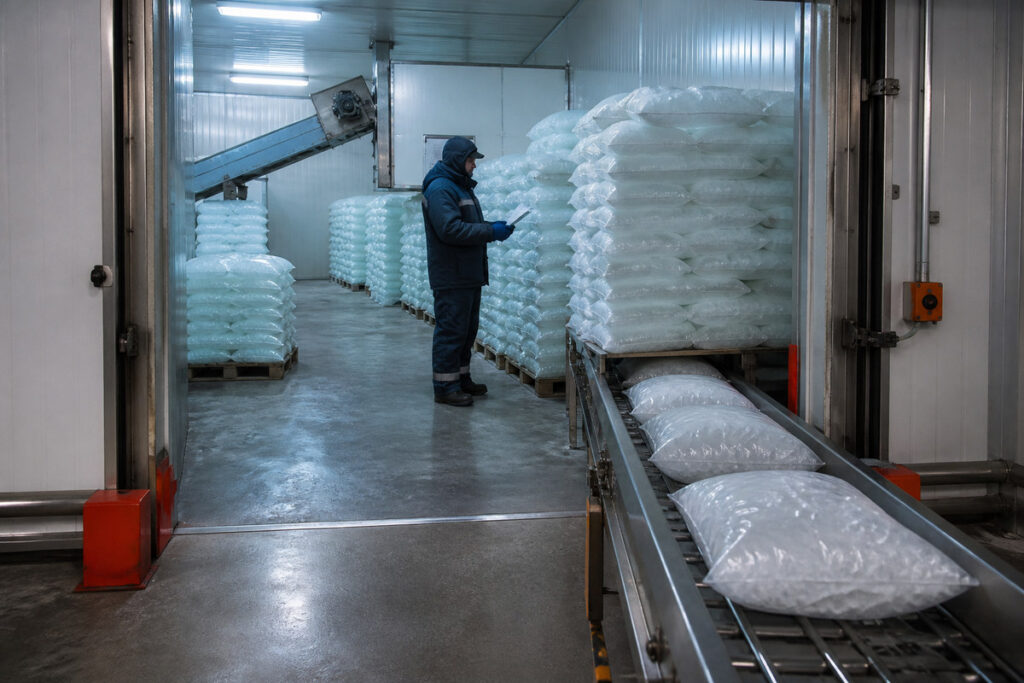
For planning, divide usable ice inventory by the peak packing-window flow to estimate buffer time. Then test one full dispatch cycle:
- Record usable ice before packing begins.
- Subtract planned bagging and any other withdrawals during the peak.
- Add expected ice production before the next peak.
If usable inventory cannot recover, revise the packing schedule, storage plan, production flow, or proposed packing configuration. Storage is a buffer for timing. It does not replace a line that cannot process the required peak flow.
When Does a Semi Automatic or Automatic Line Fit?
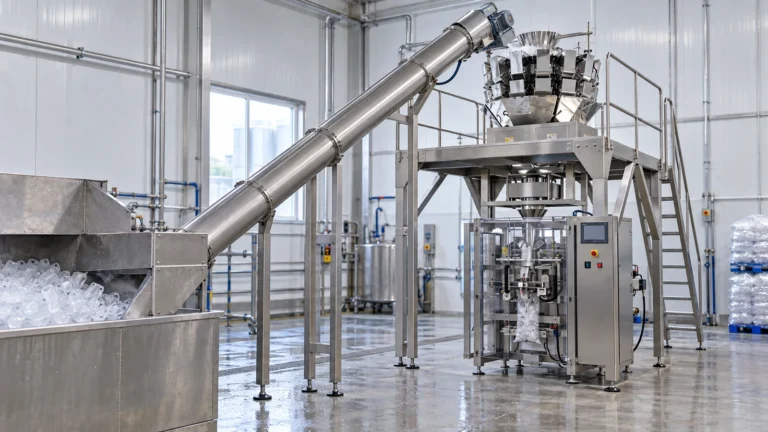
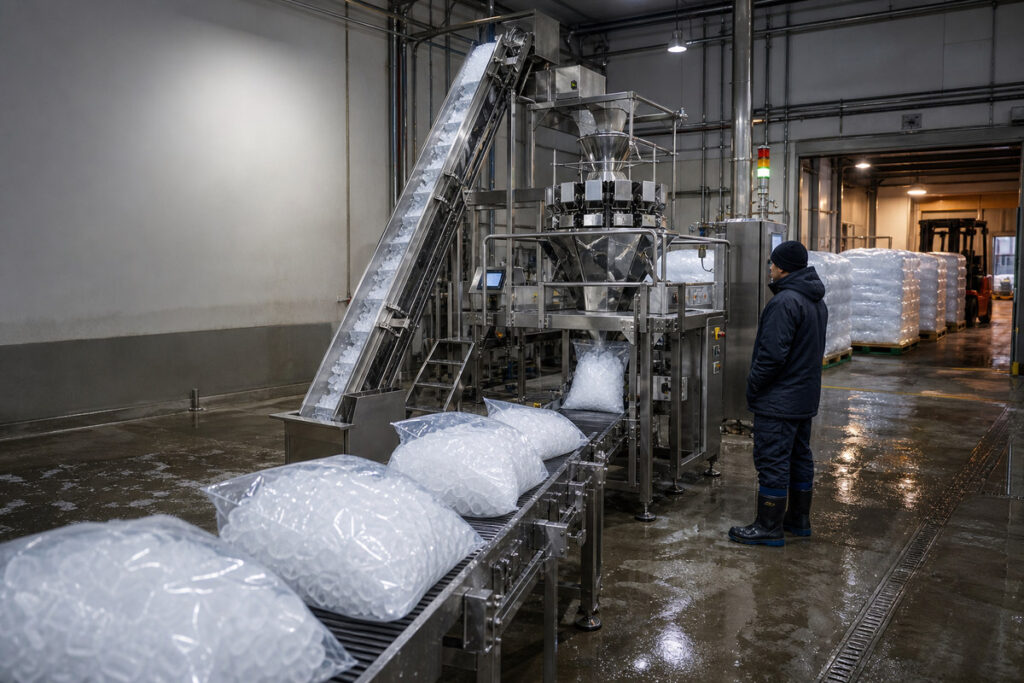
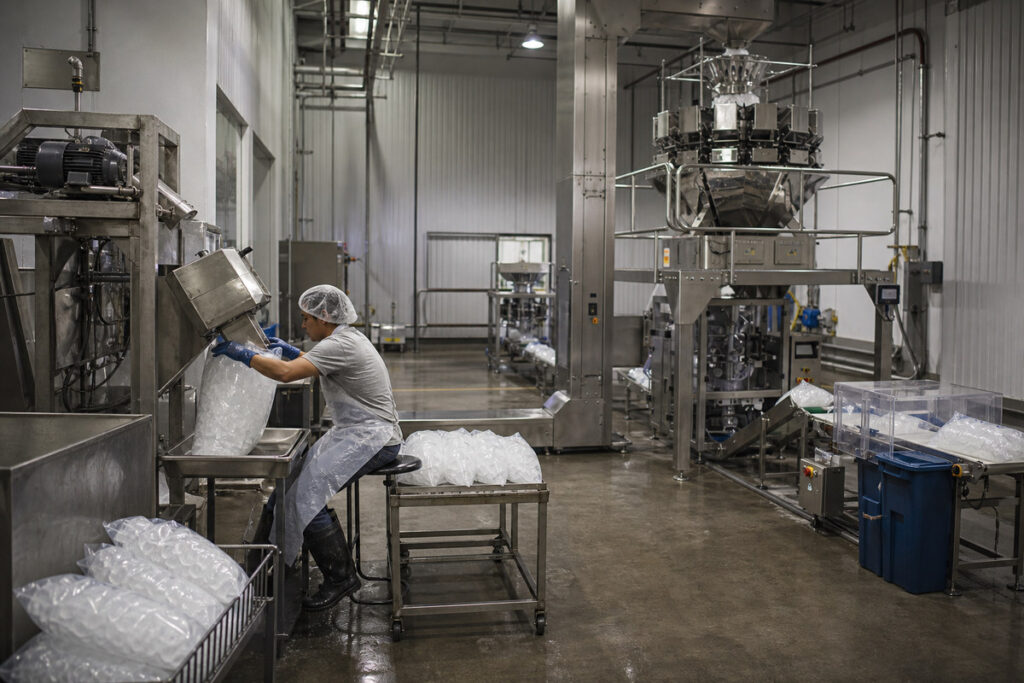
Choose the packing approach from the required bags per hour, labor plan, and the proposed ice and bag configuration. Mikeicemachine describes the MIPK-S as semi-automatic tube ice equipment where an operator places the bag while the machine controls target weight and the filling cycle. Mikeicemachine describes the automatic tube ice packing line as an MIPK-A line with lifting, weighing, bag forming, filling, sealing, and finished-bag conveying. The published pages do not provide a universal rate at which one method becomes the better choice.
Compare Operator Work With Required Flow
A semi-automatic process can fit a labor plan that includes bag placement and a required workflow the proposed system can support. An automatic line can fit a project that calls for an automatic bagging cycle with limited manual handling. The decision should connect the required flow to the planned operator tasks, not to daily tonnage alone.
Do not assume that automatic equipment will solve an upstream production or transfer limit. A packing method supports the peak requirement when the proposed ice feed and finished-bag path support the same condition.
Confirm the Proposed Configuration
The MIPK-A page identifies tube ice and says its configuration is tailored to plant output, bag weight, and bags per hour. Before treating that statement as a project commitment, confirm the proposed ice form against the selected tube ice machine range, as well as the bag format, required rate, local voltage, ambient conditions, available space, and system interfaces.
The MIPK-S page describes project-based capacity and a configuration tailored to bag size and hourly output. Its summary and technical-specification ice descriptions are not fully consistent, so buyers should obtain written confirmation of the proposed ice form rather than generalizing compatibility from the page.
What Should a Comparable Packing Quote Include?
A comparable quote starts with one capacity brief and ends with each supplier stating the same operating basis and system boundary. Price alone does not show whether a proposal includes the transfer and finished-bag interfaces needed to meet the peak packing requirement.
| Buyer Capacity Brief | Supplier Capacity Response |
|---|---|
| Daily ice output, peak packing window, and packing hours | Proposed bags per hour and stated operating basis |
| Ice form, target bag mass, and bag formats | Proposed packing method and system interfaces |
| Usable storage, dispatch pattern, voltage, ambient conditions, and space | Proposed layout, exclusions, and site assumptions |
| Required scope and forecast growth | Optional scope separated from the confirmed requirement |
Send the same brief to every supplier. Then compare the returned process, capacity conditions, and exclusions before comparing price. Ask for the proposed layout and technical specification to match the brief, and record any condition the supplier has not confirmed. Use the same scope boundary when comparing an industrial ice machine cost guide.
Frequently Asked Questions
Can an Automatic Tube Ice Packing Line Be Configured for Different Bag Weights?
Yes. Mikeicemachine states that the MIPK-A electronic weighing system can configure target weight for different retail bags. The published page does not state a supported weight range or changeover procedure, so buyers should obtain confirmation for each bag format and its required bags per hour.
Can Buyers Review a Layout and a Running Video Before Production?
Yes. Mikeicemachine states that it can provide a layout proposal, technical specification, and relevant factory or project video before production or shipment. Review those materials against the stated bag format, capacity conditions, site inputs, and system boundary because they do not replace project-specific confirmation.
Send the peak packing requirement and site conditions to Mikeicemachine for a configuration proposal that states the proposed capacity basis and system boundary.